
Introduction
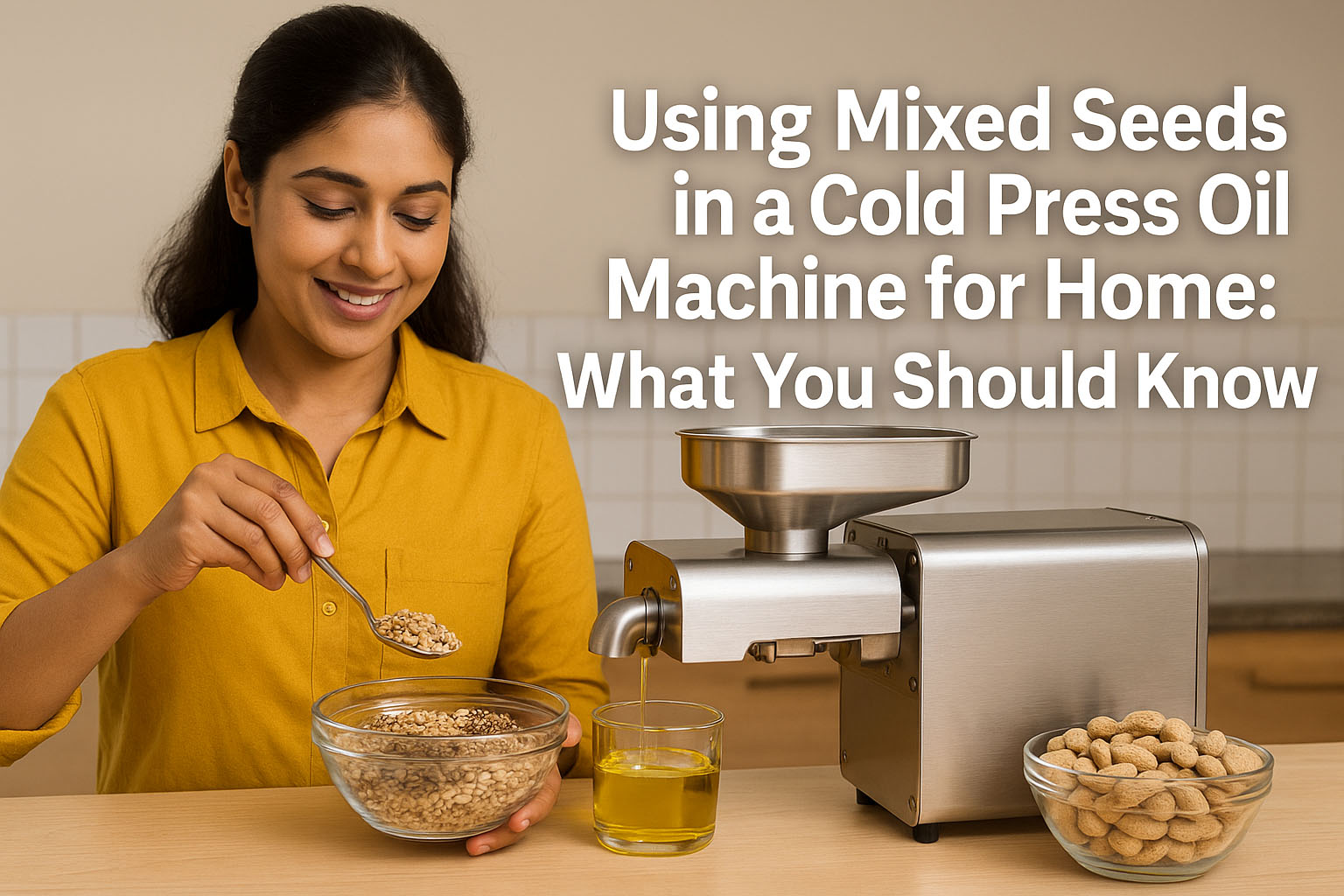
In many Indian homes, people now make pure, cold-pressed oils at home using a cold press oil machine for home. Once they master single-seed oils like groundnut or sesame, curiosity naturally grows — “Can I use mixed seeds to create my own unique oil blend?”
Yes, you can — and it’s one of the most exciting parts of owning a cold press machine. Mixing seeds allows you to combine flavours, aromas, and nutrients that no store-bought oil can match. But to do it right, you need to know the correct seed combinations, ratios, and pressing techniques.
In this post, we’ll explore everything you need to know about using mixed seeds in a cold press oil machine, so you can make nutritious, balanced, and flavorful oils in your own kitchen.
Also Read: [“Cold Press Oil Machine for Home: The Complete Beginner’s Guide (2025 Edition)”]
What Does “Mixed Seed” Oil Mean?
Mixed seed oil is created when you press two or more types of oil-bearing seeds together in your machine. For example:
- Groundnut + Sesame
- Sunflower + Flaxseed
- Coconut + Mustard
Each seed brings its own oil yield, texture, and nutrient profile. When combined, they form a balanced oil that’s healthier and more aromatic.
For example, sesame oil adds antioxidants, groundnut oil gives a mild nutty base, and sunflower oil keeps the blend light.
Can You Use Mixed Seeds in a Cold Press Oil Machine?
Yes — most modern cold press oil machines for home can handle mixed seeds without issues. However, you must maintain:
- Proper seed ratio (50:50 or 70:30) depending on seed hardness.
- Uniform moisture levels to prevent clogging.
- Gradual feeding to avoid overloading the chamber.
Hard seeds (like coconut or mustard) crush slower than soft seeds (like sunflower or sesame), so the screw speed and pressure matter. Always mix seeds with similar texture for consistent results.
✅ Example: Mix groundnut (medium-hard) and sesame (soft) — perfect combination for smooth pressing and rich flavour.
Best Mixed Seed Combinations for Home Pressing
Here are some tried and tested Indian combinations that balance taste, nutrition, and oil yield:
| Combination | Ratio | Flavour Profile | Health Benefits |
| Groundnut + Sesame | 70:30 | Mild nutty taste with a hint of roasted aroma | Vitamin E, healthy fats, antioxidants |
| Sunflower + Flaxseed | 60:40 | Light texture, slightly earthy | Omega-3 boost, heart-healthy oil |
| Mustard + Sesame | 50:50 | Sharp aroma with soft balance | Good for winters, rich in minerals |
| Coconut + Groundnut | 50:50 | Smooth, rich oil, semi-solid texture | Great for cooking and skincare |
| Rice Bran + Sunflower | 60:40 | Neutral flavour, clean texture | High smoke point, ideal for deep frying |
Tip: Start with small 500 g batches to test flavour before making large quantities.
How to Mix Seeds for Perfect Cold-Pressed Oil
Step 1 – Clean and Dry the Seeds
Remove dust, husk, and stones. Make sure seeds are completely dry. Damp seeds reduce oil yield and can cause heating.
Step 2 – Measure and Mix
Use a kitchen scale. Maintain your chosen ratio (e.g., 700 g groundnut + 300 g sesame). Mix well before feeding into the machine.
Step 3 – Set Up the Machine
Ensure the hopper, screw, and barrel are clean. Plug in and pre-run the machine for 30 seconds (empty) to stabilize motor speed.
Step 4 – Feed Gradually
Add seeds slowly. Never fill the chamber fully at once. This prevents choking and keeps oil flow consistent.
Step 5 – Filter and Store
Once pressing is done, filter the oil through a fine mesh or muslin cloth. Pour into dark glass bottles and label by date and blend type.
Also Read: [“Cleaning and Maintaining Your Cold Press Oil Machine for Home”]
What Happens When You Mix Seeds? (Behind the Scenes)
When you mix seeds, their individual oil densities and fibre contents interact during pressing. This can slightly change:
- Oil colour (darker or lighter depending on seed type).
- Viscosity (thicker when coconut or sesame is used).
- Yield (varies 5–10% lower than pure single-seed oils).
But these changes are often beneficial — you get richer texture, balanced nutrition, and more complex flavour.
Pro Insight: Some users even rotate seed combinations monthly to ensure a diverse fatty acid profile in their diet.
Common Mistakes to Avoid When Mixing Seeds
- Mixing hard and soft seeds unevenly.
→ Results in incomplete pressing or jamming. - Skipping moisture control.
→ Damp seeds reduce oil yield and can spoil flavour. - Overfilling the hopper.
→ Machine overload leads to overheating. - Not cleaning between different batches.
→ Flavour residues mix unintentionally (e.g., mustard overpowering sesame). - Pressing incompatible seeds.
→ Avoid combinations like coconut + flaxseed (uneven hardness).
Also Read: [“Why Is My Cold Press Oil Machine Producing Less Oil? 7 Common Mistakes”]
Health Benefits of Mixed Seed Cold-Pressed Oils
Using mixed seeds in a cold press oil machine for home can unlock broad health benefits:
- Balanced fatty acids – Omega-3 from flaxseed + monounsaturated fats from groundnut.
- Enhanced antioxidant content – Sesame and sunflower are rich in vitamin E.
- Improved metabolism – Combination oils digest easier than single-seed heavy oils.
- Seasonal adaptability – Mustard for winters, coconut-sunflower mix for summers.
This is why many Indian families now prefer mixed-seed oils for everyday cooking and skincare.
Practical Storage Tips
- Always store oils in dark glass bottles.
- Label blends clearly (e.g., “Sesame-Groundnut – Feb 2025”).
- Keep away from sunlight or gas stove heat.
- Use within 3–4 months for best freshness.
Cost & Yield Comparison (Real Indian Example)
| Seed Blend | Cost/kg (₹) | Oil Yield | Oil Cost/Litre (₹) | Market Equivalent (₹) | Savings |
| Groundnut + Sesame | 140 | 40% | 350 | 600 | ₹250 |
| Mustard + Sunflower | 130 | 38% | 340 | 580 | ₹240 |
| Coconut + Groundnut | 160 | 35% | 400 | 650 | ₹250 |
A single mixed-seed batch of 1 litre can save ₹200–₹300 compared to branded oils — and you control purity and freshness.
Final Thoughts
Experimenting with mixed seeds in a cold press oil machine for home is a healthy and creative way to enjoy natural oils. You get unique flavours, balanced nutrition, and savings — all without additives or chemicals.
Start small, note your favourite blends, and gradually refine your process. Within a few batches, you’ll find the mix that suits your family’s cooking style perfectly.
And remember: clean the machine after every blend, use dry seeds, and store the oil right — those three habits ensure consistent results for years.
Next Read: [“Cold Pressed Oil Shelf Life and Storage Tips: Keep It Fresh Longer”]





0 Comments