
wrong model. The result is unevenly toasted bread, fillings spilling out, or an appliance that is rarely used after a few weeks.
This sandwich maker buying guide is written to help Indian home users make the right decision the first time. Instead of brand hype or confusing specifications, it focuses on how sandwich makers actually perform in Indian kitchens and what features truly matter for daily use.
By the end of this guide, you will know exactly which type of sandwich maker suits your cooking habits, family size, and budget.
Why Choosing the Right Sandwich Maker Matters in India
Indian sandwiches are different from Western toast sandwiches. They often include mashed potatoes, paneer, onions, capsicum, cheese slices, chutneys, and leftover sabzi. These fillings are heavier, wetter, and thicker.
A poorly chosen sandwich maker may:
- Press the bread too hard and push fillings out
- Heat unevenly, leaving cold spots
- Burn the outside while the inside stays soggy
The right sandwich maker handles these challenges comfortably. That is why understanding plate design, heating performance, and usage patterns is more important than choosing the cheapest option.
Types of Sandwich Makers Explained
Understanding the types available is the first step in this sandwich maker buying guide.
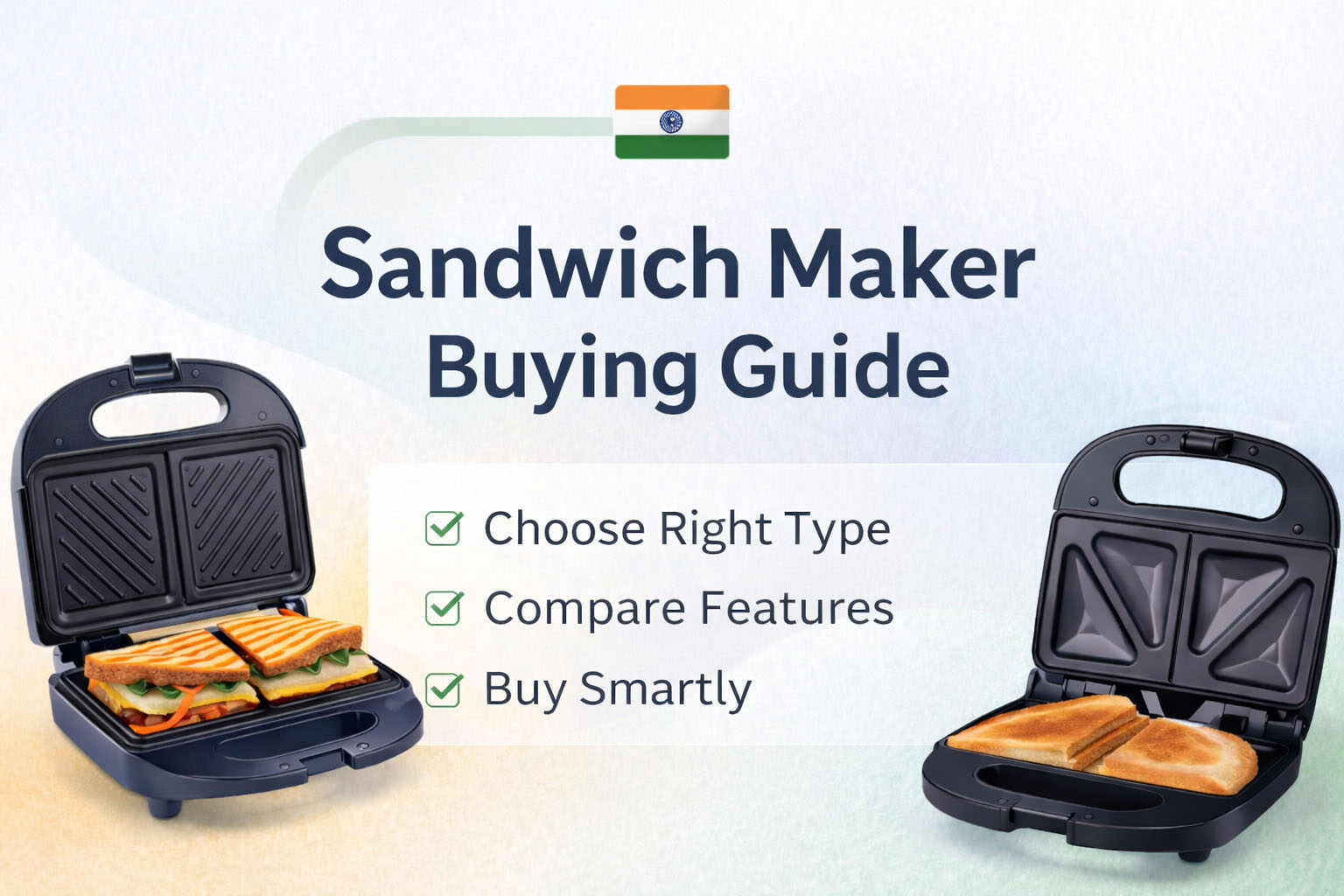
Grill Sandwich Makers
Grill sandwich makers use ridged plates that allow moisture to escape. This helps achieve crisp sandwiches without excessive oil.
Why they work well in Indian homes
- Handle thicker fillings better
- Produce evenly grilled sandwiches
- More versatile for vegetables and paneer
For most households, grill sandwich makers are the most practical choice.
Toast (Sealed) Sandwich Makers
Toast sandwich makers seal the edges of the bread, keeping fillings inside. They are simple to use and create neat triangular sandwiches.
Where they work best
- Light fillings like cheese or potatoes
- Occasional use
- Smaller kitchens
However, they are less forgiving with heavy or chunky fillings.
Grill vs Toast: Which Should You Choose?
This is one of the most common questions buyers ask.
If you enjoy stuffed sandwiches and experiment with fillings, a grill sandwich maker offers more flexibility. If you prefer simple, mess-free sandwiches and compact storage, a toast sandwich maker may be enough.
For a clearer comparison of models that perform well in Indian kitchens, you can refer to the best sandwich maker in India comparison guide on HomeGearHub, which breaks down real-world usage and performance.
Power Rating: Does Higher Wattage Mean Better Performance?
Most sandwich makers in India range between 750W and 1000W. While higher wattage helps with faster heating, it is not the only factor that determines performance.
What matters more is:
- Even heat distribution
- Plate contact with bread
- Heat retention during cooking
A well-designed 800W sandwich maker can perform better than a poorly designed 1000W model. Do not choose solely based on wattage numbers.
Plate Depth and Size: A Critical Factor
Plate depth is often overlooked, yet it plays a major role in day-to-day usability.
Why Plate Depth Matters
- Prevents bread from tearing
- Reduces filling spillage
- Allows thicker sandwiches
Shallow plates are suitable only for thin fillings. For Indian-style sandwiches, medium to deep plates are far more practical.
Also consider plate width. Wider plates allow larger bread slices and reduce overcrowding.
Non-Stick Coating and Cleaning Ease
Non-stick coating affects both cooking and maintenance. A good coating:
- Requires less oil
- Prevents sticking
- Makes cleaning quick
Most home users prefer fixed plates because they are simpler. Removable plates are easier to deep clean but add to cost and complexity.
For regular use, quality non-stick coating is more important than removable plates.
Safety and Build Quality Considerations
A sandwich maker is a heating appliance, so safety should not be ignored.
Look for:
- Heat-resistant handles
- Stable base
- Proper locking mechanism
- Indicator lights for power and readiness
Build quality becomes more important if you plan to use the appliance several times a week. A sturdier build usually translates to longer life and more consistent results.
Energy Consumption and Running Cost
Sandwich makers are generally energy-efficient. They are used for short durations and consume less electricity than many other kitchen appliances.
For example:
- A 800W sandwich maker used for 10 minutes consumes minimal power
- Regular use does not significantly impact electricity bills
Energy consumption should not be a deciding factor unless usage is extremely frequent.
How Often Will You Use It?
Your usage frequency should guide your choice.
Occasional Use
- Compact models
- Basic features
- Lower price range
Regular Use
- Grill models with good plate depth
- Reliable brand support
- Better heat consistency
Choosing based on usage prevents overpaying and avoids disappointment.
Common Mistakes Indian Buyers Make
This sandwich maker buying guide would be incomplete without highlighting common mistakes.
Buying Only Based on Price
Cheapest models often compromise on heating and durability.
Ignoring Plate Design
Plate depth and shape matter more than appearance.
Overestimating Features
Fancy features do not always improve results. Simplicity often works better.
Avoiding these mistakes leads to a more satisfying purchase.
Sandwich Maker vs Stove-Top Cooking
Some users wonder whether a sandwich maker is necessary when sandwiches can be made on a tawa or grill pan.
A sandwich maker offers:
- Consistent results
- Less oil usage
- Faster cooking
- Minimal supervision
For households that prepare sandwiches regularly, the convenience is worth it.
How This Guide Helps You Choose Better
This sandwich maker buying guide focuses on real usage rather than specifications alone. It is designed to help you narrow down options based on:
- Cooking habits
- Kitchen size
- Family needs
Once you understand these factors, choosing becomes much easier.
To see how these principles apply to actual models available in India, you can explore the detailed comparison in the best sandwich maker in India guide, which evaluates performance, pricing, and suitability for Indian homes.
Final Thoughts
A sandwich maker can be a genuinely useful kitchen appliance when chosen correctly. The right model saves time, reduces effort, and delivers consistent results without guesswork.
This sandwich maker buying guide is meant to remove confusion and help you focus on what actually matters. Instead of chasing specifications or discounts, choose a model that fits how you cook and how often you use it.
With the right choice, a sandwich maker becomes a daily convenience rather than an unused gadget tucked away in a cupboard.



0 Comments