
Introduction
An ice cube maker machine for home is no longer a luxury appliance in India. With rising summer temperatures, smaller freezer compartments, and the growing habit of cold beverages at home, many households now find traditional ice trays slow and inconvenient.
However, not every home needs an ice maker. Many buyers purchase one impulsively and later realise it does not fit their usage, kitchen space, or expectations. This buying guide explains what an ice cube maker machine actually does, how it works, who should buy it, and what to check before spending money—so you make the right decision the first time.
What Is an Ice Cube Maker Machine for Home?
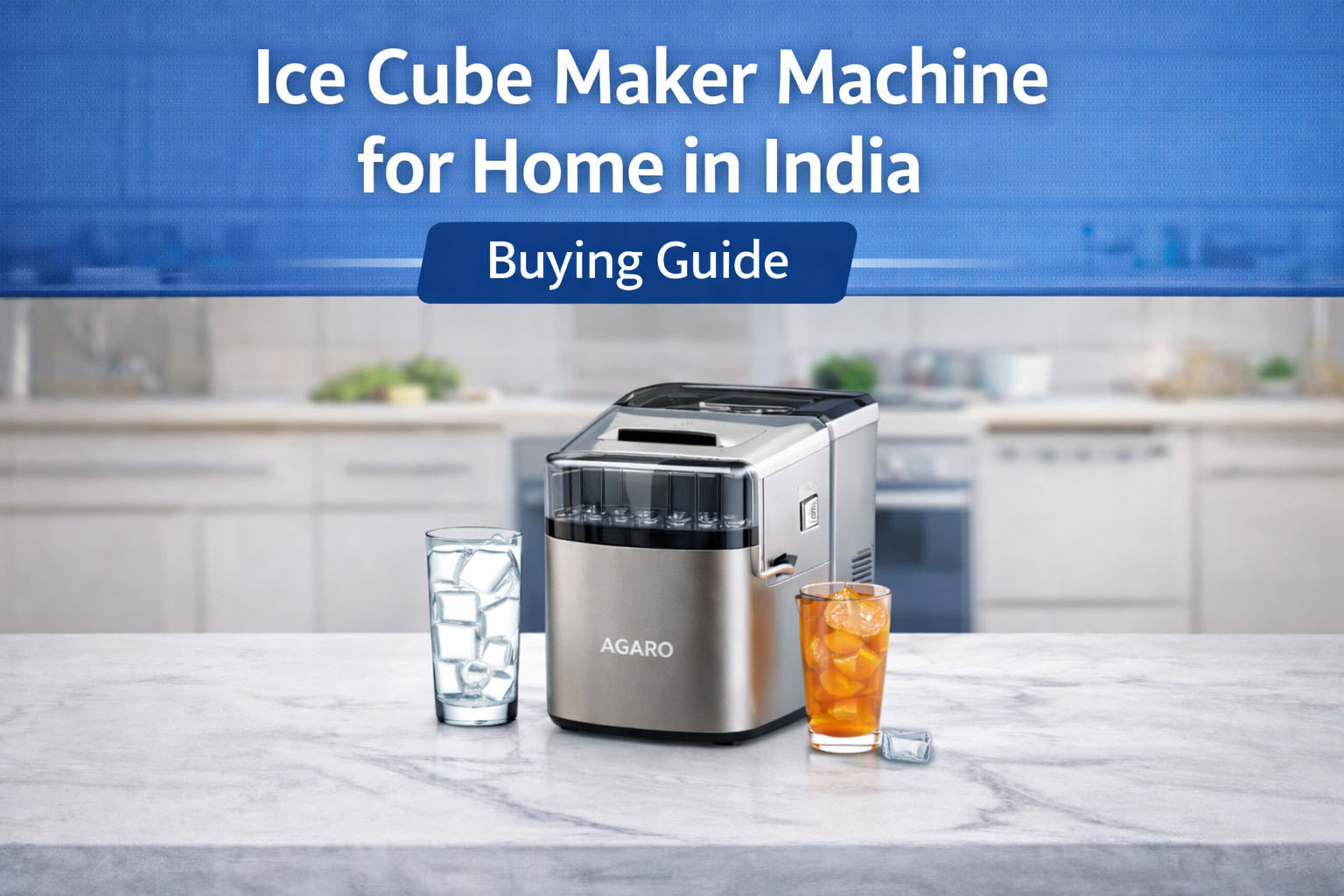
An ice cube maker machine for home is a compact, countertop appliance designed to produce ice quickly using water and electricity, without relying on a freezer.
Unlike freezer trays that take hours, these machines can produce ice in minutes, making them useful for daily drinks, parties, and summer use.
Most home ice cube makers in India are:
- Countertop or portable
- Plug-and-play (no plumbing required)
- Designed for small to medium ice demand
How Does an Ice Cube Maker Work?
Understanding how the machine works helps avoid unrealistic expectations.
Most home ice makers follow this process:
- Water is poured into a built-in tank
- The machine chills metal rods or molds
- Ice forms around the rods
- Ice is released into a basket
- The cycle repeats until the basket is full
This process is fully automatic once started, but it does not store ice long-term. Ice should be used soon after production.
Types of Ice Cube Makers for Home Use
Not all ice makers are the same. Choosing the wrong type is a common mistake.
Countertop Ice Cube Makers
These are the most common in Indian homes.
- Compact size
- Easy to move
- Suitable for daily home use
Best for: Apartments, families, renters
Portable Ice Makers
Often confused with countertop models, portable units are lighter and easier to store.
- Lower ice output
- Smaller water tank
Best for: Occasional use, travel homes
Built-in or Commercial Ice Makers
These are not suitable for most Indian homes.
- Expensive
- Require plumbing
- Designed for restaurants
Bullet Ice vs Cube Ice: What You’ll Get
Most home ice cube makers in India produce bullet-shaped ice, not traditional square cubes.
Bullet Ice (Most Common)
- Hollow or semi-solid
- Freezes faster
- Melts slightly faster than solid cubes
Good for: Soft drinks, juices, cold water
Solid Cube Ice (Rare at this price)
- Slower to produce
- More expensive machines
- Mostly commercial-grade
For home use, bullet ice is completely fine and practical.
Electricity Consumption: What Indian Buyers Must Know
One of the biggest concerns is power usage.
Most ice cube maker machines for home:
- Consume 120–200 watts
- Use power only during ice-making cycles
- Do not run continuously like refrigerators
Realistic Impact on Electricity Bill
For average home use:
- Usage: 30–60 minutes/day
- Monthly impact: low to moderate
They are generally safe to use with:
- Standard Indian sockets
- Home inverters (during short cycles)
Noise Levels: Apartment Reality Check
Ice cube makers are not silent, but they are not excessively loud either.
Typical sounds include:
- Water circulation
- Ice dropping into basket
- Cooling fan noise
In Indian apartments:
- Daytime use is fine
- Nighttime use may be noticeable in quiet homes
If noise sensitivity is high, limit use to daytime.
Water Quality & Hygiene
Since ice is consumed directly, water quality matters.
Important hygiene tips:
- Use filtered or RO water
- Clean the machine regularly
- Empty unused ice if it melts
Some machines offer self-cleaning, but manual cleaning is still necessary for hygiene.
Maintenance & Cleaning Requirements
Ice makers are low-maintenance appliances, but not maintenance-free.
Regular maintenance includes:
- Weekly water tank cleaning
- Basket removal and washing
- Exterior wipe-down
Avoid leaving water inside the tank for long periods if the machine is unused.
Space & Kitchen Compatibility
Before buying, check:
- Countertop space
- Nearby power socket
- Ventilation clearance
Most Indian kitchens can accommodate compact models, but very small kitchens may need careful placement.
Ice Cube Maker vs Freezer Ice Trays
Many buyers ask whether an ice maker is worth it compared to trays.
Ice Cube Maker Advantages
- Ice in minutes
- No freezer dependency
- Convenient during gatherings
Freezer Tray Advantages
- Zero electricity cost
- No extra appliance
If ice is used frequently, an ice maker makes sense.
If ice is used occasionally, trays may be enough.
Ice Production Speed vs Storage Capacity: What Most Buyers Misunderstand
One of the most misunderstood aspects of an ice cube maker machine for home is the difference between ice production speed and ice storage capacity. Many buyers assume that once the ice basket is full, the machine can store ice for hours. This is not how home ice makers work.
Home ice cube makers are designed to produce ice quickly, not store it long-term. Once ice is formed, it drops into a basket that is not refrigerated. If the ice is not used within a short time, it will slowly start melting. The melted water usually drains back into the tank and is reused for the next cycle.
This means the real value of an ice maker lies in:
- How fast it produces ice
- How consistently it can repeat cycles
- How easy it is to remove and use ice immediately
For Indian households, this is usually not a problem. During family dinners, parties, or summer afternoons, ice is consumed continuously rather than stored. However, buyers expecting freezer-like storage often feel disappointed.
A practical way to use an ice maker at home is to:
- Start the machine 10–15 minutes before use
- Transfer ice to a freezer tray if longer storage is needed
- Run the machine in short cycles instead of continuously
Understanding this distinction prevents unrealistic expectations and ensures you use the appliance efficiently.
Performance During Indian Summers & Climate Conditions
Indian weather plays a major role in how any cooling appliance performs, and ice cube makers are no exception. High ambient temperatures, especially during peak summer months, can slightly affect ice-making speed.
In cities where daytime temperatures regularly cross 35°C:
- Ice cycles may take a few extra minutes
- Ice cubes may be slightly smaller in initial batches
- Machines may feel warm during operation (this is normal)
This does not mean the machine is faulty. Ice cube makers rely on internal cooling systems that work harder in hot environments. For best performance in Indian conditions:
- Place the machine in a well-ventilated area
- Avoid placing it near gas stoves or ovens
- Do not block air vents
Humidity also affects ice quality. In coastal cities, ice may melt faster once released into the basket. This again reinforces the importance of using ice immediately rather than storing it inside the machine.
For Indian summers, compact countertop ice makers are still perfectly usable—as long as expectations are realistic and placement is correct.
After-Sales Support, Warranty & Brand Reality in India
While features and price matter, after-sales support is often ignored during purchase—and later becomes the biggest pain point. Ice cube makers are electrical appliances with moving parts, and occasional servicing may be required.
Before buying, Indian buyers should check:
- Warranty period (usually 1 year)
- Availability of service centres
- Ease of customer support access
Brands with a visible Indian presence generally offer better service response times. Unknown brands may look attractive due to lower pricing, but service delays or lack of spare parts can turn a small issue into a long-term problem.
Another important aspect is replacement policy. During the initial weeks, issues like water leakage or sensor errors may appear. Buying from a platform that offers easy replacement adds peace of mind.
For this reason, many experienced buyers prefer:
- Known appliance brands
- Listings with consistent reviews
- Sellers offering clear warranty terms
This is especially important for first-time buyers of an ice cube maker machine for home.
Lifespan, Usage Frequency & Realistic Expectations
A home ice cube maker is not designed for commercial or heavy-duty use. Its lifespan depends largely on how frequently it is used and how well it is maintained.
With regular home usage:
- Occasional use → lasts several years
- Daily moderate use → shorter lifespan but still reasonable
- Continuous heavy use → faster wear
To extend lifespan:
- Avoid running the machine continuously for hours
- Clean water tank and basket regularly
- Use clean water to reduce mineral buildup
- Turn off and drain the machine when not in use for long periods
It is also important to understand that ice makers are convenience appliances, not essential ones. Treating them gently and using them only when needed ensures better long-term performance.
For Indian households, an ice cube maker works best when used:
- During summers
- For gatherings
- For regular cold drinks at home
Used this way, it delivers convenience without unnecessary stress on the machine.
Who Should Buy an Ice Cube Maker Machine?
You should consider buying one if:
- You use ice daily
- You host guests often
- Your freezer space is limited
- Summers in your city are intense
Who Should Avoid Buying One?
Avoid buying if:
- Ice usage is rare
- Kitchen space is extremely limited
- Budget is tight
- You expect restaurant-level ice output
Budget Expectations in India
For Indian households:
- Under ₹6,000 → basic models
- ₹6,000–₹9,000 → best value range
- Above ₹10,000 → diminishing returns
For most homes, budget models under ₹10,000 are sufficient.
Common Mistakes Indian Buyers Make
- Expecting silent operation
- Expecting long-term ice storage
- Ignoring cleaning requirements
- Buying oversized machines
Understanding limitations prevents disappointment.
How This Guide Helps You Choose Better
This buying guide focuses on:
- Practical usage
- Indian kitchen realities
- Honest limitations
- Value-for-money decisions
If you are now clear about your needs, the next step is comparing actual models.
What to Do Next
If you want to see real, India-available models, their price range, and which one suits different types of homes, this comparison of the best ice cube maker machine for home will help you decide confidently.
Final Thoughts
An ice cube maker machine for home can be a useful appliance—but only when expectations are realistic. Understanding how it works, its limitations, and your actual usage is more important than chasing features or higher prices.
For most Indian households, compact, budget-friendly models under ₹10,000 deliver the best balance of convenience and value.




0 Comments