
Introduction
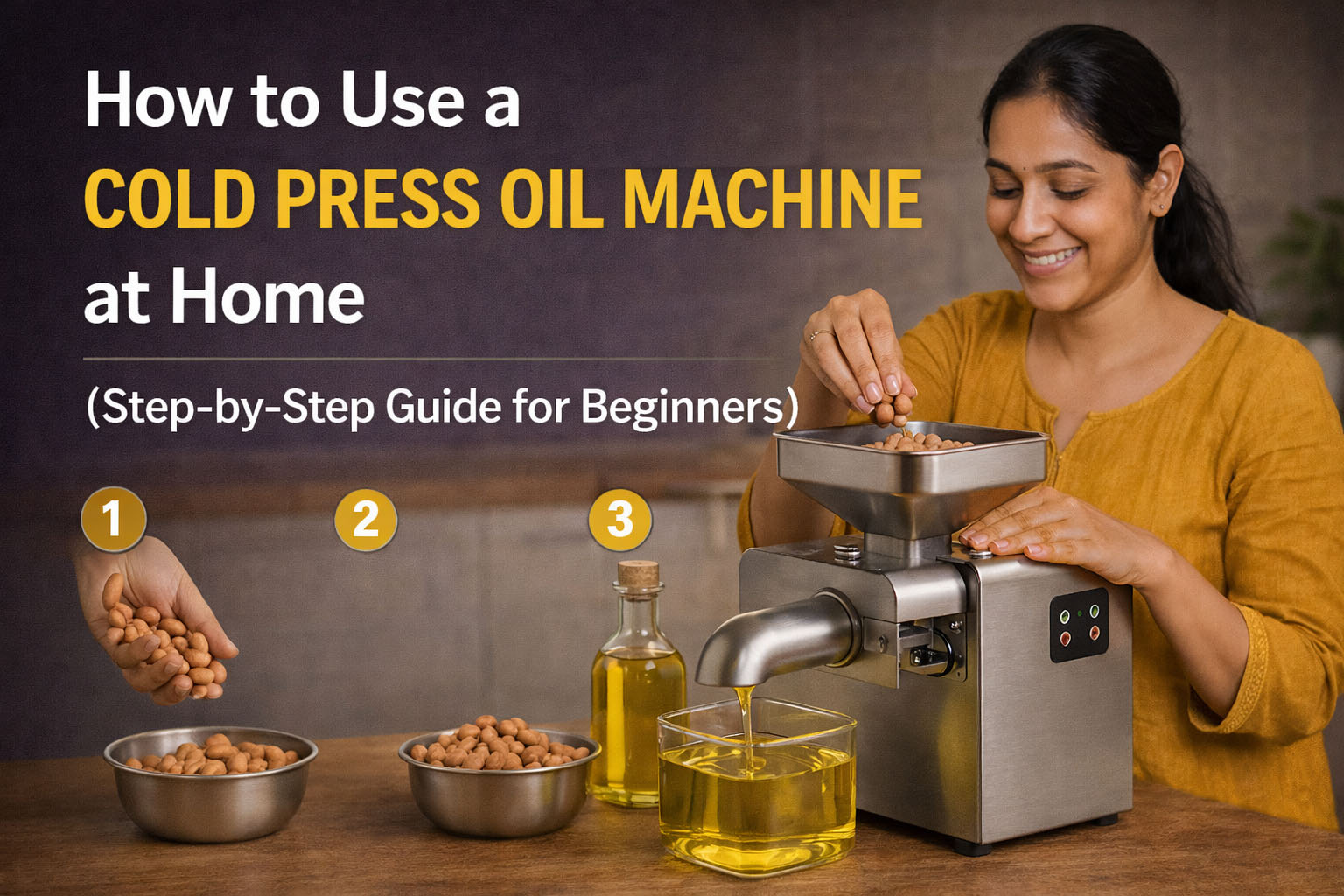
In recent years, more Indian families have started switching to natural, chemical-free cooking oils. The reason is simple — refined oils lose most of their nutrients during industrial processing. That’s where a cold press oil machine for home becomes a game changer. It allows you to extract pure, healthy oil from seeds and nuts right in your kitchen.
If you’ve recently bought one or are planning to, this simple step-by-step guide will help you understand exactly how to use it — safely, efficiently, and confidently.
Also read:[Cold Press Oil Machine for Home – The Complete Beginner’s Guide]
What You’ll Need Before You Begin
Before you press your first batch of oil, get your setup ready. A few simple things can make your experience smoother and cleaner.
Here’s your basic setup checklist:
| Item | Purpose |
|---|---|
| Cold press oil machine | The main appliance — make sure it’s assembled correctly |
| Oil-rich seeds or nuts | Mustard, groundnut, sesame, sunflower, or coconut |
| A clean tray or bowl | To collect fresh oil |
| Waste collector | To collect the leftover seed cake |
| Muslin cloth or filter | For straining the oil |
| Airtight glass bottle | To store the extracted oil |
Pro Tip: Start with groundnuts or sesame seeds. They yield more oil and are easier to process for beginners.
Step-by-Step Process: How to Use a Cold Press Oil Machine for Home
This section walks you through the entire process — from preparing seeds to collecting your first bottle of golden, fresh oil.
Step 1️⃣ – Prepare Your Seeds
Always start with clean, dry seeds.
Remove dust, small stones, or debris. If the seeds are damp, sun-dry them for 30–60 minutes. Moisture reduces oil yield and can cause smoke during pressing.
In Indian climates, especially during monsoon, seeds absorb humidity quickly. Storing them in airtight containers keeps them fresh and ready.
Step 2️⃣ – Assemble the Machine
Most cold press oil machines for home come pre-assembled, but check the manual carefully.
Attach the screw, hopper (top seed feeder), and oil outlet nozzle securely.
Place the waste collector tray under the outlet where seed cake will fall.
Once set up, plug the machine into a stable power source. If your area has voltage fluctuations, use a small stabilizer for safety.
Step 3️⃣ – Preheat (If Your Model Requires It)
Some advanced models like Gorek or EPS recommend a short preheat cycle — around 5 minutes.
This slightly warms the barrel, not to “cook” the oil but to make the pressing smoother, especially for harder seeds like mustard or coconut.
If your machine has a digital display, it will show the ideal temperature automatically.
Step 4️⃣ – Add Seeds to the Hopper
Pour 200–300 grams of seeds at a time.
Avoid overfilling — smaller batches maintain pressure and quality.
The screw inside will slowly crush the seeds, and golden oil will begin flowing out within a few minutes.
The first few drops might appear cloudy. That’s normal — it clears as the pressing continues.
Step 5️⃣ – Collect and Filter the Oil
Place your collection bowl under the outlet spout.
Once the batch finishes, pour the oil through a fine-mesh filter or muslin cloth to remove tiny seed particles.
This ensures the oil stays clear and fresh longer.
If you prefer a stronger flavor, you can skip filtering — it’s a personal choice.
Step 6️⃣ – Handle the Seed Cake
After the process, you’ll find dry, crumbly residue — called seed cake — in the waste tray.
Don’t throw it away! It’s rich in fiber and protein.
You can:
- Use it as compost for your kitchen garden
- Mix it in cattle feed
- Or simply use it as an eco-friendly fertilizer
Step 7️⃣ – Clean the Machine Properly
Once you’ve finished pressing, turn off the machine and unplug it.
Allow it to cool for 10–15 minutes.
Then remove the screw and barrel and clean them with warm water.
Avoid using detergents or submerging the motor part. Just wipe it clean with a dry cloth.
Pro Tip: Clean immediately after every use — once the oil dries, it’s harder to remove.
🔄 How Often Should You Use the Machine?
Most Indian families use their machine once or twice a week.
If you consume around 3–4 litres of oil monthly, that’s perfect. Pressing smaller batches keeps your oil fresher and more aromatic.
Machines like Savaliya or Vishvas can run 30–45 minutes continuously, so one session a week usually covers an entire family’s needs.
💧 Oil Yield from Common Indian Seeds
To set the right expectations, here’s a simple reference chart for how much oil you can expect per kilogram of seeds.
| Seed Type | Approximate Oil Yield | Notes |
|---|---|---|
| Groundnut | 400 ml | Rich, nutty aroma, ideal for frying |
| Sesame (Til) | 300 ml | Strong aroma, perfect for chutneys |
| Sunflower | 350 ml | Light and smooth for everyday cooking |
| Mustard | 350 ml | Pungent, preferred in North & East India |
| Coconut (Copra) | 300 ml | Sweet aroma, great for Kerala dishes & hair oil |
Cleaning and Maintenance Made Simple
Cleaning your machine regularly ensures longer life and better oil quality.
After every use:
- Wipe the motor body with a soft cloth.
- Wash the barrel and screw in warm water.
- Dry thoroughly before reassembly.
Weekly tip:
Run an “empty press” for 30 seconds — it clears leftover oil residue.
Also read: [Cleaning and Maintaining Your Cold Press Oil Machine for Home]
⚠️ Common Mistakes to Avoid
Even simple mistakes can affect oil yield and machine life. Watch out for these:
- Using wet seeds → causes smoke and low yield.
- Running machine too long → overheats the motor.
- Not cleaning after use → leads to clogging and bad smell.
- Mixing seeds → changes oil flavor unpredictably.
- Ignoring preheat instructions → reduces extraction efficiency.
Real-Life Example – One Week Practice Plan
To help you get comfortable, here’s a simple 7-day starter schedule:
| Day | Task | Goal |
|---|---|---|
| 1 | Unbox and test-run empty | Learn assembly |
| 2 | Press groundnuts | Understand oil flow |
| 3 | Clean and reassemble | Practice maintenance |
| 4 | Try sesame seeds | Compare yield and aroma |
| 5 | Store first batch in glass bottle | Learn filtration & storage |
| 6 | Press coconut | Try a harder seed |
| 7 | Review noise, yield, and comfort | Build confidence |
FAQ – Common Questions About Using a Cold Press Oil Machine at Home
Q1. Can I use one machine for multiple oils?
Yes, just clean the chamber after each type to avoid mixing aromas.
Q2. How long does the process take?
Typically 20–30 minutes per batch, depending on seed hardness.
Q3. Do I need to add heat manually?
No. The machine’s internal motor and pressure generate mild warmth naturally.
Q4. What do I do if the machine stops mid-way?
Turn it off, wait 10 minutes to cool, and restart. Most models have overheating protection.
Q5. How do I store fresh oil?
Use dark glass bottles, store in a cool, dry place, and finish within 3–6 months.
Conclusion
Using a cold press oil machine for home is simpler than it looks.
Once you try it a few times, it becomes a quick weekend routine — one that rewards you with pure, aromatic, and nutrient-rich oil every time.
You save money, stay healthier, and rediscover the joy of making something pure at home.
Also read:[How to Choose the Best Cold Press Oil Machine for Home Use]





0 Comments