
Introduction
For generations, sesame oil has added flavour and tradition to Indian kitchens. From Tamil Nadu’s gingelly oil to Bengal’s tiler tel, its aroma is part of our culture. Today, as more families switch to natural cooking, many are turning to a cold press oil machine for home to make pure, chemical-free sesame oil.
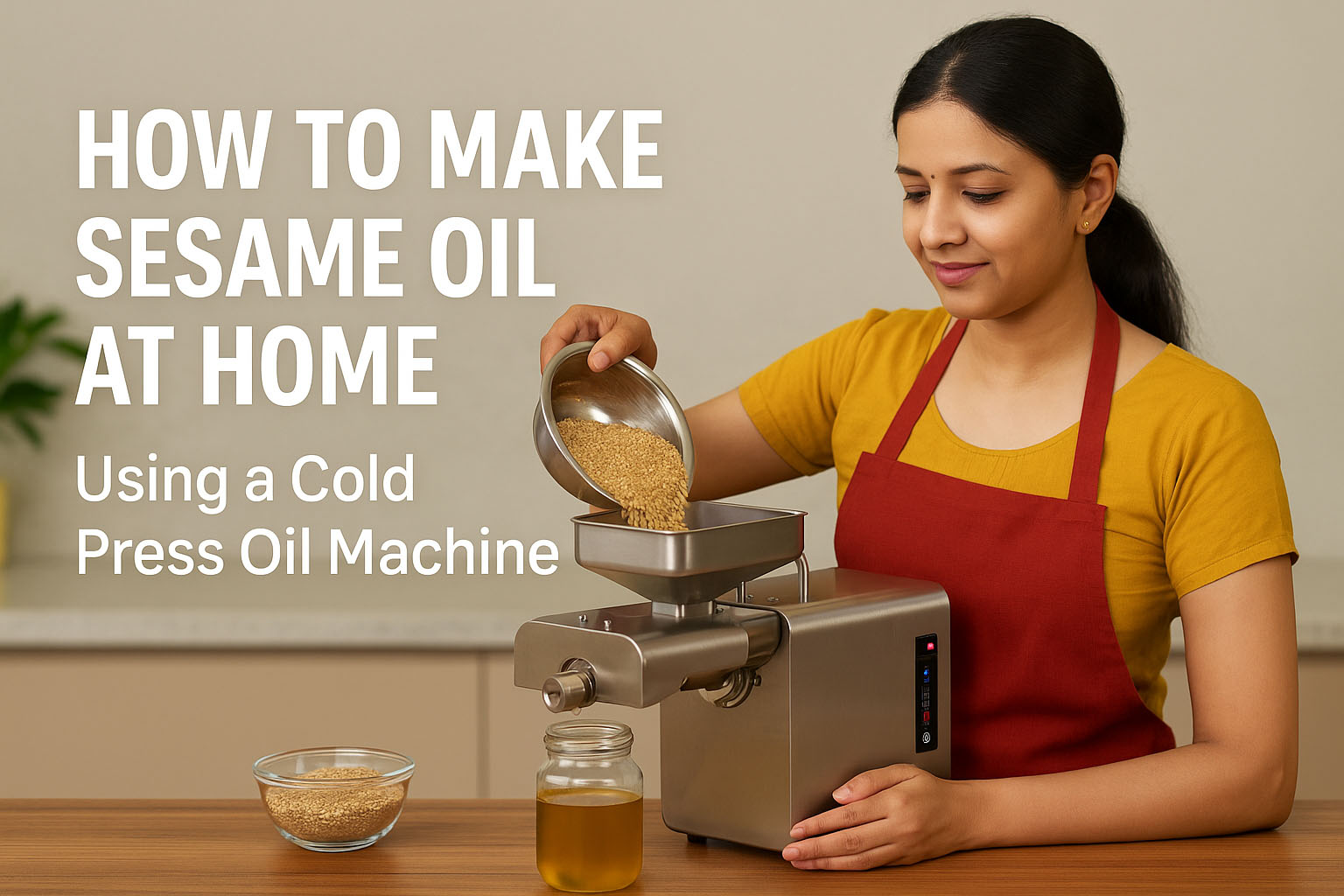
In this guide, you’ll learn how to make sesame oil at home — step by step. You’ll also understand which sesame seeds to use, how much oil to expect, and how to store it safely. Once you try it, you’ll never go back to store-bought bottles.
Also read: [Cold Press Oil Machine for Home – The Complete Beginner’s Guide (2025 Edition)]
Why Sesame Oil Deserves a Place in Every Indian Kitchen
Sesame oil, or til oil, is one of India’s oldest oils. It has deep roots in Ayurveda and Indian cooking. It’s known for its rich aroma, high vitamin E content, and stability even at high heat.
Here’s why Indian households love it:
- It boosts immunity and supports heart health.
- It enhances the taste of pickles, chutneys, and stir-fries.
- It moisturizes skin and hair naturally.
- It stays stable during frying, unlike many refined oils.
Pure sesame oil is golden, aromatic, and nutrient-rich — but only when extracted slowly without heat. That’s where a cold press oil machine for home makes the difference.
Choosing the Right Sesame Seeds
Quality seeds determine oil quality. Always use clean, dry sesame seeds. You can buy them from local markets or organic stores.
Types of Sesame Seeds Common in India:
| Type | Colour | Best Use | Aroma |
| White | Light cream | Cooking, frying | Mild and nutty |
| Black | Dark brown/black | Medicinal, raw use | Strong and earthy |
| Brown | Medium shade | General use | Balanced aroma |
For home oil extraction, white or brown sesame seeds are ideal. They yield more oil and have a pleasant flavour.
Tip: Sun-dry your seeds for 2–3 hours before pressing. It reduces moisture and increases yield.
Also read: [How to Choose the Best Cold Press Oil Machine for Home Use (2025 Buying Guide)]
Step-by-Step Guide: How to Make Sesame Oil at Home
Let’s go through the full process in simple steps you can follow even if it’s your first time.
Step 1: Prepare the Machine
- Place your cold press oil machine on a flat, stable surface.
- Ensure the parts are clean and dry.
- Insert the pressing screw, chamber, and oil outlet tray.
- Plug in the machine and switch it to “preheat” mode (most models take 3–5 minutes).
Pro Tip: For best performance, preheat the machine before adding seeds — it ensures smoother flow.
Step 2: Add Sesame Seeds
- Measure 500 grams of sesame seeds.
- Pour them slowly into the hopper.
- Allow the machine to press at its natural pace.
- You’ll see golden oil dripping into the collecting cup and dry seed cake coming out separately.
Remember: Don’t overload the hopper. Adding seeds gradually maintains steady pressure and prevents motor strain.
Step 3: Filter the Fresh Oil
- Once pressing is complete, turn off the machine.
- Pour the extracted oil through a fine-mesh stainless-steel filter or unbleached muslin cloth.
- This removes tiny seed particles and gives a clean, clear finish.
Tip: Let the oil settle for 4–6 hours before bottling. Sediments naturally sink, and the upper layer stays pure.
Step 4: Store the Oil Properly
- Use dark glass bottles or steel containers to store the oil.
- Avoid plastic containers — they can affect aroma over time.
- Keep bottles away from sunlight and heat.
Storage life:
- In Indian climates, sesame oil stays fresh for up to 6 months if stored properly.
- Refrigeration extends shelf life but can thicken the oil slightly.
Expected Yield: How Much Oil from Sesame Seeds?
Oil yield depends on the quality and dryness of your seeds.
Here’s a quick reference for home machines:
| Quantity of Seeds | Average Oil Output | Cake (By-product) |
| 1 kg | 300–350 ml | 600–650 g |
| 2 kg | 600–700 ml | 1.2–1.3 kg |
| 5 kg | 1.5–1.8 litres | 3.3–3.5 kg |
The remaining seed cake can be used as organic compost or livestock feed — nothing goes to waste.
Cooking Uses of Fresh Sesame Oil
Fresh cold-pressed sesame oil is versatile and deeply flavourful. Try it in:
- South Indian curries and chutneys.
- Pickles like gongura or mango achaar.
- Drizzled over steamed rice with salt and curry leaves.
- Ayurvedic oil pulling for oral hygiene.
- Massage oil for skin and hair nourishment.
Each batch you press at home will have a richer, nuttier flavour than store-bought oils.
Maintenance and Cleaning After Each Use
Cleaning is simple and essential. It keeps the oil pure and the machine efficient.
- Run the machine empty for 30 seconds to clear residue.
- Remove the screw and chamber.
- Rinse with warm water, then dry completely.
- Wipe the outer body with a soft cloth.
Pro Tip: Lightly coat the screw with edible oil before storage to prevent rust.
Cost and Savings: Why Home Extraction Makes Sense
Let’s break down the actual savings for a typical Indian family.
| Item | Market Price | Homemade Cost | Savings |
| 1 litre sesame oil | ₹600 | ₹350 | ₹250 |
| 5 litres/month | ₹3,000 | ₹1,750 | ₹1,250 |
If your cold press oil machine costs ₹15,000, you recover it in just 12–14 months — while enjoying pure, fresh oil daily.
Sustainability & Community Impact
When you make oil at home:
- You reduce plastic waste from disposable bottles.
- You support local farmers by buying seeds directly.
- You encourage healthier family eating habits.
Several Indian communities now share machines and buy seeds in bulk — turning this simple habit into a local sustainability movement.
Conclusion — Pure, Fresh, and Worth It
Learning how to make sesame oil at home using a cold press oil machine is easier than you think. The process is clean, rewarding, and surprisingly quick once you get used to it.
You’ll enjoy oil that smells richer, tastes fresher, and nourishes your family better — all while saving money.
If you haven’t yet invested in a home oil press, it’s the best time to start. With practice, you’ll master the art of pressing your own sesame oil — just like our ancestors did, but with a modern twist.
Also Read: [How to Extract Coconut Oil at Home with a Cold Press Machine]





0 Comments