
Introduction
If you’ve ever wondered how air purifiers work and why people in India increasingly depend on them, this guide is for you. Indoor air quality in Indian homes is affected by dust, PM2.5 pollution, cooking smoke, humidity, mold, traffic emissions, and even cleaning chemicals. Although we cannot control the outdoor AQI, we can control the air we breathe inside our homes.
This post will explain how air purifiers clean the air, how their filters work, and how the entire process protects your lungs. Moreover, you will understand which technologies matter and which features are just marketing gimmicks. By the end, you’ll clearly know whether an air purifier is a smart investment for your home.
Why Indoor Air in India Needs Purification
Most people believe indoor air is cleaner than outdoor air, but several studies show it can be 2–5 times more polluted. In India, this gets even worse because:
- We cook with strong oils that release smoke
- Many homes have poor ventilation
- Dust enters through gaps and windows
- Urban apartments face heavy traffic fumes
- Humid cities experience mold growth
- Winters trap pollution indoors
- PM2.5 levels remain high in metro cities
As a result, indoor air becomes a mix of invisible pollutants. Therefore, understanding how air purifiers work becomes important for every Indian family.
The Science Behind How Air Purifiers Work
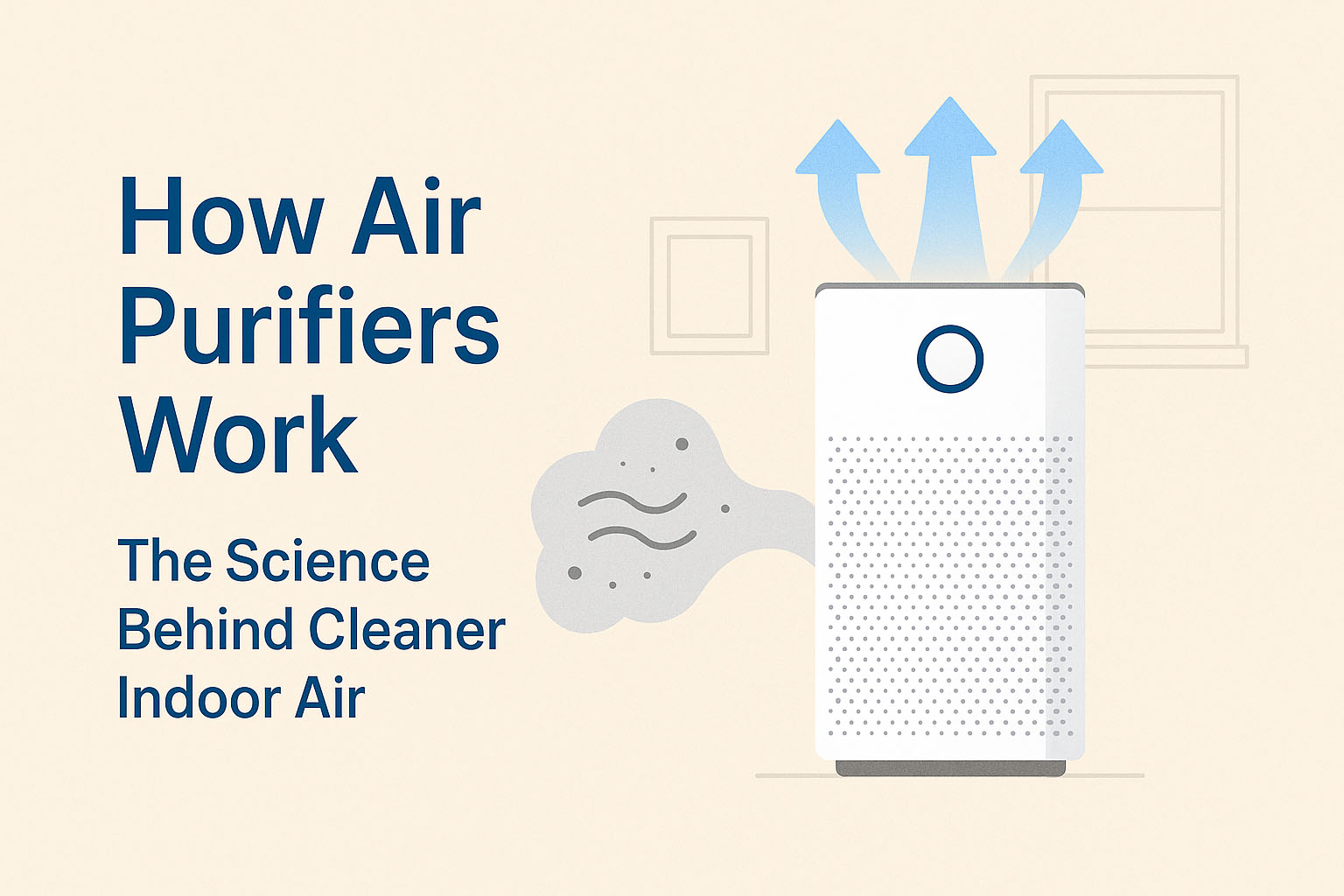
Although air purifiers look simple, the technology inside is powerful. Here’s a breakdown of how they operate.
1. The Fan: Pulling Polluted Air Inside
Every air purifier begins with a motorized fan. It draws polluted indoor air into the machine. This seems simple, yet airflow design influences:
- Noise levels
- Purification speed
- Room coverage
Brands like Coway and Philips are known for smooth, quiet air channels, while premium brands like Dyson add bladeless airflow for comfort.
2. Pre-Filter: Catching Large Dust & Hair
Once air enters the purifier, the pre-filter stops large particles such as:
- Visible dust
- Human or pet hair
- Fabric lint
- Food crumbs
- Large debris
The pre-filter is usually washable. This helps increase the life of deeper filters like HEPA and carbon.
3. HEPA Filter: The Heart of Every Air Purifier
A HEPA filter (High-Efficiency Particulate Air) is the most important part of an air purifier.
How HEPA Works
HEPA filters are made of tightly woven microfibers. They trap:
- PM2.5
- PM10
- Pollen
- Dust mites
- Bacteria
- Pet dander
- Micro-allergens
A true HEPA filter removes 99.97% of particles as small as 0.3 microns. Therefore, HEPA is essential for polluted Indian cities like Delhi, Noida, Gurugram, Mumbai, Kolkata, and Chandigarh.
Why It Matters for India
Indian pollution is heavily PM2.5-based, which means HEPA is not optional — it is mandatory.
4. Activated Carbon Filter: Removing Smoke, Smell & Chemicals
Many Indian homes struggle with:
- Cooking smoke
- Gas stove fumes
- Incense sticks
- Tandoor smell
- Traffic fumes
- Paint chemicals
- Pet odors
This is where activated carbon filters work.
How Carbon Filters Work
Activated carbon contains millions of tiny pores. These pores trap:
- VOCs (volatile organic compounds)
- Gases
- Odours
- Smoke molecules
The more carbon weight, the better the filtration. That’s why Coway, Philips, and Blueair have thicker carbon filters in higher-end models.
The Motor Pushes Clean Air Back Into the Room
After passing through all filters, clean air is released back into the room. A good purifier ensures:
- Even airflow distribution
- Faster cleaning
- Low noise
- Consistent circulation
Dyson uses an Air Multiplier technology to project clean air farther, while Coway focuses on quiet yet efficient airflow.
Understanding Filter Grades and Technologies
To fully understand how air purifiers work, you need to know the different technologies involved.
HEPA Grades Explained
- H11/H12: Basic filtration
- H13: Ideal for Indian homes (99.97% efficiency)
- H14: Medical-grade
Most Indian homes benefit most from H13 filters.
Carbon Filter Types
- Granular Activated Carbon (GAC): Best for VOC removal
- Impregnated Carbon Sheets: Cheaper, weaker
- Thick Honeycomb Carbon: Strong and long-lasting (Coway, Blueair)
If your home experiences smell or smoke problems, choose a purifier with thick, heavy carbon filters.
Ionizers (Optional or Avoidable)
Ionizers release charged ions that make particles fall to the ground. However, cheap ionizers may produce ozone, which is harmful.
Safe brands: Sharp, Philips (limited models)
Avoid low-quality ionizer-only purifiers.
UV Lights (Optional)
Some purifiers use UV-C light to neutralize bacteria. This is helpful but not essential because HEPA already blocks most microbes.
What Happens Inside an Air Purifier (Start-to-End Flow)
Here’s the full process:
- Polluted air enters through the intake.
- Pre-filter traps large dust.
- HEPA filter captures fine particles like PM2.5.
- Carbon filter absorbs gases, odors & chemicals.
- Clean air exits through the outlet.
- Sensors monitor air quality and adjust speed automatically.
This entire process repeats multiple times per hour, improving the indoor AQI steadily.
How Purifiers React to Pollution Automatically
Modern air purifiers include:
- PM2.5 sensors
- VOC sensors
- Gas detectors
- Humidity indicators
They adjust fan speed automatically. For example:
- High PM2.5 triggers turbo mode
- Cooking smoke triggers high airflow
- Chemical cleaners trigger VOC mode
This helps maintain consistent air quality without manual control.
What Air Purifiers Cannot Do
To avoid unrealistic expectations:
❌ They cannot clean outdoor air
Only indoor air is filtered.
❌ They cannot remove CO₂
Ventilation is required.
❌ They cannot work with open windows
Open airflow reduces effectiveness.
❌ They cannot replace cross-ventilation
Fresh air is still important.
Benefits of Using Air Purifiers in Indian Homes
Since you now understand how air purifiers work, here are the real benefits:
- Cleaner indoor air
- Reduced PM2.5 & PM10
- Less dust buildup
- Lower allergy symptoms
- Reduced asthma triggers
- Protection during winter smog
- Better sleep quality
- Safer air for babies and seniors
This is why purifiers have become essential in Indian cities.
Conclusion
Air purifiers use a combination of filters, airflow design, and sensors to remove pollutants and clean indoor air. Now that you understand how air purifiers work, you can decide which technology suits your home best. As indoor pollution continues to rise across India, purifiers have become essential tools for breathing cleaner, healthier air every day.
FAQ Section
Yes. HEPA filters remove up to 99.97% of fine particles.
No. Outdoor air will reduce purifier efficiency.
Run it at least 10–12 hours a day, or 24×7 during high pollution.
Yes, but only if the purifier has a strong activated carbon filter.





0 Comments