
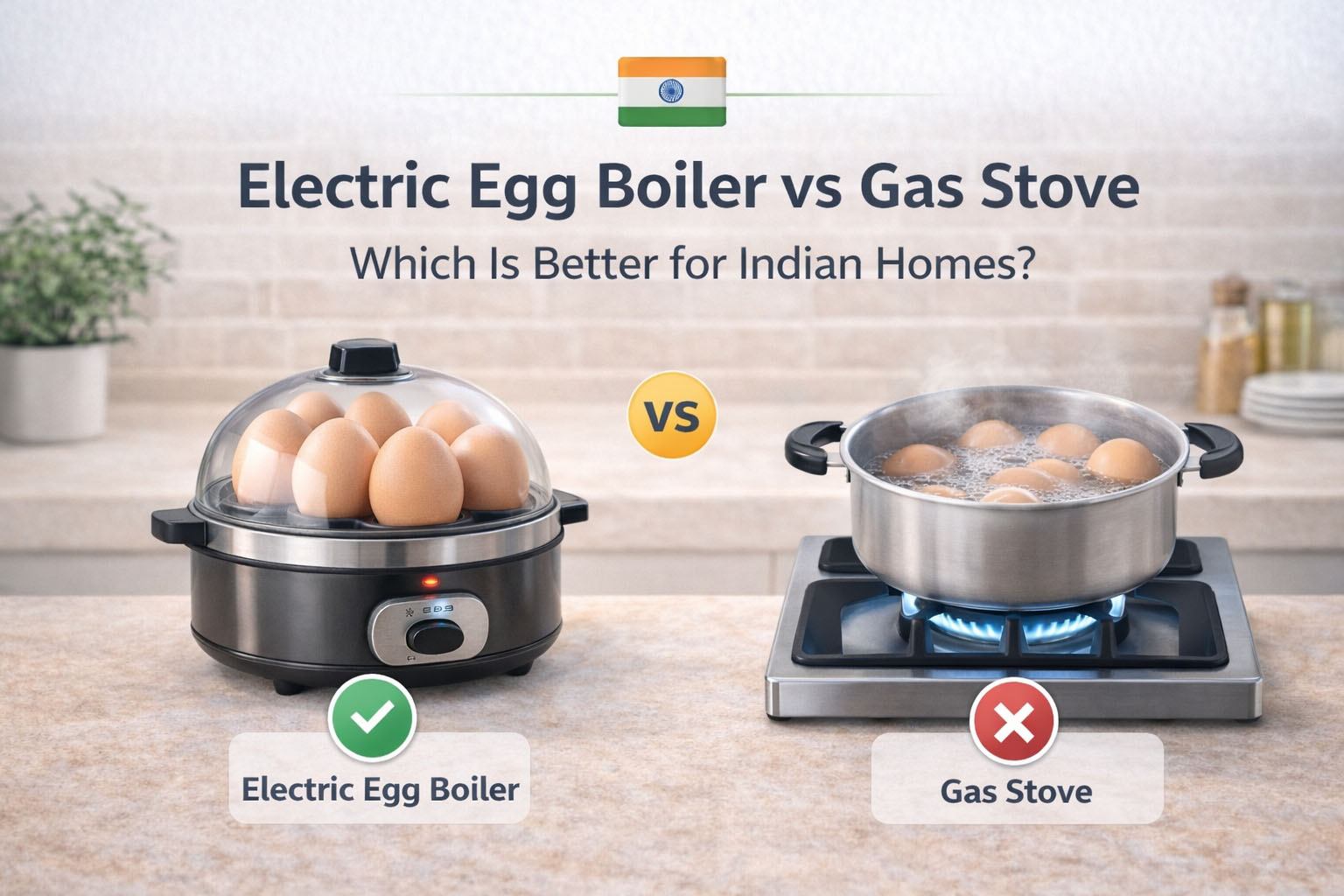
When it comes to boiling eggs, most Indian households still rely on the gas stove. It feels familiar and does the job. However, with changing lifestyles and growing focus on convenience, many people now consider electric egg boilers as an alternative.
This electric egg boiler vs gas stove comparison explains the real differences between the two methods. Instead of assumptions, it focuses on daily usage, consistency, safety, and practicality in Indian kitchens. By the end, you will know which option suits your routine better.
Why This Comparison Matters Today
Eggs are no longer an occasional food item. They are a regular part of breakfast, fitness diets, and quick meals for students and working professionals.
Yet, boiling eggs is often treated as a minor task. In reality, inconsistent boiling, cracked shells, and wasted time are common frustrations. Choosing the right method can make a noticeable difference in everyday cooking.
How Egg Boiling Works on a Gas Stove
Boiling eggs on a gas stove involves placing eggs in water, bringing it to a boil, and manually timing the process.
Advantages of Using a Gas Stove
- No extra appliance needed
- Works in every kitchen
- Easy to control heat manually
Limitations
- Requires constant attention
- Timing errors are common
- Eggs may crack or overcook
- Gas and water usage is higher
For occasional use, this method is acceptable. For frequent use, it can become inconvenient.
How an Electric Egg Boiler Works
An electric egg boiler uses steam-based heating. You add a measured amount of water, place the eggs on a tray, and switch it on. The appliance stops automatically or alerts you when cooking is complete.
Key Advantages
- Consistent results
- No supervision needed
- Clear doneness control
- Less mess
This automated process is the main reason electric egg boilers appeal to modern households.
Electric Egg Boiler vs Gas Stove : Core Differences
| Aspect | Electric Egg Boiler | Gas Stove |
| Supervision | Not required | Required |
| Consistency | Very high | Depends on timing |
| Ease of use | Simple, automated | Manual |
| Safety | Controlled heating | Risk of spills |
| Daily convenience | High | Moderate |
This table highlights why the electric egg boiler vs gas stove debate is more about convenience than capability.
Consistency of Results
Consistency is where electric egg boilers clearly outperform gas stoves.
With a gas stove:
- Slight timing changes affect doneness
- Water levels vary
- Heat control depends on experience
With an electric egg boiler:
- Measured water determines doneness
- Results are repeatable
- Beginners get reliable outcomes
For people who prefer predictable cooking, electric egg boilers offer a clear advantage.
Time and Effort Comparison
Gas Stove
- Needs setup and monitoring
- Requires manual timing
- Cleanup involves utensils
Electric Egg Boiler
- One-time setup
- Hands-free cooking
- Minimal cleaning
Over time, the effort saved becomes noticeable, especially for daily egg consumption.
Safety and Kitchen Comfort
Safety is often overlooked in simple tasks like boiling eggs.
Gas stoves involve:
- Open flame
- Hot water spills
- Steam exposure
Electric egg boilers are enclosed and designed for controlled use. Auto shut-off features reduce the risk of overheating or accidents.
For households with children or elderly members, this added safety matters.
Cost Comparison: Appliance vs Gas Usage
Initial Cost
- Gas stove: Already owned
- Electric egg boiler: One-time purchase
Running Cost
- Gas stove: Ongoing gas usage
- Electric egg boiler: Very low electricity usage
Electric egg boilers typically consume 350W–500W for a few minutes. Over time, the running cost difference is negligible.
Space and Storage Considerations
Gas stoves are fixed appliances. Egg boilers are compact and easy to store.
Most electric egg boilers:
- Fit inside a cabinet
- Occupy minimal counter space
This makes them suitable even for small kitchens.
When a Gas Stove Makes More Sense
A gas stove is sufficient if:
- You boil eggs occasionally
- You prefer manual cooking
- You do not want an extra appliance
For such users, investing in an egg boiler may not be necessary.
When an Electric Egg Boiler Is the Better Choice
An electric egg boiler is worth considering if:
- Eggs are cooked several times a week
- You want consistent doneness
- You follow a fitness or protein-focused diet
- You value convenience and time savings
For these users, the appliance quickly becomes part of the daily routine.
Common Misconceptions About Egg Boilers
“They Are Only for Fitness Enthusiasts”
Egg boilers are useful for anyone who values consistency, not just fitness users.
“They Consume Too Much Electricity”
In reality, power consumption is minimal due to short cooking time.
“They Replace the Gas Stove”
Egg boilers complement the gas stove. They do not replace it.
Which Option Is Better for Indian Homes?
The answer depends on usage frequency.
- Occasional use: Gas stove is enough
- Regular use: Electric egg boiler offers better convenience
Understanding this difference helps avoid unnecessary purchases.
How This Comparison Helps You Decide
This electric egg boiler vs gas stove comparison focuses on practical, real-world factors. It helps you evaluate:
- Your cooking habits
- Time availability
- Need for consistency
Once these are clear, the choice becomes straightforward.
To see how electric egg boilers perform in real Indian households and compare available models, you can refer to our detailed guide on the best egg boiler in India, which breaks down features, pricing, and suitability.
Final Verdict
Both methods can boil eggs, but they serve different needs. Gas stoves offer familiarity and flexibility. Electric egg boilers offer consistency, safety, and convenience.
If egg boiling is a regular task in your kitchen, an electric egg boiler is a practical upgrade. If it is occasional, the gas stove remains sufficient.
The key is choosing what fits your routine, not what feels trendy.





0 Comments