
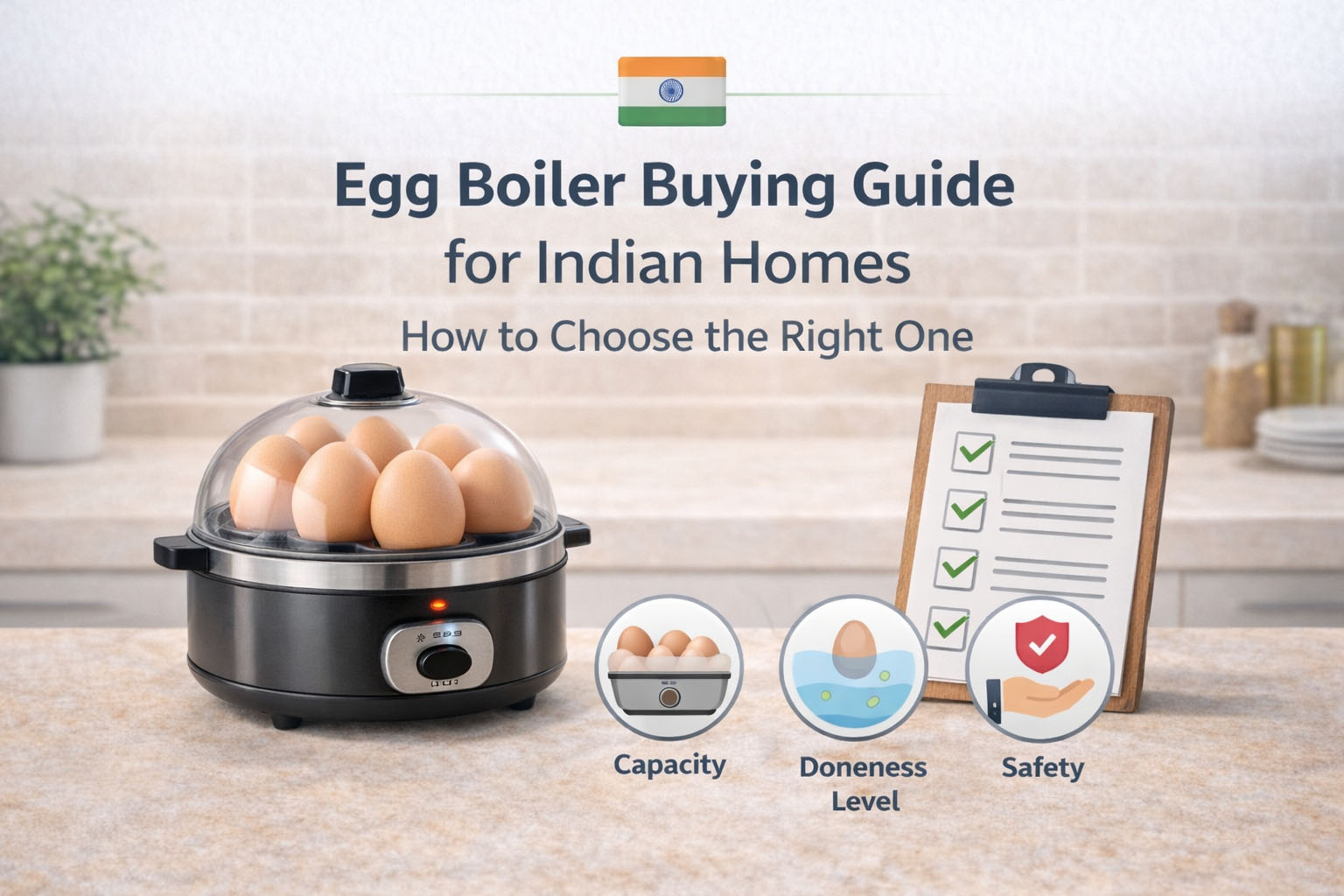
Buying an electric egg boiler may look simple, but many Indian households end up disappointed after a few weeks of use. Eggs crack, results are inconsistent, or the appliance feels unnecessary after the initial excitement fades.
This egg boiler buying guide is designed to help Indian home users choose the right model based on actual usage, not marketing claims. Instead of focusing on brands alone, it explains what features truly matter, how egg boilers fit into Indian kitchens, and when buying one actually makes sense.
Why Egg Boilers Are Becoming Popular in Indian Homes
Egg consumption in India has increased steadily, especially among working professionals, students, and fitness-focused households. Eggs are quick, affordable, and versatile.
However, boiling eggs on a gas stove:
- Requires constant attention
- Often leads to overcooking
- Wastes water and gas
- Produces inconsistent results
Electric egg boilers automate the process. You add water, place eggs, and let the machine handle timing and heat. For many homes, this convenience alone justifies the purchase.
How an Electric Egg Boiler Works
An electric egg boiler uses measured steam heating instead of boiling eggs directly in water. The amount of water you add determines how long the eggs cook.
Once the water evaporates, the appliance automatically stops or alerts you. This prevents overcooking and delivers predictable results.
This method is simple, efficient, and well-suited to everyday home use.
Capacity: How Many Eggs Do You Really Need to Boil?
Most electric egg boilers in India support 6 to 8 eggs per batch.
Choose based on your household:
- 1–2 people: 6 eggs is sufficient
- Families / meal prep: 7–8 eggs is more practical
Buying a higher-capacity model does not significantly increase power consumption, so it often offers better flexibility.
Doneness Control: Soft, Medium, or Hard Boiled Eggs
Good egg boilers allow you to control doneness using a measuring cup or preset modes.
Why this matters:
- Soft-boiled eggs for breakfast
- Medium-boiled eggs for salads
- Hard-boiled eggs for curries or snacks
If an egg boiler does not offer clear doneness control, it limits how useful the appliance is in daily cooking.
Multi-Purpose vs Single-Purpose Egg Boilers
This is an important decision point for Indian buyers.
Single-Purpose Egg Boilers
- Only boil eggs
- Usually cheaper
- Fewer accessories
Multi-Purpose Egg Boilers
- Boil eggs
- Allow poaching
- Support light steaming (vegetables, momos, idlis in some cases)
Multi-purpose models often provide better long-term value, especially for families and fitness users. However, they should only be chosen if the additional functions are genuinely useful, not just listed on the box.
Build Quality and Safety Features to Look For
Since egg boilers deal with heat and steam, safety matters.
Look for:
- Heat-resistant outer body
- Stable base
- Auto shut-off or buzzer
- Secure lid design
Poorly built models may work initially but degrade quickly with regular use.
Cleaning and Maintenance
Egg boilers are generally easy to clean, but some designs are more convenient.
Better designs include:
- Removable egg trays
- Smooth heating plates
- Minimal crevices
Regular descaling using vinegar or lemon water helps maintain performance.
Power Consumption and Electricity Usage
Egg boilers are energy-efficient appliances.
- Typical power range: 350W–500W
- Cooking time: 7–12 minutes
- Electricity usage: negligible for daily use
Energy consumption should not be a deciding factor when choosing an egg boiler.
Is an Egg Boiler Better Than Stove-Top Boiling?
For occasional use, stove-top boiling works fine. But for regular egg consumption, electric egg boilers offer clear advantages:
- Consistent doneness
- Less supervision
- Reduced mess
- Faster preparation
For many households, the convenience outweighs the cost difference.
For a deeper understanding of how these features matter in Indian kitchens, you can also refer to our Electric Egg Boiler vs Gas Stove: Which Is Better for Indian Homes?
Common Mistakes Indian Buyers Make
Buying the Cheapest Model
Low-quality models often fail early or produce inconsistent results.
Ignoring Capacity Needs
Small capacity models become inconvenient for families.
Choosing “Multi-Purpose” Without Real Use
Extra features are useful only if you actually use them.
Avoiding these mistakes ensures better satisfaction.
Who Should Buy an Electric Egg Boiler?
An egg boiler makes sense if you:
- Eat eggs regularly
- Prefer consistent results
- Want faster breakfast prep
- Follow a fitness or protein-rich diet
If eggs are an occasional item in your kitchen, a basic model is sufficient.
How This Guide Helps You Choose Better
This egg boiler buying guide focuses on practical decision-making, not promotional hype. It helps you:
- Understand what features matter
- Match products to your routine
- Avoid unnecessary spending
Once you know what to look for, choosing becomes much easier.
To see how these factors apply to real products available in India, you can refer to our detailed comparison of the best egg boiler in India, which evaluates actual models based on pricing, features, and usability.
Final Thoughts
An electric egg boiler is a small appliance, but the right choice can improve daily cooking convenience significantly. The key is choosing a model that fits how often you cook eggs and what you expect from the appliance.
This egg boiler buying guide is meant to help Indian households make an informed decision without confusion. Focus on capacity, doneness control, and build quality, and you are unlikely to regret the purchase.





0 Comments