
Introduction
A compost maker at home sounds like a simple solution to kitchen waste, but many Indian households end up confused after buying the wrong type. Some expect instant compost. Others struggle with smell, space, or daily maintenance.
This guide explains what a compost maker really is, the types available in India, their costs, and which options actually work for home kitchens. The goal is clarity—so you choose a solution that fits your lifestyle, not just your intentions.
What Is a Compost Maker at Home?
A compost maker at home is a system that helps convert daily kitchen waste into usable compost. This waste usually includes vegetable peels, fruit scraps, coffee grounds, and leftover food.
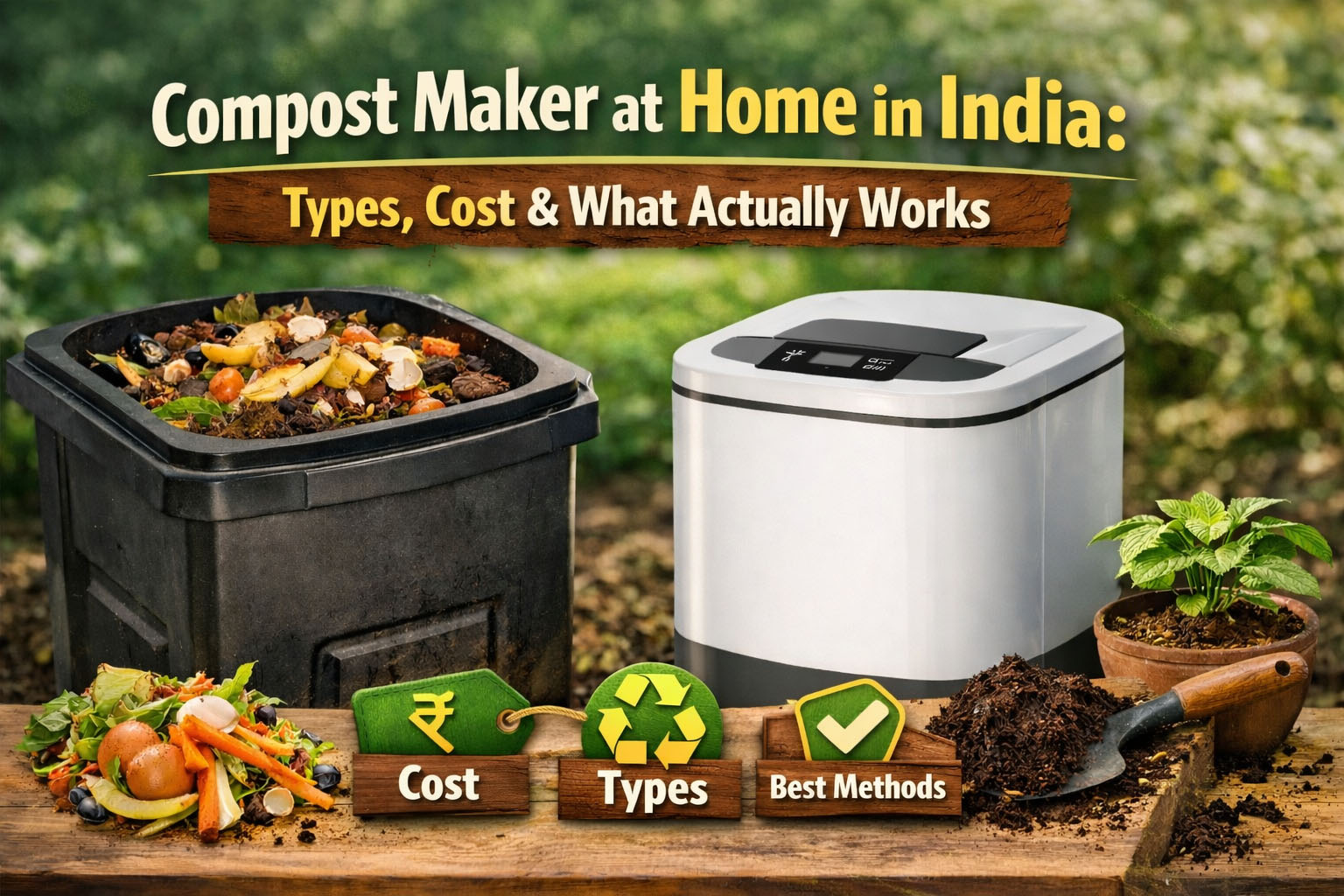
In Indian homes, compost makers generally fall into two broad categories:
- Manual compost bins
- Electric compost makers
Each works differently and suits different households. Understanding this difference is critical before spending money.
Why More Indian Homes Are Considering Composting
Urban Indian households generate a large amount of wet waste every day. With limited garbage segregation and rising awareness, many families want an at-home solution instead of relying only on municipal collection.
Common reasons people explore composting include:
- Reducing kitchen waste
- Avoiding foul-smelling dustbins
- Using compost for home plants
- Adopting a more sustainable lifestyle
However, good intentions alone are not enough. The system must be practical for daily use.
Types of Compost Makers for Home Use
Not all compost makers work the same way. Choosing the wrong type is the most common mistake.
Manual Compost Bins
Manual compost bins are the most traditional option. These include plastic bins, clay pots, or specially designed containers for kitchens or balconies.
How they work:
- Kitchen waste is added daily
- Dry waste or composting medium is mixed in
- The compost forms naturally over time
Pros:
- Low cost
- No electricity required
- Simple design
Cons:
- Takes weeks to form compost
- Requires regular mixing
- Can smell if mismanaged
Manual bins are often called kitchen compost makers, indoor compost bins, or compost bins in the kitchen, but they all work on the same basic principle.
Electric Compost Makers
Electric compost makers are appliance-based solutions designed for faster processing.
How they work:
- Use heat, agitation, and airflow
- Reduce food waste volume significantly
- Speed up drying and decomposition
Pros:
- Faster than manual bins
- Cleaner operation
- Less odour when used correctly
Cons:
- Higher upfront cost
- Requires electricity
- Still needs basic cleaning
Many buyers looking for convenience eventually gravitate toward electric compost makers, especially in apartments.
Compost Maker for Home: What Actually Works in Indian Kitchens
The right choice depends on space, time, and tolerance for maintenance.
For Indian kitchens:
- Small apartments benefit from compact systems
- Daily cooking creates frequent wet waste
- Heat and humidity affect composting speed
Manual compost bins work best when:
- You have patience
- You can manage segregation carefully
- You are comfortable with basic composting routines
Electric compost makers work better when:
- You want faster results
- You prefer appliance-style convenience
- You want minimal smell in closed kitchens
There is no universal “best” option—only what fits your routine.
Cost of Compost Makers in India
Understanding cost helps set realistic expectations.
Manual Compost Bins
- Generally affordable
- One-time purchase
- Low running cost
These are suitable for beginners but require consistency.
Electric Compost Makers
- Higher upfront investment
- Low ongoing electricity cost
- Lower daily effort
While the price difference is noticeable, many users see electric models as a convenience upgrade, not a necessity.
Space & Placement Considerations
Before choosing a compost maker at home, consider where it will be placed.
Common placement options include:
- Under the kitchen counter
- Balcony corner
- Utility area
Important factors:
- Ventilation
- Ease of access
- Distance from cooking area
Poor placement often leads to dissatisfaction, even with a good product.
Smell, Hygiene & Common Concerns
Smell is the biggest fear among first-time users.
In reality:
- Smell usually comes from excess moisture or poor segregation
- Proper balance prevents odour
- Regular emptying and cleaning matter more than the type of bin
Using the compost maker correctly is more important than the brand or price.
Who Should Use a Compost Maker at Home?
A compost maker makes sense if:
- You cook daily
- You want to reduce wet waste
- You have basic discipline with segregation
- You prefer an organised kitchen setup
It may not suit households where:
- Waste segregation is inconsistent
- Space is extremely limited
- Daily maintenance is not possible
Being honest about habits avoids regret.
Compost Maker at Home vs Traditional Waste Disposal
Many households wonder if composting is worth the effort.
Compared to regular disposal:
- Composting reduces garbage volume
- It lowers dependency on daily collection
- It creates something usable instead of waste
However, it should be viewed as a supporting habit, not a perfect solution to all waste problems.
Common Mistakes First-Time Users Make
Avoid these common errors:
- Adding non-compostable waste
- Ignoring dry-to-wet waste balance
- Expecting instant compost
- Overfilling the bin
Most problems come from expectations, not the system itself.
What to Do Next
If you are considering a compost maker at home, the next step is understanding whether a manual bin or an electric compost maker for home suits your lifestyle better.
A detailed comparison of electric compost makers for Indian kitchens, including which ones are practical and which to avoid, will help you decide confidently.
Conclusion
A compost maker at home can be a useful addition to Indian kitchens—but only when chosen thoughtfully. Understanding the types, costs, and daily effort involved matters far more than following trends.
When expectations are realistic, composting becomes manageable, clean, and genuinely helpful rather than frustrating.





0 Comments