
Introduction
For many Indian households, groundnut oil is the heart of traditional cooking — from crunchy pakoras in Gujarat to spicy curries in Tamil Nadu. But store-bought groundnut oil today often loses its true aroma and nutrients due to refining and chemical processing. That’s why more families are turning toward cold pressing groundnut oil at home — a simple, healthy way to make pure oil using a compact cold press machine.
When you extract groundnut oil at home, you control everything — from the quality of peanuts to the freshness of oil. There’s no mixing, no preservatives, and no hidden additives. In this detailed guide, we’ll walk you through everything you need to know about cold pressing groundnut oil — including yield, taste, benefits, and the best ways to store it safely.
What Is Cold Pressing Groundnut Oil?
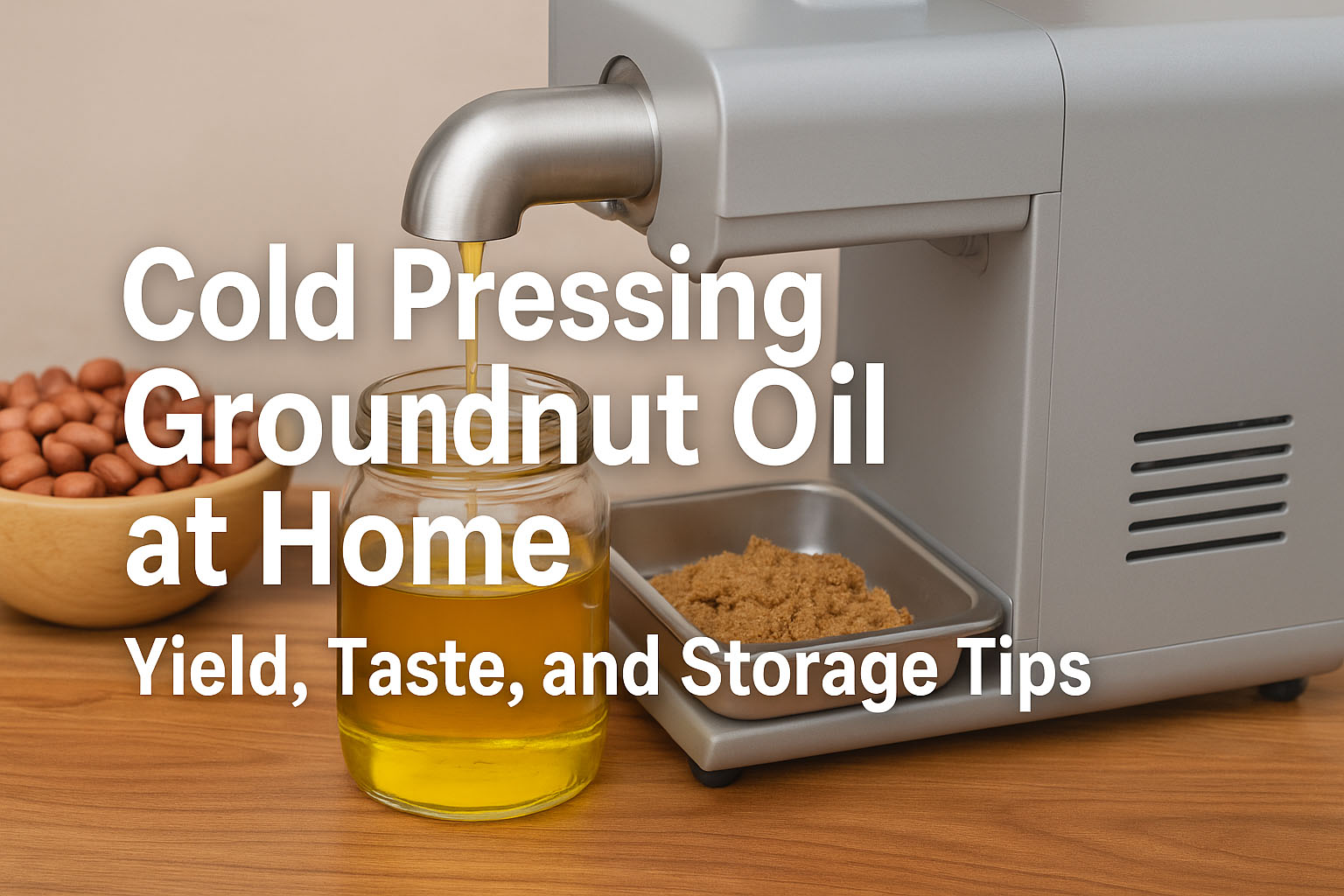
Cold pressing is a natural extraction method that uses mechanical pressure instead of heat or chemicals. Inside the cold press oil machine, the peanuts are crushed slowly by a screw press (called a worm). As the pressure increases, oil separates from the peanut paste and flows out through a filter.
Because the process happens below 45°C, nutrients like vitamin E, antioxidants, and unsaturated fats remain intact. You get an oil that’s golden, aromatic, and rich in heart-healthy compounds — far superior to refined or hot-pressed oils.
| Type | Extraction Method | Temperature | Nutrient Retention | Aroma |
| Refined Oil | Heat + Solvent | ~200°C | Low | Neutral |
| Hot-Pressed Oil | High Heat | 70–100°C | Moderate | Mild |
| Cold-Pressed Oil | Mechanical Pressure | <45°C | High | Strong, Natural |
In short — cold-pressed groundnut oil is pure, flavorful, and close to what our grandparents made using wooden ghani machines.
Choosing the Right Machine for Groundnut Oil
To make groundnut oil efficiently, the right cold press oil machine matters. Groundnuts are harder than sesame or sunflower seeds, so your machine must have enough power and build quality.
Ideal Machine Features for Peanuts:
- Motor power: 600–700 W minimum
- Material: Food-grade stainless steel (SS 304)
- Noise level: Below 60 dB
- Output: 1 litre oil per 2.5–3 kg peanuts
- Warranty: At least 1 year
Popular Brands in India (2025):
- Gorek Technologies: Known for 600W home-use models with solid yield performance.
- EPS Eco Smart: Offers consistent temperature control and durability.
- Savaliya Industries: Budget-friendly and beginner-compatible stainless-steel units.
If your family uses around 3–4 litres of oil monthly, a mid-range 650W machine is perfect. It can handle both groundnuts and other seeds like sesame or sunflower.
Preparing Peanuts for Cold Pressing
The secret to high yield lies in preparation. Even a high-end machine won’t extract well if the seeds are damp or unclean.
Step-by-Step Preparation:
- Select good quality peanuts:
Choose whole, unbroken peanuts. Avoid moldy or damaged ones. - Dry them properly:
Spread them under sunlight for 2–3 hours to remove moisture. - Deshell (optional):
While most machines crush shelled peanuts easily, removing shells increases yield slightly. - Cool before pressing:
Warm seeds may produce more oil but can alter flavor. Keep them at room temperature.
Pro Tip : If your groundnuts feel slightly oily to touch, they’re perfect for pressing. Too dry, and yield drops; too wet, and the oil becomes cloudy.
Step-by-Step: Cold Pressing Groundnut Oil at Home
Now let’s extract your first batch of golden, aromatic oil.
- Setup the machine:
Place it on a stable countertop. Check that the oil outlet and waste collector are clean. - Preheat slightly (if your model supports it):
Some automatic machines allow a mild preheat to help seed flow — not more than 5 minutes. - Add peanuts gradually:
Pour 300–500 grams at a time for uniform pressure. - Collect oil:
Oil begins to flow in about 3–5 minutes. The remaining seed cake exits separately. - Filter the oil:
Use a fine mesh or unbleached muslin cloth to remove fine particles. - Cool and store:
Let it rest for 24 hours before sealing in bottles. This helps natural sediment settle at the bottom.
That’s it — you’ve made your own fresh, preservative-free groundnut oil in under an hour!
Yield and Efficiency — What to Expect
Oil yield depends on peanut quality, moisture, and machine efficiency. On average:
| Input | Output | Seed Cake |
| 1 kg peanuts | 400 ml oil | 600 g residue |
| 2.5 kg peanuts | ~1 litre oil | 1.5 kg residue |
High-quality peanuts with 45–50% oil content produce better yield. If you get less oil, check seed dryness or reduce batch size slightly.
Tip: You can reuse the seed cake as compost or as cattle feed — nothing goes to waste.
Taste and Aroma: Why Homemade Is Different
Cold-pressed groundnut oil has a deep golden color, nutty aroma, and rich flavor that enhances Indian dishes naturally.
- For frying: It holds steady up to 160–170°C without breaking down.
- For tadka: Adds strong, earthy fragrance to dals and sabzis.
- For salads or chutneys: Blends perfectly without leaving greasy residue.
Because it’s not refined or bleached, the oil has a fuller taste — many users say it “smells like authentic Indian kitchens from childhood.”
If your oil smells burnt or too smoky, the seeds may have been overheated or damp during pressing.
Storage Tips for Fresh Groundnut Oil
Cold-pressed oils have no preservatives, so proper storage is key.
Best Practices:
- Use dark glass or stainless-steel bottles to block sunlight.
- Keep bottles in a cool, dry cabinet away from the stove.
- Do not refrigerate — it causes thickening.
- Always use a clean, dry spoon to pour oil.
- Label each bottle with date and seed type.
When stored correctly, homemade groundnut oil lasts 3–4 months easily, retaining its aroma and quality.
Pro Tip
If your kitchen is very humid, drop a small piece of dried clove into the bottle — it naturally delays rancidity.
Cost and Savings Breakdown
Let’s see how cost-effective it is to make groundnut oil at home.
| Item | Market Price | Home Extraction |
| 1 kg peanuts | ₹120 | ₹120 |
| Yield per litre | ~2.5 kg peanuts | ₹300 |
| Branded cold-pressed oil | ₹550–₹600/litre | — |
| Savings per litre | — | ₹250–₹300 |
Even after including electricity (₹3–₹5 per batch), you save around ₹1,000 per month if your family uses 4 litres of oil.
Your machine pays for itself within 12–15 months — plus, you enjoy fresher and healthier oil every day.
Common Mistakes to Avoid
- Using raw or damp peanuts: Causes foamy oil and poor yield.
- Running the machine continuously: Overheats the motor. Always rest 15 minutes between cycles.
- Ignoring cleaning: Residue build-up spoils oil flavor.
- Mixing seeds: Press one type at a time for best results.
- Skipping filtration: Makes the oil cloudy and shortens shelf life.
Health Benefits of Cold-Pressed Groundnut Oil
Cold-pressed groundnut oil is rich in monounsaturated fats (MUFA), vitamin E, and plant sterols — all linked to better heart health.
Key Benefits:
- Boosts heart health by lowering bad cholesterol (LDL).
- Protects cells from oxidative stress.
- Supports healthy skin and hair due to vitamin E.
- Enhances metabolism and improves taste balance in food.
Doctors often recommend groundnut oil as a balanced cooking oil — perfect for both frying and low-heat cooking in Indian homes.
Conclusion — Pure Flavor, Real Savings, and Better Health
Cold pressing groundnut oil at home is more than a kitchen trend — it’s a return to India’s roots of purity and wellness. You get oil that smells rich, tastes authentic, and saves you money every month.
All you need is good peanuts, the right machine, and a little consistency. Once you experience the aroma of your own freshly pressed groundnut oil, you’ll never look back at supermarket bottles again.
Next Read: [Cold Press Oil Machine for Home: The Complete Beginner’s Guide (2025 Edition)]





0 Comments