
Introduction
In every Indian kitchen, oil is the heart of cooking. From frying pooris to tempering dal, we use it daily. But have you ever wondered about cold pressed oil shelf life and storage.
Unlike refined oils, which are packed with preservatives, cold pressed oils are pure and chemical-free. That’s what makes them healthier — but it also means they have a shorter shelf life. The good news? With proper storage, you can keep them fresh for months without losing flavour or nutrition.
In this guide, you’ll learn everything about cold pressed oil shelf life, how to store different oils, and a few easy tips to make
your homemade oils last longer.
Why Cold Pressed Oils Have a Shorter Shelf Life
Cold pressed oils are made by pressing seeds and nuts without heat. This preserves nutrients but also keeps natural enzymes active. Over time, these enzymes react with oxygen, light, and moisture, causing the oil to turn rancid.
Here’s what usually affects shelf life the most:
- Air exposure – triggers oxidation, making oil smell stale.
- Light – breaks down fatty acids and reduces antioxidants.
- Heat – accelerates spoilage and changes flavour.
- Moisture – causes cloudy texture and microbial growth.
That’s why correct storage is as important as pressing the oil itself.
Average Shelf Life of Popular Cold Pressed Oils
Different oils have different natural lifespans. Here’s a quick reference for Indian households:
| Oil Type | Average Shelf Life | Storage Tips |
| Groundnut Oil | 6–8 months | Keep in a cool, dark cupboard |
| Coconut Oil | 9–12 months | Store in airtight glass jars |
| Sesame Oil | 6 months | Avoid sunlight; use amber bottles |
| Mustard Oil | 6–9 months | Keep sealed and away from spices |
| Sunflower Oil | 4–6 months | Best refrigerated after opening |
| Flaxseed Oil | 2–3 months | Always refrigerate; very delicate |
These numbers are for well-pressed, filtered, and stored oils. If moisture gets in, reduce expectations by 20–30%.
Ideal Storage Conditions for Longer Shelf Life
Let’s break down how to keep your oil fresh naturally.
1️⃣ Store in Airtight Containers
Air is the number one enemy of oil freshness. Always store oils in tightly sealed containers.
Best options:
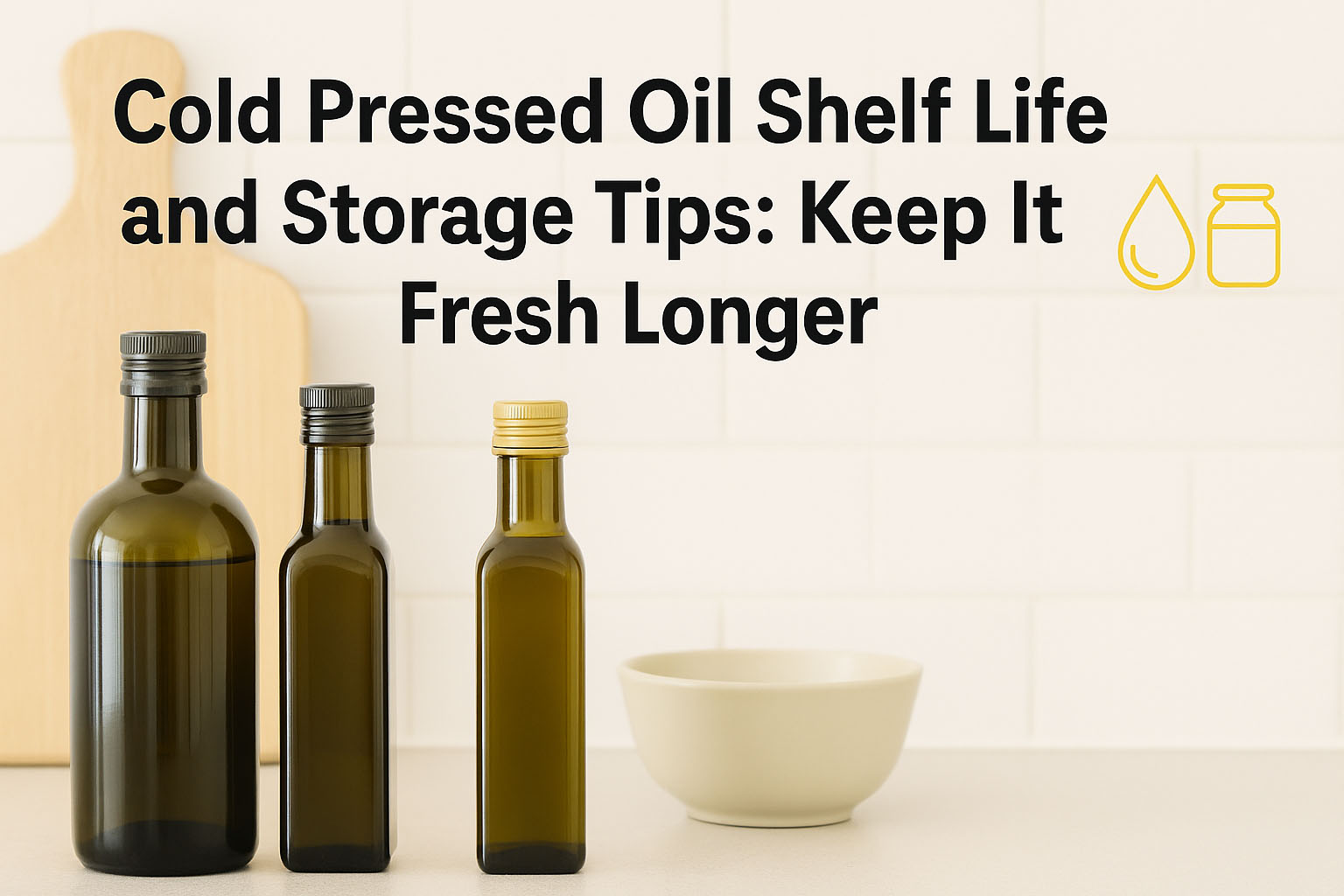
- Dark glass bottles (brown or green)
- Stainless steel jars (for bulk storage)
Avoid: - Plastic bottles — they react with oils over time.
- Aluminium containers — may alter taste.
2️⃣ Keep Away from Light and Heat
Store oil in a dark cupboard or pantry, not near your gas stove or window. Even small exposure to sunlight can speed up oxidation.
Pro tip: Wrap clear bottles with brown paper or use tinted glass.
3️⃣ Maintain Stable Temperature
Temperature swings — like going from cool nights to hot afternoons — can ruin your oil faster. The ideal range for most cold pressed oils is 18–24°C.
In hotter Indian cities like Chennai or Hyderabad, refrigeration is recommended, especially during summer.
4️⃣ Avoid Moisture
Always use a dry spoon when pouring oil for cooking. Even a drop of water can cause bacterial growth.
Filtering Makes a Big Difference
Unfiltered oil often contains tiny seed particles that continue to decompose after pressing. Filtering removes them and extends shelf life.
You can use:
- Fine mesh strainer (300-micron) for initial filtering.
- Muslin cloth for final purification.
After filtering, let the oil rest for 24 hours before sealing it for storage. This step alone can add two extra months to shelf life.
Signs Your Cold Pressed Oil Has Gone Bad
It’s easy to spot spoilage if you know what to look for.
- Smell – turns sour, like paint or old nuts.
- Taste – loses freshness and becomes bitter.
- Texture – feels sticky or thick.
- Colour – becomes darker than usual.
Never use rancid oil for cooking or skincare. It can cause digestion issues and skin irritation.
Easy Tricks to Keep Oil Fresh Longer
Here are small but powerful tricks that make a big difference:
1️⃣ Buy or press oil in small batches — enough for 1–2 months.
2️⃣ Label bottles with the date of pressing.
3️⃣ Keep a separate bottle for daily use and store the rest sealed.
4️⃣ Add a small piece of dry turmeric in mustard or sesame oil (acts as a natural preservative).
5️⃣ Never leave the bottle open while cooking.
6️⃣ Avoid clear glass near kitchen lights or gas flames.
These old-fashioned habits, still used in South Indian households, can double your oil’s freshness.
How Storage Impacts Taste and Nutrition
Every time oil oxidizes, it loses antioxidants, vitamins E and K, and healthy fatty acids. Properly stored cold pressed oil not only smells better but also retains its:
- Rich golden colour
- Distinct nutty aroma
- High smoke point
This is especially important for cold pressed mustard, groundnut, and sesame oils, which are commonly used in Indian frying and sautéing.
When stored correctly, these oils maintain 90% of their original nutrients even after 6 months.
Bonus: How to Reuse or Repurpose Old Cold Pressed Oils
If you find oil nearing its expiry date, don’t throw it away immediately. You can still use it in smart ways:
- As a hair oil or massage oil (if it smells fine).
- As a natural polish for wooden kitchenware.
- Mix with coconut oil for DIY soap or moisturizer.
This reduces waste and ensures you get the most value from every drop.
Conclusion
Pure cold pressed oils deserve proper care — they’re natural, healthy, and free from preservatives. But that also means they need mindful storage.
Remember these golden rules:
- Filter before storing.
- Keep in airtight, dark bottles.
- Avoid sunlight and moisture.
- Make small batches often.
With these tips for cold pressed oil shelf life and storage will easily extend by several months — keeping your kitchen fragrant and your meals full of natural goodness.
Next Read: [How to Use a Cold Press Oil Machine at Home: Step-by-Step Guide for Beginners]
Related: [Cold Pressed Oils vs Refined Oils: Why Home Extraction Is Better]





0 Comments