
Introduction
This guide includes the latest machine pricing, seed yield data, and electricity cost considerations for Indian households.
A cold press oil machine for home has become increasingly important for Indian households. Oil is a daily part of every kitchen. We use it to fry breakfast snacks, roast vegetables, and make traditional dishes that remind us of home. Yet few people stop to ask: what exactly is in the oil we use? Most commercial oils on store shelves are refined, processed, and chemically treated to last longer. Refining may improve appearance, but it often strips away nutrients and natural flavor.
That’s why many households today are switching to cold-pressed oils—pure oils made without heat or chemical treatment. These oils retain their aroma, color, and nutrients exactly as nature intended. Thanks to compact modern appliances, anyone can now produce such oil at home. All you need is a cold press oil machine.
If you’ve never used one before, don’t worry. This guide explains everything step-by-step: how the machine works, what to look for when buying, the best brands available today, and how to care for it. By the end, you’ll know exactly how to make healthy, natural oil in your own kitchen.
What Is a Cold Press Oil Machine?
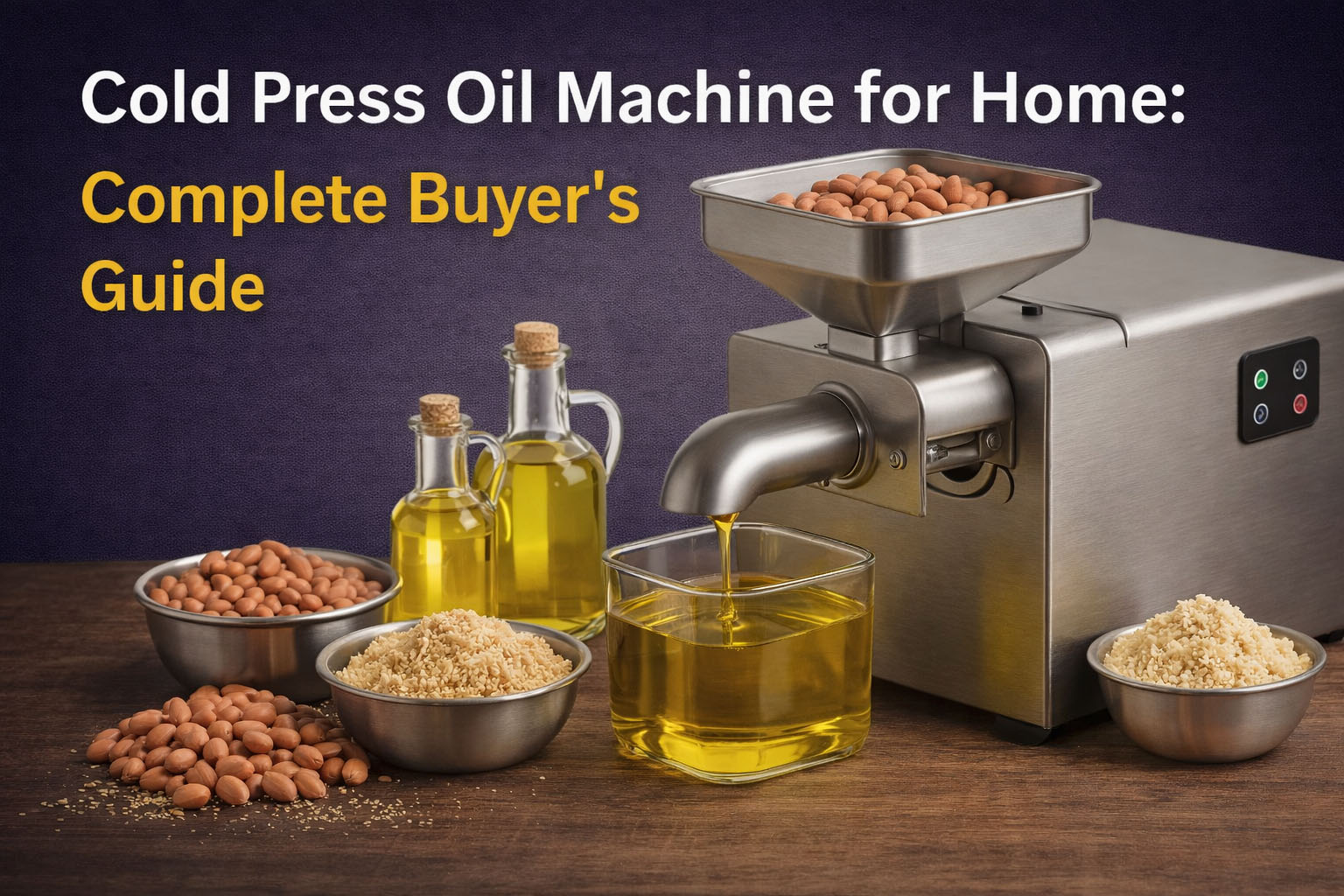
A cold press oil machine (sometimes called an oil expeller) extracts oil from seeds, nuts, or coconuts using slow mechanical pressure rather than heat. Inside the chamber, a screw-type press crushes and squeezes the raw material until oil oozes out. Because friction is gentle, the temperature remains below 45 °C. The result is cold-pressed oil—rich in flavor, color, and nutrition.
A Short History
Cold pressing is not new—it has been part of Indian kitchens for centuries. Ancient farmers used wooden pestles and stone mills to crush sesame or mustard seeds. Over time, metal ghanis replaced stones, and in the 20th century, large hydraulic presses powered by steam appeared. The domestic cold-press machines we use today are a smart evolution of that same principle—miniature, electric, and clean enough for a modern countertop.
Common Seeds Used
You can press many kinds of seeds at home:
- Peanuts
- Sesame
- Sunflower
- Mustard
- Coconut
- Flaxseed
- Almond
- Cashew
Each yields a different aroma and nutrient profile. Coconut gives a sweet, tropical scent. Mustard offers a sharp bite. Flaxseed delivers omega-3 fatty acids. Once you begin experimenting, you’ll quickly discover which oils you prefer for cooking or skin care.
Why Choose a Cold Press Oil Machine for Home in India?
Buying oil from the store may feel convenient, but producing your own is far healthier and surprisingly economical in the long run. Let’s look at why more people are making this switch.
1. Pure and Chemical-Free Oil
Commercial refining involves bleaching and deodorizing to make oil look clear and odorless. These steps remove natural vitamins and antioxidants. When you cold-press at home, you skip all that. You get pure, chemical-free oil whose ingredients you can pronounce.
2. Rich Nutrient Content
Cold pressing keeps delicate compounds intact—vitamin E, omega fatty acids, and plant antioxidants. These support heart health, boost immunity, and even nourish the skin. Because no high heat is involved, nutrients remain stable.
3. Better Taste and Aroma
Refined oils often smell neutral because manufacturers remove the natural aroma. Cold-pressed oil smells like its source seed. Mustard oil carries a strong nutty kick, coconut oil feels sweet, and sesame oil adds earthy depth to stir-fries.
4. Cost-Effective Over Time
A good cold-press machine might cost a little more initially, but it pays for itself within a few months if you use oil regularly. The per-liter cost of homemade cold-pressed oil is much lower than branded bottles labeled “organic” or “virgin.”
5. Control Over Ingredients
You decide which seeds to buy and from where. You can choose pesticide-free or organic produce and know exactly what ends up in your food.
6. Eco-Friendly Choice
The process uses very little electricity and generates almost no waste. The leftover seed cake can serve as compost or animal feed, making the system nearly zero-waste.
How Does a Cold Press Oil Machine For Home Work?
Although the term oil extraction may sound complex, the operation is remarkably straightforward. Understanding how it functions will help you get consistent, high-quality oil every time.
- Seed Preparation – Start by cleaning and drying the seeds. Any moisture left inside can reduce the yield or make the oil cloudy.
- Feeding the Hopper – Pour the dry seeds into the machine’s top container, called the hopper.
- Pressing and Grinding – Inside, a slow-moving screw crushes the seeds. Pressure builds gradually, releasing oil without generating high heat.
- Separation of Oil and Cake – As the mixture moves forward, tiny holes allow oil to escape while the dry pulp—called seed cake—gets pushed out separately.
- Filtration – The fresh oil passes through a mesh filter to remove small particles.
- Collection – The filtered oil drips into a container, ready for bottling or immediate use.
The entire process takes between 20 and 45 minutes depending on the seed type. Because temperatures stay low, the oil maintains its natural color, fragrance, and nutrients.
Types of Cold Press Oil Machines
Cold-press machines for home use fall into three main categories.
1. Manual Press Machines
These work through hand power. You rotate a lever or screw to crush the seeds. Manual models are compact and inexpensive, perfect for small experimental batches.
Pros
- No electricity required
- Portable and low maintenance
Cons
- Physical effort needed
- Limited oil output
2. Automatic Electric Machines
These dominate the market in 2026. You simply add seeds and press start. Sensors manage temperature and pressure automatically.
Pros
- Effortless operation
- Consistent oil quality
- Works with many seed types
Cons
- Slightly costlier
- Needs electricity
3. Semi-Automatic Machines
A mix of both worlds. You feed seeds manually but pressing happens through motor power. They cost less than full automatics and suit medium users.
Top Cold Press Oil Machine Brands for Home in India
Today, the Indian market offers several reliable cold press oil machine brands. Let’s look at a few trusted names and what sets them apart.
Softel Domestic Cold Press Oil Maker 450 W
Softel provides a table-top model with digital temperature control, marketed for seeds like peanuts, almonds, and mustard. While the brand is less known, it’s correct for home use and helps broaden your brand coverage beyond major players.
Use case: first-time buyers and small Indian families pressing 1–2 litres per month.
Check Out: Softel Domestic Cold Press Oil Maker 450 W
Vishvas Oil Maker VI-582TC
Vishvas lists a “Home Use Cold Press Oil Machine / Automatic Oil Press” model that’s compact and intended for multi-seed use. It offers accessible pricing and fills the budget category, making it a solid choice for small households.
Use case: regular Indian families pressing up to 3–4 litres per month.
Check Out: Vishvas Oil Maker VI-582TC
Gorek Technologies
Gorek offers sleek models with efficient energy use. Their 600-watt motors extract high yields from almost any seed while staying compact enough for countertop placement.
Use case: regular Indian families pressing up to 3–4 litres per month.
Check Out: Gorek Technologies Oil Press machines
Savaliya Industries
Savaliya’s machines are compact, stainless-steel, and beginner-friendly. They include clear control buttons, automatic temperature regulation, and easy-to-clean barrels. Ideal for daily home use.
Use case: regular Indian families pressing up to 3–4 litres per month.
For a detailed breakdown of this model, you can read our Savaliya cold press oil machine review, where we test real yield and long-term performance.
Check Out: Savaliya cold press oil maker
EPS (Eco Smart Products)
EPS models are known for durability. Many feature overheating protection and built-in air vents. They handle hard seeds such as coconut with ease and deliver consistent yield.
Use case: joint families, small entrepreneurs, or buyers pressing 5+ litres a month.
Check Out: Eco Smart Products Oil Press Machine
Shreeja Health Care
Shreeja focuses on semi-commercial models that serve both households and small businesses. The strong motors allow long running hours without heating problems.
Use case: joint families, small entrepreneurs, or buyers pressing 5+ litres a month.
Check Out: Shreeja Health Care
Sonar Cold Press Oil Machine SA-2014 (800 W)
Sonar’s 800 W model offers higher power for tougher seeds. This gives you a premium home-user option—perfect for those looking for more capacity or handling hard seeds like mustard and coconut.
Use case: joint families, small entrepreneurs, or buyers pressing 5+ litres a month.
Check Out: Sonar Cold Press Oil Machine SA-2014 (800 W)
If you are confused between these models, our detailed comparison guide helps you choose based on your budget and usage.
Key Features to Look For Before Buying
Buying a cold-press oil machine is similar to buying any long-term appliance. Check these essential points before placing your order.
1.Material Quality
Go for food-grade stainless steel barrels and screws. They resist rust and maintain purity.
2.Motor Power
Choose between 400 and 700 watts. A stronger motor handles dense seeds like coconut or castor with less strain.
3.Capacity
For normal families, a 3–5 kg per hour capacity works well. Heavier users can move up to 8 kg per hour machines.
4.Ease of Use
Prefer simple one-touch operations. Some modern models offer LCD panels showing time, seed mode, and temperature.
5.Noise Level
Look for decibel ratings under 60 dB. Quiet machines make your kitchen experience more pleasant.
6.Cleaning and Maintenance
Machines with removable barrels and built-in brushes are easiest to maintain. Some even have auto-clean cycles.
7.Warranty and Support
A warranty of at least one year is standard. Confirm spare-part availability and customer-service response time.
8.Energy Efficiency
Check wattage against output. A machine that extracts more oil per unit of power saves money long-term.
Step-by-Step Buying Checklist
1.Decide your budget range.
2.Choose between manual, automatic, or semi-automatic.
3.Make a shortlist of brands like Savaliya, EPS, or Sonar.
4.Compare motor power, body material, and capacity.
5.Read a few recent user reviews.
6.Confirm warranty coverage and service network.
7.Place your order from a verified source.
Following these simple steps keeps your purchase safe and ensures years of reliable service.
Seeds You Can Use for Oil Extraction
One of the most enjoyable parts of owning a cold-press oil machine is the freedom to experiment. You can try a wide range of seeds and nuts depending on what kind of oil you need. Below is a simple guide to help you start.
| Seed/Nut | Approx. Oil Yield | Typical Uses | Notes |
| Peanut | 40 % | Cooking, frying, snacks | Light taste, high stability |
| Sesame | 35 % | Salads, stir-fries | Strong nutty aroma |
| Sunflower | 45 % | Everyday cooking | Heart-friendly |
| Coconut | 30 % | Hair, skin, and cooking | Solidifies in cold weather |
| Mustard | 33 % | Indian dishes | Pungent aroma |
| Flaxseed | 25 % | Dressings, health use | Rich in omega-3 |
| Almond | 20 % | Skin care | Expensive but luxurious |
Always choose clean, dry, and fresh seeds. Even slight moisture can reduce oil yield and may clog the screw. If you store seeds, keep them in airtight jars away from sunlight.
How to Use a Cold Press Oil Machine for Home – Step by Step
At first glance, the machine may look technical, but it’s simple once you’ve done it once or twice. Follow these steps for reliable results.
- Clean the Parts
Before each use, check that no residue from earlier pressing remains inside the chamber or filter. - Prepare the Seeds
Spread them on a tray for 5–10 minutes to ensure they are fully dry. - Set Up the Containers
Position the oil outlet bowl and the waste-cake tray correctly. - Feed the Seeds Slowly
Pour a small handful at a time into the hopper to prevent jamming. - Start the Machine
Select the seed mode if your model provides presets. Once the motor begins, oil will appear after two to five minutes. - Watch the Process
The machine will automatically separate oil and seed cake. Do not overload while it’s running. - Filter and Store
Once done, pass the oil through a fine mesh or cloth to remove small particles. Then store in dark glass bottles. - Clean Immediately
Cleaning right away prevents residue hardening and keeps the next batch pure.
With practice, the entire cycle—from feeding to cleaning—takes about one hour.
If you want a visual walkthrough, our guide on cleaning and maintaining a cold press oil machine at home shows each step clearly.
💡 Tips for Getting Maximum Output
- Use room-temperature seeds; very cold seeds reduce extraction.
- Avoid mixing different seeds in one batch. Each needs its own pressure setting.
- After every 30–40 minutes of continuous pressing, let the machine rest for ten minutes.
- Use the leftover seed cake as fertilizer or compost—it’s nutrient-rich.
- Store oil bottles in a cool, dark cupboard; never near a stove.
Consistent small habits like these protect both your machine and your oil quality.
Cold Press vs. Hot Press – Key Differences
| Feature | Cold Press | Hot Press |
| Temperature | < 45 °C | > 100 °C |
| Nutrient Value | Retained | Partially lost |
| Flavor | Natural | Neutral |
| Oil Yield | Moderate | Higher |
| Shelf Life | Shorter | Longer |
| Ideal Use | Home & health-focused | Large-scale industry |
Although hot pressing can produce slightly more oil, the nutritional loss and bland flavor make cold pressing the clear winner for household use.
Storage and Shelf Life of Cold-Pressed Oils
Because these oils contain no preservatives, proper storage is essential.
- Container: Use dark glass bottles—amber or green—to block light.
- Temperature: Keep below 25 °C; refrigeration is optional for delicate oils like flaxseed.
- Avoid Moisture: Water promotes rancidity.
- Shelf Life: Most cold-pressed oils stay fresh for 3–6 months. Coconut oil lasts a bit longer.
Check occasionally for changes in color or smell. If it smells sour or sticky, make a fresh batch.
How to Maintain Your Cold Press Oil Machine
A good machine lasts years with basic care.
- Clean After Every Use
Detach the screw, barrel, and filter. Wash with mild detergent and dry completely. - Use the Cleaning Brush Provided
It reaches tight corners without scratching the metal. - Avoid Soaking the Motor Section
Wipe it with a dry cloth only. Water can damage internal wiring. - Lubricate if Recommended
Some brands advise applying a drop of food-grade oil on moving joints monthly. - Check Screws and Bolts
Tighten them occasionally to reduce vibration noise. - Store Properly
Cover the machine to protect it from dust and moisture.
When maintained well, most home units run efficiently for five to seven years or even longer.
Troubleshooting Common Problems
Problem 1: Machine stops mid-operation
→ Check power supply and reset button. Let the motor cool for ten minutes before restarting.
Problem 2: Low oil output
→ Seeds may be damp or of poor quality. Dry them and retry. Also, ensure you haven’t overfilled the hopper.
Problem 3: Oil appears cloudy
→ Re-filter the oil. Cloudiness usually comes from tiny seed bits trapped inside.
Problem 4: Unusual noise or vibration
→ Inspect the screw and barrel for debris. Tighten external bolts if loose.
Problem 5: Overheating
→ Pause the machine for a cooling break; continuous operation for long periods can raise internal temperature.
Learning to fix small issues yourself saves time and keeps your appliance reliable.
Most first-time issues disappear once you understand seed preparation and machine resting cycles.
Environmental Benefits and Sustainability
Using a cold press oil machine for home is not only good for your health; it’s also a quiet step toward a greener planet.
1. Low Energy Consumption
Cold pressing relies on slow mechanical force, not heat. That means far less electricity compared with industrial oil extraction that runs large heaters and blowers. For most automatic models, the power draw equals that of a small mixer grinder.
2. Zero Chemical Waste
Refined oils require solvents, bleaching agents, and preservatives. Cold-pressed oil needs none of those. Every drop you make at home is biodegradable and free from harmful residues.
3. Re-using the By-Product
The leftover seed cake isn’t waste. It’s rich in nitrogen and phosphorus. You can:
- Mix it into garden soil as organic manure.
- Feed it (peanut or coconut cake) to cattle or poultry.
- Use it to make eco-friendly compost briquettes.
4. Reduced Plastic Usage
When you press oil at home, you avoid buying multiple plastic bottles each month. You can store oil in reusable glass jars, cutting household plastic waste dramatically.
5. Smaller Carbon Footprint
Transporting packaged oil involves trucks, factories, and warehouses. By producing locally—right in your kitchen—you reduce that supply-chain footprint to nearly zero.
Small everyday choices like these add up to genuine sustainability.
💰 Price Range of Cold Press Oil Machines in India & Long-Term Value
By 2026, domestic cold-press machines fall roughly between ₹ 16 000 and ₹ 25 000. Here’s what you get for different budgets:
| Price Range | Typical Power (W) | Ideal For | Example Brands |
| ₹ 8 000 – ₹ 12 000 | 400 – 450 W | Beginners | Savaliya, Agaro |
| ₹ 13 000 – ₹ 18 000 | 500 – 650 W | Regular families | EPS, Gorek |
| ₹ 19 000 – ₹ 25 000+ | 700 W and above | Heavy users / small businesses | Shreeja Health Care |
Running Cost Breakdown
- Power use: Around 0.5 units of electricity per hour.
- Seeds: If peanuts cost ₹ 120 per kg and you get 400 ml of oil, your raw cost is ≈ ₹ 300 per litre. Comparable store oil sells for ₹ 500 – ₹ 700.
- Maintenance: Negligible—occasional cleaning and no spare parts for months.
So, after a few months of regular use, the machine practically pays for itself.
Who Should Buy a Cold Press Oil Machine for home?
1. Families Focused on Health
If you avoid processed foods and prefer natural ingredients, this machine fits your lifestyle perfectly. You decide your oil source and ensure purity in every meal.
2. Small Entrepreneurs
Homemade cold-pressed oil sells quickly at farmers’ markets and online organic stores. A medium machine can serve as a low-cost business venture.
3. Beauty and Skincare Enthusiasts
Fresh coconut, almond, or flaxseed oil is excellent for hair and skin. Having your own supply means you always use pure oil without fragrance additives.
4. Gardeners and Eco-Friendly Users
The by-product works as compost. Many urban gardeners love this two-in-one benefit—fresh oil and free fertilizer.
First-Week Getting-Started Plan
| Day | Activity | What to Do / Learn |
|---|---|---|
| Day 1 | Unbox and Assemble | Read the manual, identify each part, and run an empty test cycle to understand how it works. |
| Day 2 | Press Peanuts | Start with peanuts — they yield more oil and help you understand pressing speed and flow. |
| Day 3 | Clean and Inspect | Disassemble, wash, and dry all parts. Learn how easily it comes apart and reassembles. |
| Day 4 | Try Sesame Seeds | Press sesame seeds to notice the unique aroma and slightly lower yield compared to peanuts. |
| Day 5 | Store Your First Batch | Pour the oil into a dark glass bottle, label it with the date, and taste the difference in freshness. |
| Day 6 | Experiment with Coconut or Sunflower | Try harder seeds to get a feel for different textures and yields. |
| Day 7 | Review Your Experience | Evaluate cleaning ease, noise, and output. By now, you’ll know how to press any seed confidently. |
Health and Culinary Benefits in Detail
Better Digestive Health
Cold-pressed oils retain phytosterols that aid digestion and support gut balance.
Heart Protection
The presence of monounsaturated and polyunsaturated fats helps reduce bad cholesterol.
Antioxidant Boost
Vitamin E and natural phenols in unheated oils protect cells from oxidative damage.
Improved Skin and Hair
Coconut and almond oils work as natural moisturizers. Regular application restores shine and elasticity.
Enhanced Flavor in Food
A tablespoon of freshly pressed sesame or mustard oil can transform simple vegetables into delicious dishes.
These benefits are the reason many nutritionists recommend cold-pressed oils for daily use.
Many nutritionists and Ayurvedic practitioners recommend cold-pressed oils due to their natural nutrient retention.
💡 Extended Maintenance and Safety Tips
- Keep Vent Holes Clear: Dust clogs reduce motor cooling.
- Avoid Metal Utensils Inside the Barrel: They can scratch the steel.
- Check Cables Monthly: If you notice fraying, replace immediately.
- Use Voltage Stabilizer in Areas with Fluctuation.
- Operate on a Stable Countertop to minimize vibration and noise
Following these steps ensures safe, quiet, and efficient operation for years.
♻️ Sustainability and Community Impact
Imagine a neighborhood where every house produces its own oil. No plastic bottles, no truck deliveries, and no chemical waste. That vision is slowly taking shape as more urban families adopt cold pressing.
Local farmers also benefit. When you buy raw seeds directly, you support small agriculture and reduce middle-men dependency. Every batch you press at home encourages cleaner food systems and stronger local economies.
Conclusion
Choosing the right cold press oil machine for home gives you full control over what your family consumes every day. You don’t need industrial equipment or special training—just a little curiosity and fresh seeds.
By making your own oil, you eliminate refined additives, preserve essential nutrients, and enjoy richer taste in every meal. You also save money, support local farmers, and cut down plastic waste.
Start small. Buy a few kilograms of peanuts or sesame seeds. Run your first batch, breathe in the fresh aroma, and taste the difference. Once you do, you’ll realize why cold-press oil machines are becoming a household essential in 2026 and beyond.
Healthy oil, less waste, and a greener planet—all from your kitchen counter.
❓ Frequently Asked Questions (Expanded)
Yes, but yield is low and the oil is best used for skincare rather than cooking.
Dark glass is ideal; stainless steel also works. Avoid plastic.
Supervised teenagers can, but younger children should stay away from moving parts.
Wood-pressed uses traditional wooden mortars; cold-press machines use metal screws but the principle is identical—no heat.
Yes, a pleasant nutty aroma fills the room. Ensure ventilation if you press larger batches.
For small-scale sales, check local food licensing rules. Register if you plan commercial quantities.
About 30–45 minutes, then allow 10 minutes to cool before the next batch.





0 Comments