
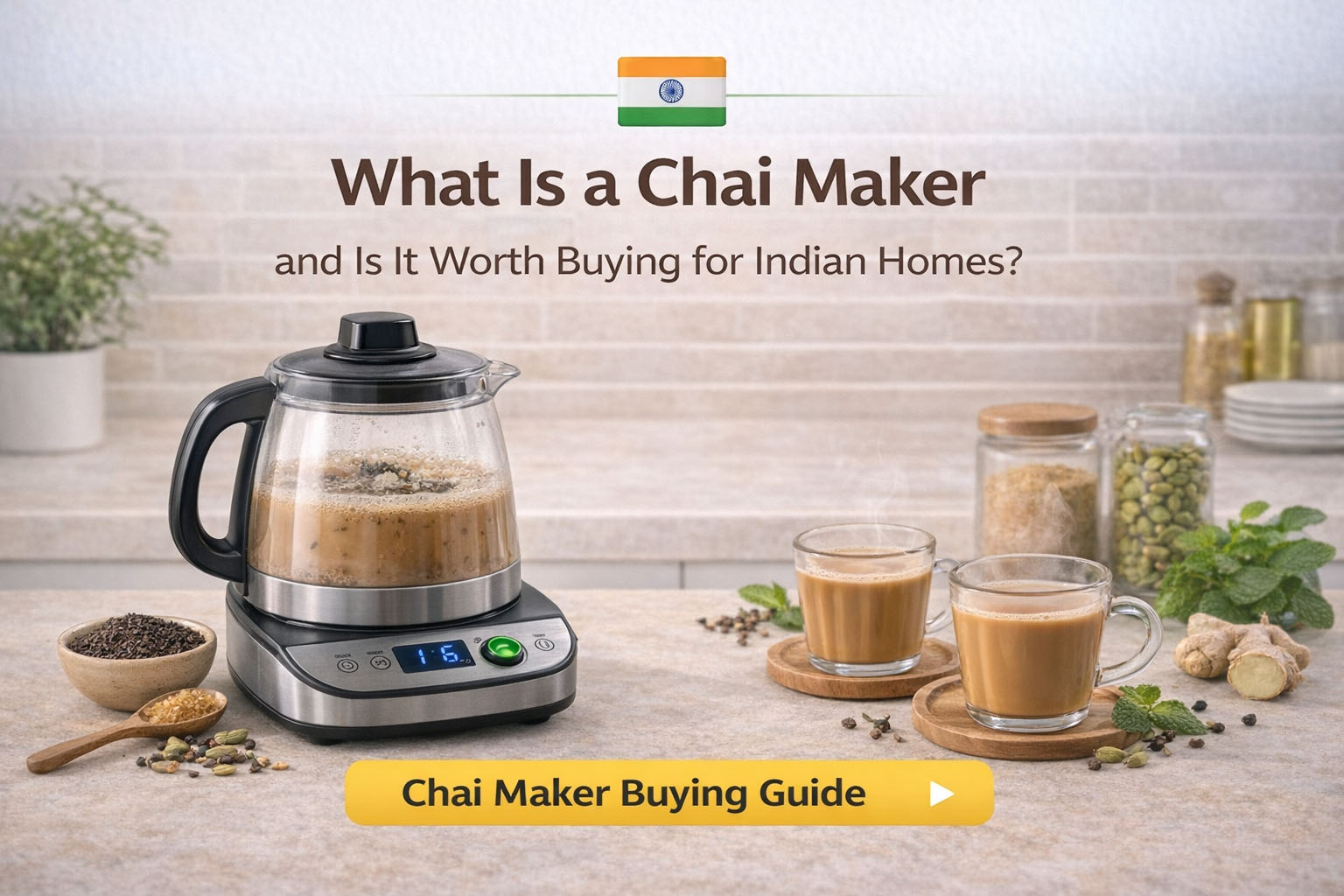
Making chai is part of daily life in most Indian homes. From early mornings to evening breaks, chai is brewed multiple times a day. Traditionally, this happens on a gas stove with constant supervision, stirring, and careful timing.
A chai maker for home promises to simplify this process. It claims to automate boiling, reduce spills, and deliver consistent taste. But is it genuinely useful, or just another kitchen gadget?
This guide explains what a chai maker is, how it works, and whether it actually fits Indian kitchen habits.
What Is a Chai Maker?
A chai maker is an electric appliance designed to prepare tea automatically. It heats water and milk, boils tea leaves, and controls temperature to prevent overflow.
Most chai makers work like a controlled electric kettle, but with features tailored specifically for Indian tea preparation.
Unlike a regular kettle, chai makers are designed to handle:
- Milk boiling
- Tea leaf infusion
- Continuous heating without spilling
Why Chai Makers Are Gaining Attention in India
Indian households are changing. More people live in apartments, work long hours, and look for convenience in everyday tasks.
Chai makers attract attention because they:
- Reduce supervision
- Prevent milk overflow
- Offer consistent results
- Save time during busy mornings
For households where chai is prepared multiple times a day, even small convenience improvements matter.
How a Chai Maker Works
A chai maker uses electric heating with controlled temperature regulation.
The basic process is:
- Add water, milk, tea leaves, and sugar
- Switch on the appliance
- Let it boil and simmer automatically
- Turn off or alert when chai is ready
Some models offer preset modes, while others rely on manual timing.
Chai Maker vs Traditional Gas Stove Method
The gas stove method is familiar and flexible. However, it has limitations.
Gas Stove Chai Making
- Requires constant attention
- High chance of milk spilling
- Depends on experience for taste consistency
Chai Maker Preparation
- Minimal supervision
- Controlled boiling
- Reduced mess
For people who enjoy hands-on cooking, gas stoves still feel natural. For those who value convenience, chai makers offer a clear alternative.
Many buyers also compare automation with traditional methods, which is why understanding chai maker vs gas stove usage patterns can help avoid unnecessary purchases.
Is the Taste Different When Using a Chai Maker?
This is one of the most common concerns.
In practice:
- Taste depends more on ingredients than the appliance
- Proper boiling time matters more than heat source
- Chai makers can deliver consistent flavor once settings are understood
Initially, some users may need trial runs. Once adjusted, taste differences are minimal.
Who Should Consider Buying a Chai Maker for Home?
A chai maker for home makes sense for:
- Working professionals
- Families preparing chai multiple times daily
- Elderly users who prefer safer appliances
- People who dislike cleaning milk spills
If chai is an occasional drink, a chai maker may feel unnecessary.
Multi-Purpose Value: More Than Just Chai
Many modern chai makers can also:
- Boil water
- Heat milk
- Prepare coffee
- Make soups or instant drinks
This multi-purpose capability improves value, especially in compact kitchens where space matters.
However, buyers should choose multi-purpose models only if they genuinely plan to use those functions.
Safety and Convenience in Daily Use
Safety is an underrated advantage of chai makers.
They usually offer:
- Controlled heating
- Stable bases
- Reduced risk of overflow
- Less exposure to open flame
For households with children or elderly members, this can be a significant benefit.
Cleaning and Maintenance
Most chai makers are easy to clean, but some designs are better than others.
Good designs include:
- Wide openings
- Non-stick interiors
- Simple lids
Regular cleaning prevents milk residue buildup and odor issues.
Electricity Consumption and Running Cost
Chai makers typically consume between 600W to 1000W, but only for short durations.
Because chai preparation takes only a few minutes, electricity usage remains low. For regular users, the convenience gained usually outweighs the minor power consumption.
Common Myths About Chai Makers
“Chai Makers Are Only for Lazy Cooking”
They are designed for efficiency, not laziness.
“They Ruin Traditional Taste”
Taste depends on ingredients and boiling time, not the appliance.
“They Replace the Gas Stove”
They complement the kitchen, not replace it.
When a Chai Maker Is NOT Worth Buying
You may skip a chai maker if:
- You make chai rarely
- You enjoy manual preparation
- Kitchen space is very limited
Understanding this avoids regret purchases.
How This Guide Helps You Decide
This MOFU guide focuses on real usage scenarios, not product promotion. It helps you evaluate:
- Your chai consumption frequency
- Need for convenience
- Willingness to adopt a new appliance
Once these are clear, deciding becomes easier.
To see how different models compare in features and pricing, you can explore our detailed comparison of the best chai maker for home use in India, which reviews currently available options.
Final Thoughts
A chai maker is not essential for every household. But for homes where chai is prepared several times daily, it can simplify routines and reduce mess.
The decision should be based on lifestyle, not novelty. If convenience, safety, and consistency matter to you, a chai maker for home can be a practical addition to the kitchen.





0 Comments