
Introduction
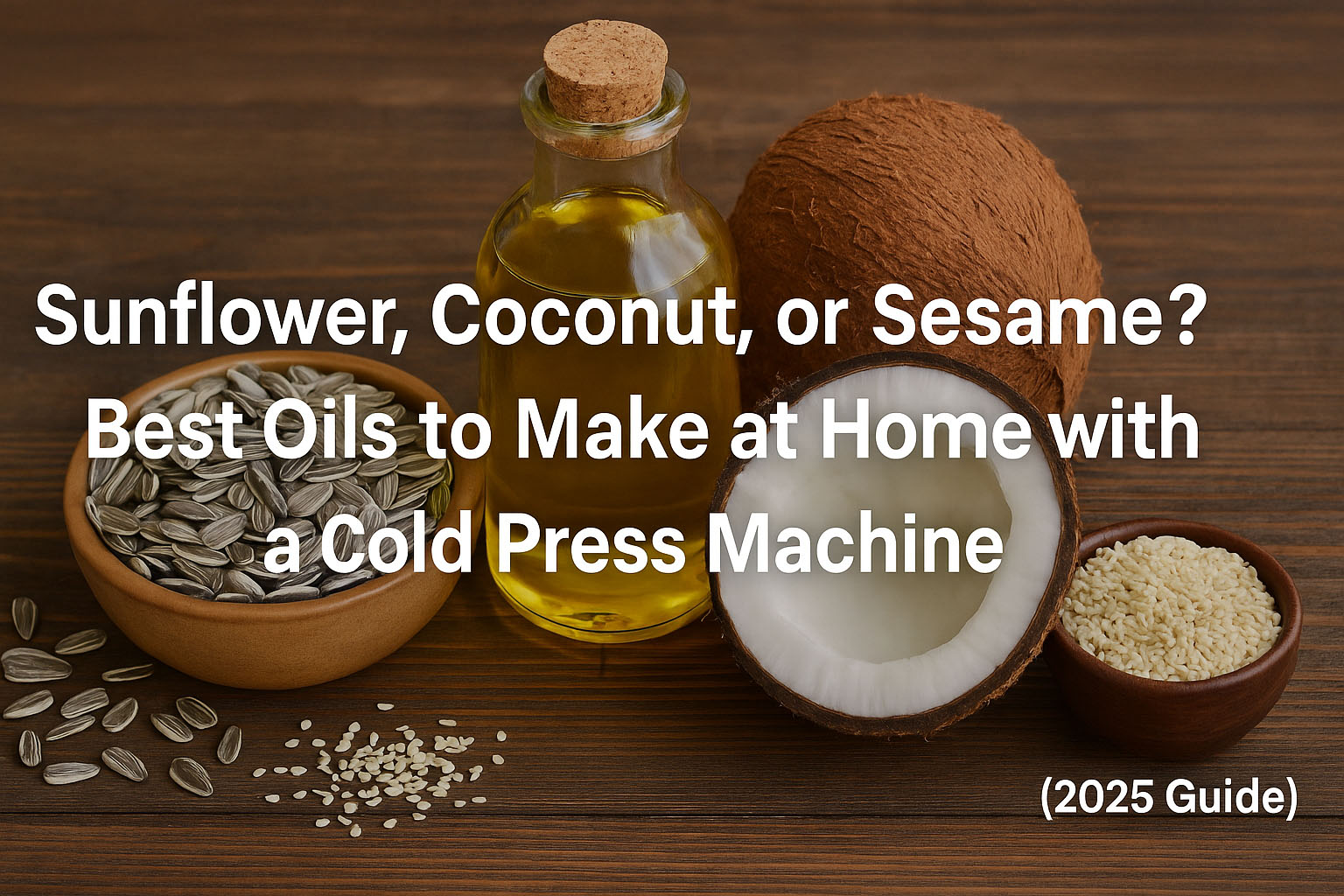
If you’ve bought a cold press oil machine for home, your next big question is simple — which oil should I make first? Among Indian households, sunflower, coconut, and sesame oils top the list. Each offers unique aroma, nutrition, and yield. In this guide, we’ll help you choose the best oils to make at home with a cold press machine.
If you’re just getting started with oil extraction, you’ll love our Cold Press Oil Machine for Home: The Complete Beginner’s Guide (2025 Edition). You’ll learn which seeds give the highest output, which suit your cooking style, and how each fits your region’s food habits.
By the end, you’ll know exactly which oil deserves a place in your next batch.
Why Homemade Cold-Pressed Oils Matter
Homemade oils are fresh, chemical-free, and full of natural flavour. When you make oil at home:
- You control the quality of seeds.
- You skip preservatives and bleaching agents.
- You retain vitamins and antioxidants lost during industrial refining.
Cold pressing keeps temperature below 45°C. That means better retention of Vitamin E, good fats, and the natural aroma Indians love — whether it’s the nutty smell of sesame or the clean fragrance of coconut.
Making oil at home also saves money. Most families recover machine cost within a year and enjoy oil that’s 100 % pure.
Coconut Oil — South India’s All-Purpose Favourite
Why choose it: Coconut oil is prized for hair, skin, and cooking. It has medium-chain fatty acids that promote heart health and digestion.
Best suited regions: Kerala, Tamil Nadu, Karnataka, coastal Andhra.
Pressing tips:
- Use dried copra pieces, not fresh coconut.
- Slightly warm seeds under sunlight for higher yield.
- Expect ~300 ml oil per kg.
Taste and use:
Coconut oil adds mild sweetness and enhances flavours in idlis, chutneys, or curries. It also works for frying when used fresh.
Storage:
Keep in airtight glass bottles. Solidifies below 24 °C — normal for Indian winters.
Why it’s one of the best oils to make at home with a cold press machine:
Because it’s multi-purpose — you can use one batch for cooking and another for personal care.
Want to learn the exact process step by step? Read How to Extract Coconut Oil at Home with a Cold Press Machine.
Sunflower Oil — Light, Neutral, and Everyday-Friendly
Why choose it: Sunflower oil is India’s most widely used edible oil. It’s rich in Vitamin E and polyunsaturated fats, great for heart health.
Best suited regions: North and Central India, where light oils are preferred for daily cooking.
Pressing tips:
- Use clean, dried sunflower seeds.
- Expect around 350 ml oil per kg.
- Filter twice to remove fine husk.
Taste and use:
Sunflower oil has a neutral taste, ideal for stir-frying vegetables, snacks, or sweets. It doesn’t overpower spices — perfect for everyday Indian meals.
Storage:
Store in cool, dark place to avoid oxidation. Fresh cold-pressed sunflower oil lasts about four months.
Why it’s among the best oils to make at home with a cold press machine:
Because it’s versatile and easy to digest — a dependable choice for daily family use.
If you’re curious about real oil output, check How Much Oil Can You Get from 1kg of Seeds? Real Yield Test at Home.
Sesame Oil — The Ancient Healer
Why choose it: Known as til ka tel, sesame oil has been part of Indian tradition for centuries. It’s rich in antioxidants like sesamol and has natural anti-inflammatory benefits.
Best suited regions: Tamil Nadu, Andhra Pradesh, Bengal, and parts of North India for pickles and deep-fried snacks.
Pressing tips:
- Lightly roast seeds before pressing for a deeper aroma.
- Expect 350–400 ml oil per kg.
- Mix black and white sesame for balanced flavour.
Taste and use:
Has a strong, nutty aroma. Great for tadka, pickles, and Ayurvedic massages.
Storage:
Can last six months or longer in cool, dark storage.
Why it’s one of the best oils to make at home with a cold press machine:
Because it bridges health and heritage — a taste of India’s roots in every drop.
For a complete guide to pressing sesame, visit How to Make Sesame Oil at Home Using a Cold Press Oil Machine.
Comparison Table — Yield, Use, and Storage
| Oil Type | Avg. Yield (ml/kg) | Shelf Life | Best Use | Aroma | Ideal For |
| Coconut | 300 | 6–12 months | Cooking, hair, skincare | Mild & sweet | South India |
| Sunflower | 350 | 3–4 months | Daily cooking | Neutral | All India |
| Sesame | 375 | 6 months | Pickles, frying | Strong & nutty | East & South |
Factors to Decide Which Oil to Start With
1️⃣ Climate & Cuisine – In humid states, coconut oil suits both food and skincare. In cooler regions, sesame or groundnut feels warmer and heartier.
2️⃣ Health Goals – For heart health, sunflower works best. For anti-inflammatory benefits, sesame excels.
3️⃣ Machine Power – Coconut and sesame are harder; use 600 W+ motor models. Sunflower seeds press easily even in 450 W machines.
4️⃣ Usage Variety – Coconut is the all-rounder; sesame brings intense flavour; sunflower remains the everyday choice.
Cost & Savings for Each Oil Type (2025 India Snapshot)
| Seed Type | Avg. Seed Cost/kg | Oil Yield | Cost per Litre (Home-Made) | Market Price/litre | Monthly Saving |
| Coconut | ₹200 | 300 ml | ₹650–700 | ₹950 | ₹250 |
| Sunflower | ₹120 | 350 ml | ₹350 | ₹550 | ₹200 |
| Sesame | ₹150 | 375 ml | ₹400 | ₹600 | ₹200 |
In most cases, home pressing saves ₹200–₹300 per litre while guaranteeing purity.
Wondering if making your own oil is really worth it? Here’s Is Cold Pressed Oil Worth It? Cost, ROI, and Long-Term Health Gains.
Pro Tips to Improve Oil Yield
- Use dry seeds only — moisture reduces extraction.
- Clean the hopper regularly — buildup blocks smooth pressing.
- Press smaller batches — consistent pressure gives better yield.
- Rest your machine every 45 minutes to prevent overheating.
These steps ensure smoother pressing and extend your machine’s life.
Bonus: Blend for Custom Flavours
You don’t have to stick to one seed. Try these combinations at home:
- Sunflower + Sesame (70:30) — light oil with nutty aroma.
- Coconut + Sesame (50:50) — richer texture for South Indian cooking.
- Groundnut + Sunflower (60:40) — neutral yet flavorful mix.
Custom blends help balance taste, yield, and health benefits.
Real-World Indian Examples
1️⃣ Tamil Nadu: Many households mix sesame for flavour with sunflower for lightness.
2️⃣ Kerala: Coconut remains king — often cold-pressed weekly in small batches.
3️⃣ Gujarat & Maharashtra: Sunflower and groundnut dominate because of high frying use.
These regional patterns show how your oil preference can match your lifestyle and cuisine.
Health Snapshot — Why Variety Wins
Rotating oils keeps your diet balanced. Each type brings its own nutrient set:
| Nutrient | Coconut | Sunflower | Sesame |
| Vitamin E | Moderate | High | Moderate |
| Omega 6 | Low | High | Balanced |
| Antioxidants | High | Medium | Very High |
That’s why experts suggest alternating between at least two oils — especially if you make them fresh at home.
Conclusion
When choosing between sunflower, coconut, and sesame, there’s no single winner — it depends on your taste, health goals, and region.
- For everyday cooking: choose sunflower oil.
- For multi-purpose use: go with coconut oil.
- For traditional, rich flavour: press sesame oil.
Whichever you start with, remember this: making your own oil gives you control, freshness, and trust. That’s the real joy of discovering the best oils to make at home with a cold press machine.Ready to choose your own machine? Compare the top models in How to Choose the Best Cold Press Oil Machine for Home Use (2025 Buying Guide)





0 Comments