
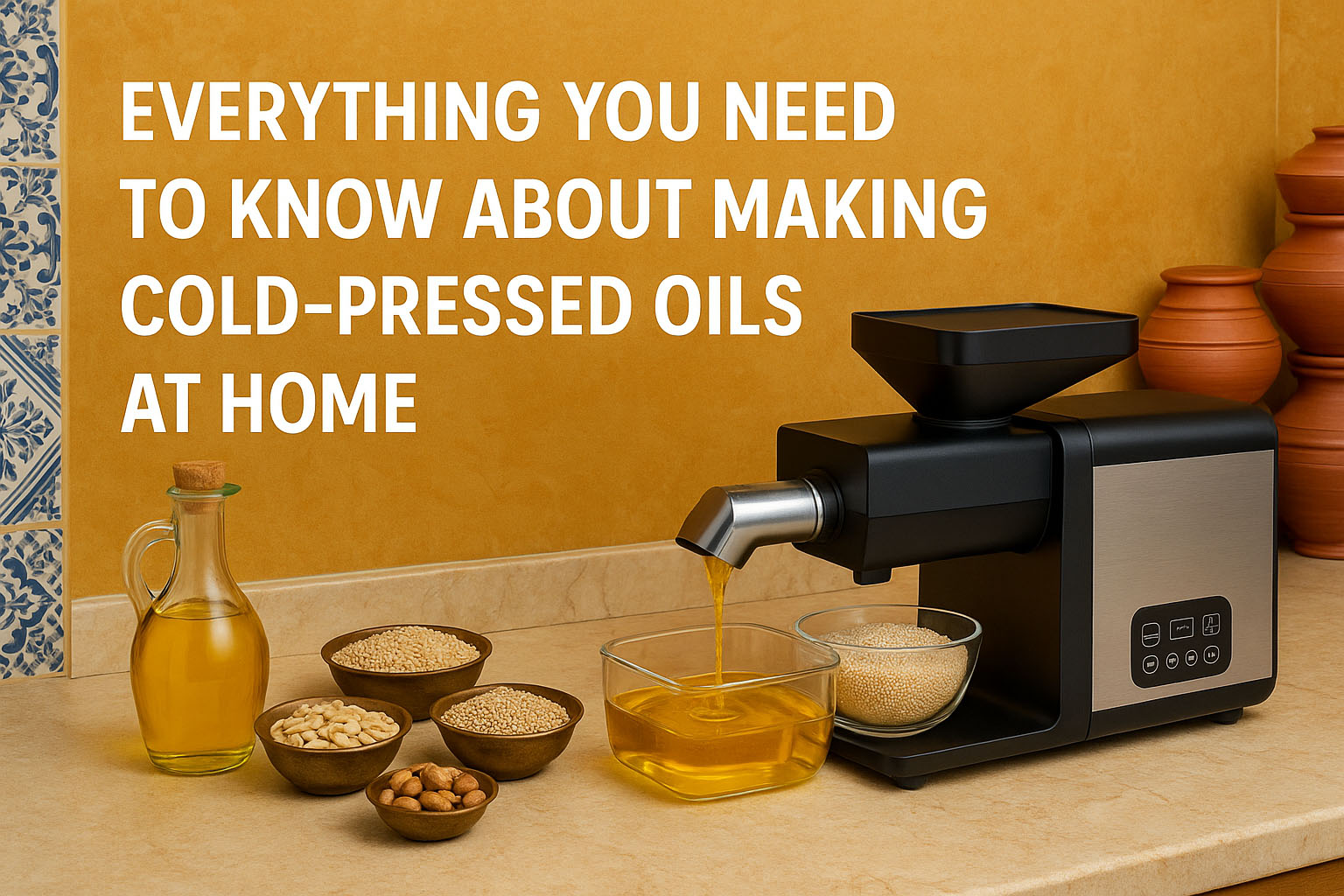
Making cold pressed oils at home is becoming a major trend in India. As families move away from refined oils and choose natural alternatives, more people now want full control over the purity, freshness, and flavor of their cooking oil. And that’s exactly what making cold pressed oils at home offers—pure, chemical-free oils that you extract yourself from clean seeds.
Today, cold press machines are compact, efficient, and easy to use. Whether you live in a small apartment or a large independent home, you can now press fresh groundnut, sesame, sunflower, coconut, or mustard oil anytime. The process is simple. The results are healthier. And most importantly, it brings back the traditional Indian approach to food—fresh, natural, and made at home.
This guide covers every single thing Indian beginners need to know before making their first batch of cold pressed oil. You’ll learn how the machines work, which seeds give the best yield, how to prepare them, how long the oils last, mistakes to avoid, and how to store oils the right way. By the end, you’ll feel confident and ready to extract your own oil at home.
Along the way, I’ll refer to related guides such as:
- Using a machine for the first time
- Yield calculations
- Cleaning routines
- Troubleshooting low oil output
These internal guides ensure you get a complete understanding step by step.
This guide is based on real home testing, traditional Indian oil practices, and practical machine usage.
What Exactly Is Cold-Pressed Oil?
Cold-pressed oil is extracted using slow mechanical pressure without heat or chemicals. This keeps the oil rich in minerals, antioxidants, vitamin E, and natural aroma. Modern machines replicate the old Indian wooden “ghani” method, but in a compact, stainless steel format.
Why Indians Prefer Cold-Pressed Oil
- No bleaching, neutralizing, or chemical solvents
- No heat damage to nutrients
- Pure flavor that varies by seed and region
- Freshness you can taste
- You know exactly what seeds you used
- Higher-quality oil for cooking, skin, and hair
For those who want clean food habits, making cold pressed oils at home is one of the simplest lifestyle upgrades.
How Does a Home Cold Press Oil Machine Work?
Before you start pressing oil, you must understand how these machines function. All home cold press machines follow the same core mechanism:
1. Seed Hopper
You pour cleaned seeds into the hopper. The machine slowly feeds them into the screw.
2. Rotating Screw (Worm Shaft)
This is the heart of the machine. It crushes the seeds gradually, pushing them through a narrow, high-pressure chamber.
3. Oil Extraction Chamber
As the seeds compress, oil separates and flows out into a collection cup.
4. Seed Cake Outlet
The leftover seed residue comes out from a separate opening. This seed cake is completely dry and useful for:
- Compost
- Cattle feed
- Home gardening fertilizer
5. Temperature Control
Some seeds need a warm press, some need a mild press. Good machines balance temperature to protect nutrients.
6. Oil Filter
A fine mesh filter removes tiny particles to give you a clear, clean oil.
If this is your first time using a machine, follow this step-by-step cold press oil machine guide to avoid beginner mistakes and improve yield.
Why Make Cold Pressed Oils at Home Instead of Buying Them?
There are three main reasons Indian families are shifting to homemade oils:
1. You save money every month
Cold pressed oils in bottled form are expensive.
For example:
- Branded cold pressed groundnut oil → ₹550–₹600 per litre
- Homemade cost → ₹300–₹350 per litre
This difference adds up quickly for families that consume 3–5 litres monthly.
2. You know it is 100% pure
Store-bought cold pressed oils are not always pure. Many brands mix:
- Cheap oils
- Low-grade seeds
- Antioxidants
- Preservatives
When you make the oil yourself, you choose:
- The seeds
- The quality
- The freshness
- The exact quantity
3. The taste and aroma are unmatched
Coconut oil from fresh dried copra, mustard oil from pungent rai, or sesame oil from clean til seeds—each smells and tastes richer when extracted at home.
Homemade oil feels alive.
Which Oils Can You Make at Home? (India-Specific Guide)
This is where Indian households get excited. You can press almost all commonly used edible oils, and each behaves differently during extraction.
Below is the detailed list:
1. Groundnut Oil (Most Popular in West & South India)
- Yield: ~400 ml per 1 kg
- Flavor: Nutty, warm
- Best for: Frying, curries, all-purpose cooking
- Difficulty: Easy for beginners
If you haven’t tried pressing oil before, start with groundnut. It gives high yield and needs zero temperature adjustment.
2. Sesame Oil (Til Oil)
- Yield: ~300 ml per 1 kg
- Flavor: Strong, aromatic, slightly sweet
- Best for: Chutneys, pickles, idlis, Tamil cuisine
- Difficulty: Easy
Cold-pressed sesame oil has a deep golden color and cultural importance in South India.
For exact seed ratios and filtering tips, check this detailed sesame oil extraction guide using a cold press machine.
3. Coconut Oil
- Yield: ~250–300 ml per 1 kg copra
- Flavor: Mild, sweet, classic Kerala aroma
- Best for: Cooking, skincare, haircare
- Difficulty: Moderate
Dry copra pieces must be used. Fresh coconuts reduce yield drastically.
This coconut oil extraction guide explains seed prep and temperature control in detail.
4. Sunflower Oil
- Yield: ~280–300 ml
- Flavor: Light, neutral
- Best for: Everyday cooking
- Difficulty: Slightly tricky (needs clean, dry seeds)
5. Mustard Oil
- Yield: ~350 ml
- Flavor: Strong, pungent, sharp
- Best for: North & East Indian cooking
- Difficulty: Moderate (strong odor, requires mild pre-heating)
It’s perfect for tarka, frying, and pickles.
6. Almond & Walnut Oil
- Yield: Low (expensive seeds)
- Best for: Skincare, haircare
- Difficulty: Easy, but costly
Which Oil Should Beginners Start With?
For first-time users:
- Groundnut oil → easiest
- Sesame oil → very stable yield
- Coconut oil → simple once you learn seed prep
Seed Preparation: The Most Important Step
Most oil extraction problems have nothing to do with the machine.
They come from poor seed preparation.
Here’s how to prepare seeds for making cold pressed oils at home:
1. Clean the Seeds Thoroughly
Remove:
- Stones
- Sand
- Broken shells
- Dust
- Spoiled seeds
2. Sun-Dry the Seeds
Seeds must be completely dry.
If seeds hold moisture:
- Yield drops
- Oil turns cloudy
- Machine strains
Dry for:
- 1 hour in summer
- 2–3 hours in winter
3. Break Large Items (like copra)
Cut dried coconut into small pieces so the machine can crush them evenly.
4. Remove Bad Seeds
Even 5% bad seeds can:
- Increase bitterness
- Affect aroma
- Reduce shelf life
5. Pre-Heat Mustard Slightly
Mustard produces more oil if warmed for 2–3 minutes on low flame.
Step-by-Step Process for Making Cold Pressed Oils at Home
This is the part most beginners worry about. But once you follow this simple flow, the entire process feels natural. The routine becomes as easy as making dosa batter or grinding chutney.
Here is the complete beginner-friendly workflow:
1. Set Up Your Machine on a Stable Surface
Choose a platform that is:
- Level
- Clean
- Dry
- Away from heat sources
If you live in an apartment with limited space, place the machine on:
- Kitchen slab
- Dining table
- Small rolling cart
Keep the oil tray and waste container close by.
2. Assemble the Barrel, Screw & Hopper
Almost all home machines have:
- A steel screw
- A cylindrical barrel
- A seed hopper
- An oil collection tray
- A waste/cake outlet
Fit each part snugly.
Loose assembly leads to:
- Noise
- Vibration
- Lower oil output
If you want a visual reference, check your earlier guide: How to Use a Cold Press Oil Machine at Home – Step-by-Step Guide
3. Warm-Up Cycle (Optional but Helpful)
Some seeds extract better when the machine runs empty for 1–2 minutes. This:
- Reduces strain
- Increases yield
- Helps in smoother oil flow
Most modern machines auto-adjust temperature, but a warm-up cycle still helps.
4. Add the Seeds Slowly
This is where many users make mistakes.
Do not pour seeds all at once.
Feed seeds in small, steady amounts.
This maintains:
- Even pressure
- Consistent oil flow
- Smooth screw rotation
5. Collect the Oil
Fresh oil flows into the tray in a light stream. Its color may look cloudy at first. This is normal. After filtering, it becomes clear.
Depending on the seed:
- Groundnut oil looks golden
- Sesame oil looks deep amber
- Coconut oil remains pale yellow
- Mustard oil is bright yellow to brownish
6. Remove the Seed Cake
The cake comes out dry and crumbly.
Save it because it is extremely useful:
You can use it for:
- Garden compost
- Cow feed (groundnut, sesame, mustard)
- Home plants
- Natural fertilizer
This reduces waste and supports your kitchen garden if you have one.
Filtering Your Oil Properly
Cold pressed oil contains fine particles after extraction. Filtering improves:
- Clarity
- Taste
- Shelf life
Best filters:
- Fine stainless steel mesh
- Unbleached muslin cloth
- Coffee filter paper (slow but very clean)
Let filtered oil rest for 4–6 hours.
Any remaining particles settle naturally.
How Much Oil Will You Get? (Yield Science Explained)
Oil yield depends on:
- Seed quality
- Seed dryness
- Machine pressure
- Seed oil content
- Temperature
Here is a realistic India-specific yield chart:
| Seed Type | Yield per 1 kg |
| Groundnut | 380–450 ml |
| Sesame | 280–320 ml |
| Mustard | 300–350 ml |
| Sunflower | 250–300 ml |
| Coconut (copra) | 230–300 ml |
| Flaxseed | 200–260 ml |
| Almond | 200–250 ml |
For a full yield breakdown, refer to your earlier post. See this real yield test of different seeds.
This internal linking strengthens topical authority and improves SEO.
How to Store Cold Pressed Oils Correctly
Storage directly affects freshness and flavor. Cold pressed oils spoil faster than refined oils because they contain no preservatives.
Follow these rules to extend shelf life:
1. Use Glass or Steel Bottles Only
Avoid plastic completely.
Plastic reacts with oil and reduces shelf life.
Best options:
- Dark amber glass bottles
- Food-grade steel bottles
- Airtight steel tins
2. Keep Oils Away from Light
Light destroys antioxidants and causes oxidation.
Store bottles:
- In a closed cabinet
- Away from the stove or window
- In a dark corner of the kitchen
3. Keep Bottles Airtight
Exposure to air speeds up spoilage.
Use tight caps or silicone seals.
4. Do Not Mix Old Oil with New Oil
Always wash bottles before refilling.
This prevents:
- Mold
- Rancidity
- Flavour mixing
5. Best Shelf Life (Realistic Indian Conditions)
| Oil Type | Shelf Life |
| Groundnut | 3–6 months |
| Sesame | 5–8 months |
| Mustard | 6–9 months |
| Coconut | 8–12 months |
| Sunflower | 3–5 months |
You can read more in This cold-pressed oil storage guide explains shelf life by oil type.
Health Benefits of Homemade Cold-Pressed Oils
Cold-pressed oil extracted at home is healthier because it retains all natural compounds.
Here’s what you get:
1. Vitamin E
Powerful antioxidant that supports skin and hair.
2. Good fats (MUFA & PUFA)
Improve heart health and metabolism.
3. Natural aroma compounds
Enhance food flavor.
4. Zero chemicals or preservatives
Pure and clean.
Read about the health benefits of cold-pressed oils for heart, skin, and digestion.
Common Mistakes Beginners Make
Avoid these to ensure high-quality oil:
❌ Using wet or damp seeds
Reduces yield and causes cloudiness.
❌ Overloading the hopper
Strains the motor.
❌ Not cleaning the machine daily
Builds residue.
❌ Pressing seeds without removing stones
Scratches the barrel.
❌ Expecting high yield from cheap seeds
Quality seeds = quality oil.
If yield is low, this troubleshooting guide explains common causes and fixes.
Is Making Cold Pressed Oils at Home Worth It? (Cost Analysis)
Yes — in almost all Indian households.
Here’s why:
Seed Cost (per litre of homemade oil): ₹250–₹350
Branded Cold Press Oil: ₹550–₹700 per litre
You save ₹250–₹350 per litre, and families typically use:
- 3–5 litres monthly
Resulting in about:
₹900 to ₹1,750 savings per month
This cost vs benefit breakdown shows long-term savings clearly.
Regional Oil Preferences Across India
Understanding these helps you choose the right seeds to buy.
North India: Mustard oil
East India: Mustard + Sunflower
West India: Groundnut
South India: Coconut + Sesame + Groundnut
This cultural pattern is important when planning seed purchases.
Using Multiple Oils for Better Nutrition
Doctors and nutritionists recommend rotating oils.
You can switch between:
- Groundnut (stable for frying)
- Sesame (rich in minerals)
- Coconut (skin + hair benefits)
- Sunflower (neutral flavour)
This improves heart health and gut health.
This mixed seed oil guide shows the best seed combinations for aroma and nutrition.
References you can explore:
- Indian food safety guidelines (FSSAI)
- Research studies on MUFA/PUFA benefits
- Seed quality recommendations from agriculture boards
- Genuine machine listings on Amazon and Flipkart
Advanced Tips to Improve Oil Quality
Once you’ve mastered the basics, these advanced techniques take your oil quality to the next level.
1. Warm the Seeds Slightly (Not a Hot Press!)
This is a technique many experienced home users follow.
Warm dry seeds under the sun for 20–30 minutes or gently on a pan for 1–2 minutes without heating them.
Benefits:
- Better aroma
- Higher yield
- Smoother flow
Do NOT roast the seeds. That becomes “hot press,” not cold press.
2. Use Fresh Seeds, Not Old Stock
Old or poorly stored seeds lose natural oil content.
Signs of bad seeds:
- Dull color
- Dusty smell
- Slight stickiness
- Mold specks
Fresh seeds = richer taste + higher yield.
3. Mix Seeds Smartly
Many Indian homes mix two seeds to enhance aroma and yield.
Examples:
- Groundnut + Sesame → Balanced aroma and good yield
- Sunflower + Flaxseed → Omega-rich oil
- Mustard + Sesame → Sharper pungency for pickles
This cold-pressed vs refined oil comparison explains why home extraction is healthier.
4. Rest the Oil Overnight Before Use
Freshly extracted oil contains microscopic particles (called “foots”).
Letting the oil sit overnight allows them to settle naturally.
This results in:
- Clearer oil
- Longer shelf life
- Improved taste
The top layer becomes crystal clear.
5. Do Not Press More Than One Type of Seed Back-to-Back
Example: pressing coconut after sesame or mustard causes flavor transfer.
Do this instead:
- Run 200–300g of groundnut through the machine
OR - Use the built-in cleaning function (if available)
This flushes out the previous seed residue.
Environmental & Community Benefits
Home oil pressing isn’t just healthier — it’s kinder to the environment.
1. Less Plastic Waste
Store-bought oils come in plastic pouches or bottles.
When you press oil at home, you reuse the same glass bottles for years.
This reduces plastic footprint by 80–90% per household.
2. Support Local Farmers
Buying seeds from:
- Mandis
- Farmers’ markets
- Local mills
…creates a direct link with India’s agricultural supply chain.
You support small-scale farmers instead of large refining corporations.
3. Zero Chemical Exposure
Refined oil factories use:
- Hexane
- Bleaching agents
- Deodorizers
Cold pressed oil at home avoids all industrial chemicals.
Better for you and the environment.
For deeper comparison, link to: Cold Pressed Oils vs Refined Oils: Why Home Extraction Is Better
4. Lower Carbon Footprint
Your oil doesn’t need:
- Transport trucks
- Plastic packaging
- Mega-factories
Every litre made at home reduces carbon emissions.
Cold Pressed Oils in Indian Cooking
Indians use oil differently depending on region and cuisine. Here’s how your homemade oils fit naturally into daily cooking.
Groundnut Oil
Perfect for:
- Poha
- Sabzi
- Frying
- Gujarati snacks
It has a high smoke point.
Sesame Oil
Great for:
- Idli podi
- Tamil-style chutneys
- Asian stir fries
- Sambar tadka
Sesame adds a deep, roasted aroma.
Coconut Oil
Used in:
- Kerala curries
- Fish fry
- Hair & skincare
Pure coconut oil enhances both taste and wellness.
Mustard Oil
Ideal for:
- Parathas
- Bengali fish curry
- Pickles
- Aloo bhaja
The pungency is unmatched in flavour.
Sunflower Oil
A mild, neutral oil perfect for:
- Light cooking
- Baking
- Deep frying
Useful when you don’t want a strong aroma.
Each oil serves a purpose, which is why rotating oils is recommended.
Safety Tips for Home Cold Press Machines
Safety matters, especially when beginners are involved.
1. Never Add Wet Seeds
Moisture causes:
- Jamming
- Motor strain
- Burnt smell
Ensure seeds are completely dry.
2. Keep Children Away During Operation
Moving machinery parts can be risky.
3. Do Not Touch the Barrel After Long Runs
It becomes warm due to friction (still “cold press” but warm to touch).
4. Always Use a 3-Pin Socket
Prevents electrical overload.
5. Do Not Wash the Motor Section
Water damage voids warranty instantly.
Your safety-focused article already covers more details: Cold Press Oil Machine Safety Tips
Troubleshooting: Common Problems & Simple Fixes
Problem #1: Machine Is Producing Less Oil
Causes:
- Damp seeds
- Poor quality seeds
- Low oil content batch
Fix:
- Sun-dry seeds
- Use better grade seeds
Why Is My Cold Press Oil Machine Producing Less Oil?
Problem #2: Machine Overheating
Causes:
- Long continuous run
- Improper ventilation
Fix:
- Rest every 20–30 minutes
- Keep vents dust-free
How to Reduce Noise and Overheating in Cold Press Machines
Problem #3: Oil Has a Burnt Smell
Causes:
- Faulty seed quality
- Overload
- Old residue inside barrel
Fix:
- Deep clean
- Avoid pressing too fast
Problem #4: Strange Noises
Causes:
- Loose screw
- Metal scraping
- Stones in seeds
Fix:
- Tighten parts
- Remove contaminants
Final Conclusion
Making cold pressed oils at home is:
- Healthier
- Cheaper
- Cleaner
- Eco-friendly
- Culturally grounded
You control:
- Quality
- Freshness
- Seeds
- Aroma
- Purity
With the right machine and the right method, homemade oil becomes a daily habit that improves your entire lifestyle.
Frequently Asked Questions (FAQ)
Yes. Groundnut, sunflower, and mustard oils tolerate high heat well.
Only coconut oil is suitable. Others should stay at room temperature.
Yes—machines are built for regular home use.
Depends on the purpose. For heart health: groundnut or sesame. For hair/skin: coconut.
Yes, by ₹250–₹350 per litre depending on the seed.





0 Comments