
Introduction
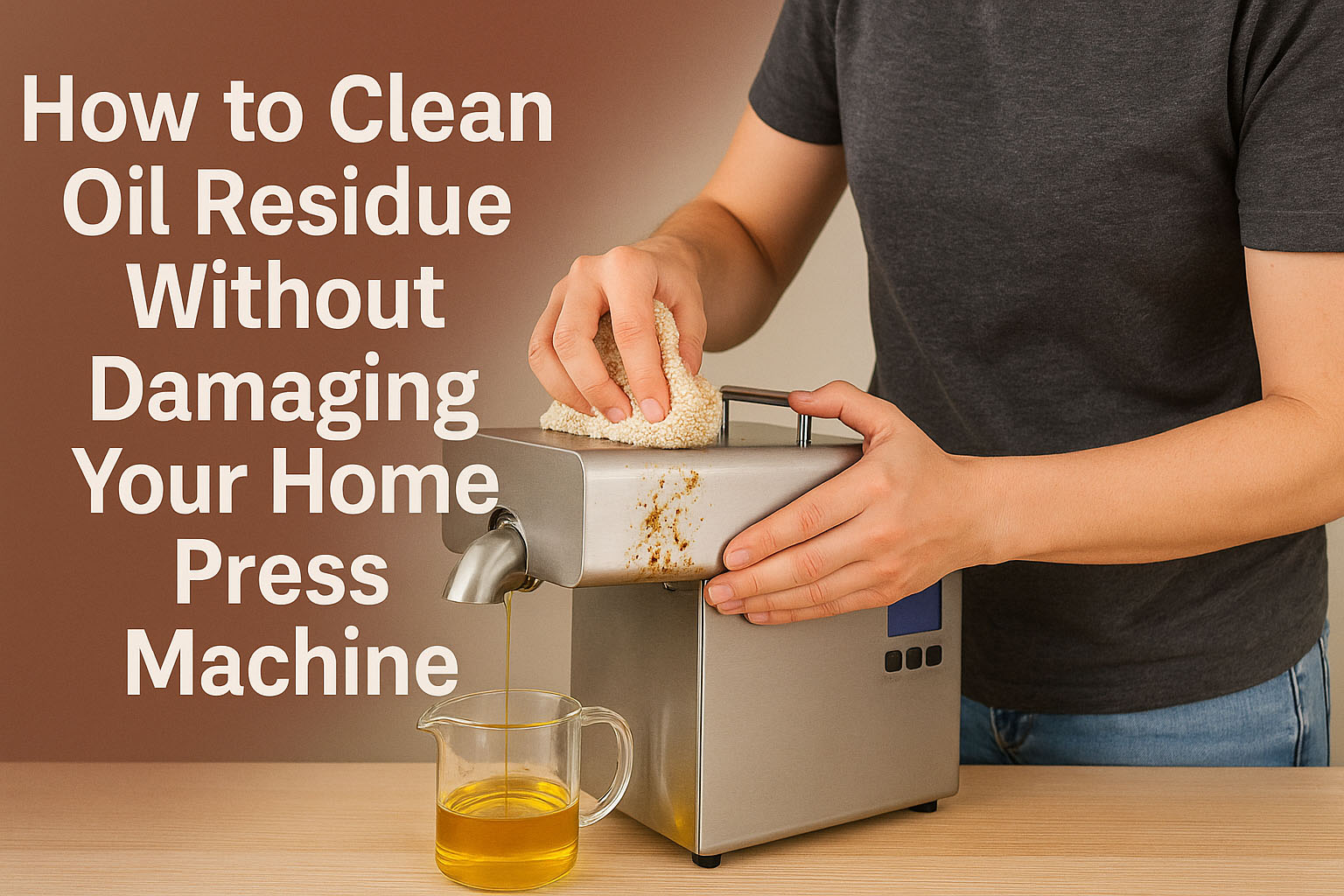
Cleaning a cold press oil machine for home might seem tricky at first, especially with sticky oil residues left after each batch. But don’t worry — with the right routine, you can keep your press spotless, hygienic, and long-lasting. This guide will show you how to clean oil residue from a cold press machine safely, step by step.
You’ll learn which parts to wash, which to avoid, and how to protect the motor from moisture damage — all using simple methods you can do in your kitchen.
Why Cleaning Your Cold Press Machine Matters
Every time you press oil, fine seed particles mix with leftover oil and stick to the barrel, screw, and outlet. If not cleaned properly, this buildup:
- Reduces oil yield in future batches
- Creates unpleasant smells
- Affects the flavour of your oils
- Shortens the machine’s lifespan
For Indian households that press groundnut, sesame, or coconut oil weekly, a quick post-press cleaning habit is the best way to maintain both hygiene and performance.
Understand What Causes Oil Residue
Oil residue forms when heat and pressure cause tiny seed particles to bake onto the metal surfaces inside the barrel. Harder seeds like coconut or mustard tend to leave thicker layers than softer ones like sunflower.
You’ll usually see residue in these spots:
- The inner barrel (pressing chamber)
- The screw (or worm shaft)
- The oil outlet and filter tray
- The seed input hopper
These are the only parts that need washing. The motor and electrical sections should never come in contact with water.
Step-by-Step: How to Clean Oil Residue from a Cold Press Machine
Step 1 – Cool Down Completely
After pressing oil, let the machine rest for at least 30 minutes.
Cleaning a hot chamber can warp parts and make oil residue harder to remove.
Step 2 – Disassemble Key Parts
Remove the hopper, screw, barrel, and filter tray carefully.
Follow the order in your user manual to avoid damaging threads.
Keep all screws and small parts together in a small bowl.
Also Read: [Cleaning and Maintaining Your Cold Press Oil Machine for Home] for complete weekly care.
Step 3 – Soak in Warm Water
Fill a bowl with warm water (not boiling).
Add a few drops of mild dish soap — no harsh detergents.
Soak the metal parts for 5–10 minutes to loosen residue.
Avoid soaking plastic parts or any section with wiring.
Step 4 – Scrub Gently
Use the cleaning brush provided with your machine or a soft toothbrush.
Gently scrub the screw grooves and barrel interior.
For stubborn residue, sprinkle a pinch of coarse flour or rice powder as a natural scrub.
Step 5 – Rinse and Dry Completely
Rinse under running water to remove all traces of soap.
Wipe with a soft, lint-free towel.
Place the parts on a dry tray and air-dry for at least 1 hour before reassembly.
Tip: Never reassemble damp parts — moisture can cause rust and damage internal bearings.
Deep Cleaning (Weekly or After 5–6 Uses)
Even if you clean after each batch, small traces of oil can harden over time.
Once a week, perform this deeper clean:
- Mix equal parts warm water and white vinegar (optional).
- Soak the barrel and screw for 15 minutes.
- Use the brush to clean every groove.
- Rinse thoroughly and dry.
- Apply a drop of edible oil on the screw threads before reassembly to prevent rust.
For coconut or groundnut oil users, this step helps prevent strong odours from sticking between uses.
What NOT to Do When Cleaning
Many users accidentally damage their machines while cleaning.
Avoid these common mistakes:
- ❌ Using steel wool or sharp tools — they scratch the barrel.
- ❌ Pouring water over the motor unit — risk of electrical shock.
- ❌ Using strong detergents or alcohol — they corrode stainless steel.
- ❌ Reassembling while parts are damp — leads to rusting.
- ❌ Forcing stuck parts — instead, soak them longer in warm water.
Quick Cleaning Between Presses
If you press different seeds on the same day (say sesame in the morning, groundnut in the evening):
- Run a handful of rice grains through the machine between batches.
The rice absorbs leftover oil and cleans internal surfaces naturally. - Wipe the exterior with a soft cloth dipped in mild soap water.
- Always clear the waste tray before starting a new batch.
Also Read: [Using Mixed Seeds in a Cold Press Oil Machine for Home] for cross-topic relevance]
Storing Your Machine After Cleaning
- Reassemble once parts are fully dry.
- Store in a cool, dry place away from direct sunlight.
- During monsoon, add a silica gel packet to the storage area.
- Once a month, apply a drop of edible oil on the screw to keep it smooth.
These small habits keep your machine working like new for years.
Extra Tips for Long-Term Care
- Clean immediately after every use. Dried residue is harder to remove.
- Once every 3 months, check for minor wear or scratches.
- Avoid soaking plastic or rubber parts for long durations.
- Replace filters or mesh trays every 6 months if used heavily.
- Keep a small soft brush exclusively for your cold press machine.
Also Read: [Cold Press Oil Machine Safety Tips: What Every Home User Should Know].
Common Cleaning Questions
Q. How long does it take to clean completely?
Usually 10–15 minutes after every use. Deep cleaning once a week takes 25 minutes.
Q. Can I use baking soda to clean oil residue?
Yes, but use it sparingly. Baking soda helps neutralize odours but can dull polished steel if overused.
Q. Should I lubricate after every wash?
A light edible oil coat on the screw once a week is enough. It prevents rust and keeps movement smooth.
Conclusion — Keep It Clean, Keep It Fresh
Learning how to clean oil residue from a cold press machine is the simplest way to protect your investment and ensure the purity of every drop of oil.
With gentle cleaning, natural drying, and weekly care, your cold press oil machine can easily last 5–7 years — giving you fresh, chemical-free oils every time.
Must Read: [Cold Press Oil Machine for Home: The Complete Beginner’s Guide (2025 Edition)]





0 Comments