
Introduction
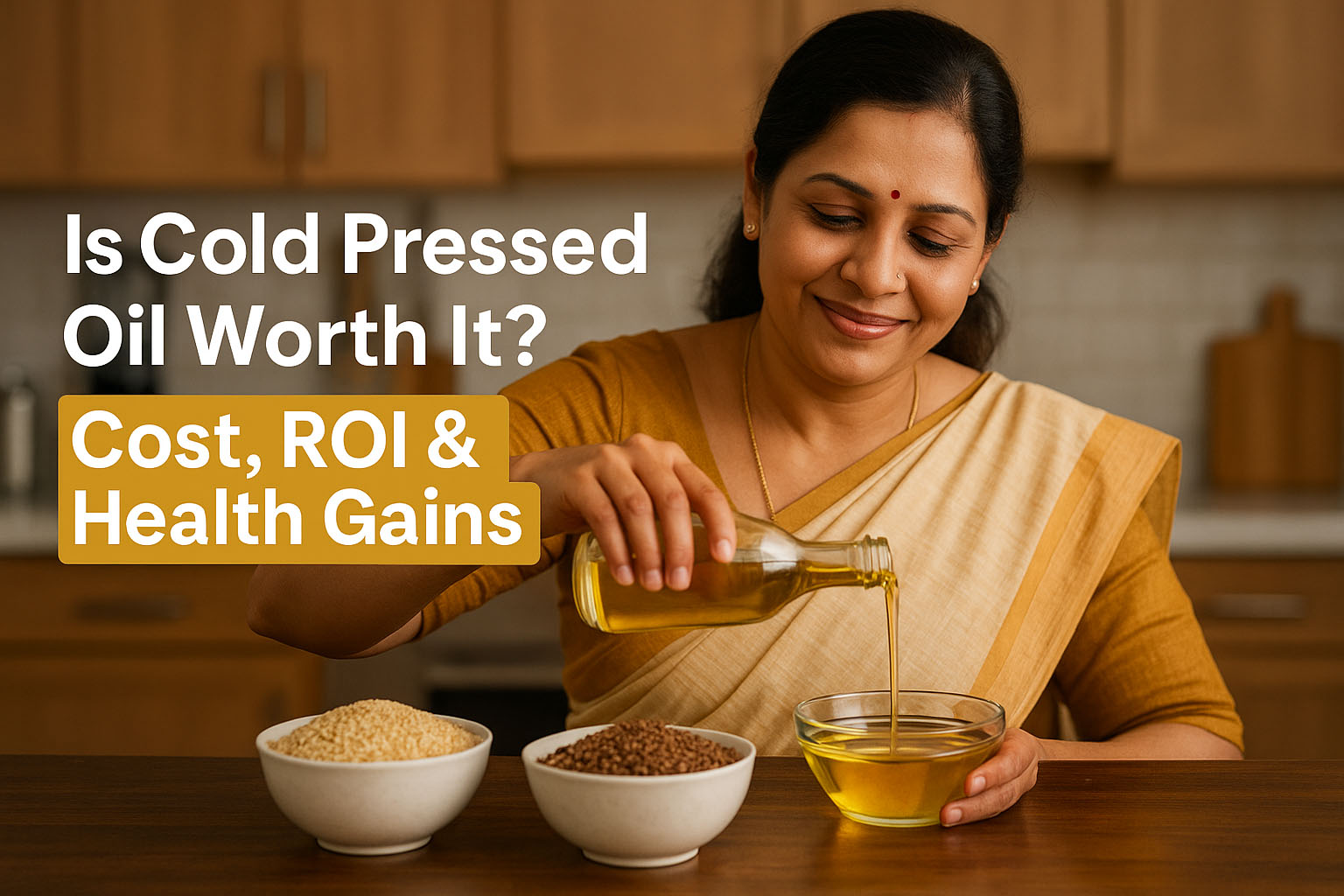
In most Indian kitchens, oil is more than a cooking ingredient — it’s part of our culture. From frying puris in groundnut oil to sautéing vegetables in mustard oil, it shapes our food and our health. But recently, many families are asking the same question: is cold pressed oil worth it?
Cold pressed oils are extracted without heat or chemicals. That means they retain their natural nutrients, aroma, and flavour. But they also cost more than refined oils, both when buying them from the market or pressing them at home.
In this guide, we’ll break down whether switching to cold pressed oil truly pays off — financially and for your health.
What Makes Cold Pressed Oils More Expensive
Let’s start with the obvious — why cold pressed oils cost more than regular refined oils.
Cold pressing uses a slow, mechanical process to extract oil at room temperature (below 45°C). Unlike refined oil factories that use high heat and chemicals to extract every last drop, cold pressing gives priority to purity, not quantity.
Each litre of cold pressed oil requires 2.5–3 kg of seeds, while refined oil factories can extract 1 litre from 1.8–2 kg using solvents. So the cost per litre goes up.
Add to that:
- Manual cleaning of seeds
- Slow extraction process
- No added preservatives
- Premium-grade packaging (glass or steel bottles)
The result is a higher upfront price — but a much cleaner, safer product.
Understanding the Real Value
When comparing cold pressed oils with refined oils, cost alone doesn’t tell the whole story. You must also consider nutritional value, shelf life, and long-term health effects.
| Feature | Refined Oil | Cold Pressed Oil |
| Extraction Process | High heat & chemicals | Low heat, natural pressing |
| Nutrient Retention | Very low | High |
| Aroma & Flavour | Neutral | Natural & distinct |
| Additives | Antioxidants, solvents | None |
| Shelf Life | 8–10 months | 3–6 months |
| Health Impact | Can cause inflammation | Supports heart & digestion |
A spoonful of cold pressed oil delivers more antioxidants, vitamin E, and essential fatty acids — all of which protect the heart, skin, and brain.
Cost Breakdown for Indian Households
Now let’s talk numbers — because that’s what most home users want to know before investing in a cold press oil machine for home.
Example 1: Groundnut Oil
- 1 kg groundnut seeds = ₹120
- Yields ≈ 400 ml oil + seed cake
- To make 1 litre oil → 2.5 kg seeds = ₹300
- Branded cold pressed groundnut oil in stores ≈ ₹550–₹600/litre
So, if you press oil at home, you save ₹250–₹300 per litre.
For a family using 4 litres/month, that’s around ₹1,000 saved monthly — and over ₹12,000 per year.
Example 2: Coconut Oil
- 1 kg dried copra = ₹200
- Yields ≈ 300 ml oil
- 3.3 kg → 1 litre oil = ₹660
- Market price ≈ ₹900–₹950/litre
Your savings = ₹250–₹300/litre and you get pure, preservative-free coconut oil for both cooking and skincare.
Example 3: Mustard Oil
- 1 kg mustard seeds = ₹100
- Yields ≈ 350 ml oil
- 3 kg → 1 litre oil = ₹300
- Market price ≈ ₹500–₹550/litre
Again, a saving of ₹200+ per litre — with the added benefit of freshness and no chemicals.
ROI: When a Cold Press Oil Machine Pays for Itself
Most home-use cold press machines in India cost between ₹12,000 and ₹18,000.
At an average saving of ₹250 per litre and 4 litres/month usage:
ROI = ₹1,000 saved per month → full payback in about 15–18 months.
After that, every litre of oil you press is pure savings — plus you control quality and freshness.
For small communities or cooperative families, the payback period can be as short as 10–12 months when sharing a machine.
❤️ Long-Term Health Benefits
Now let’s talk about the real reason cold pressed oil is worth it — your health.
1️⃣ Better Heart Health
Cold pressed oils retain monounsaturated and polyunsaturated fats, which help reduce bad cholesterol (LDL) and improve good cholesterol (HDL). Oils like mustard, groundnut, and sesame promote heart wellness naturally.
2️⃣ Rich in Antioxidants
Vitamin E and other antioxidants in cold pressed oils protect cells from free radical damage, slowing down aging and inflammation.
3️⃣ Improved Digestion
Because they’re unrefined and chemical-free, these oils are easier on the stomach and help the body absorb nutrients better.
4️⃣ Hormonal Balance
Cold pressed oils contain omega-3 and omega-6 fatty acids that support hormone regulation — especially beneficial for women’s health.
5️⃣ Better Skin and Hair
Coconut and sesame cold pressed oils are excellent for external use too. They nourish the skin and strengthen hair roots without side effects.
6️⃣ Immune System Support
Natural tocopherols and plant sterols in these oils support the immune system, making your body more resilient to infections.
Why Home Extraction Wins
Buying bottled cold pressed oil is healthy — but making it at home is even better.
Here’s why:
- You know exactly what seeds you’re using.
- No risk of adulteration or old stock.
- You can blend seeds for taste and nutrition.
- You save significantly in the long run.
It’s like owning a mini oil mill right in your kitchen — minus the mess.
(Internal link cue: Link this section to “Cold Press Oil Machine for Home: The Complete Beginner’s Guide.”)
Health Is an Investment, Not an Expense
Many people hesitate to buy a cold press oil machine because of the upfront cost. But think of it this way:
- You spend ₹15,000 once.
- You save ₹1,000+ every month.
- You protect your family’s long-term health.
That’s a rare case where your investment gives both financial and physical returns — month after month.
Conclusion
So, is cold pressed oil worth it?
Absolutely — especially if you value purity, health, and long-term savings.
While refined oils may seem cheaper upfront, their hidden health costs are far greater. With a cold press oil machine at home, you get the best of both worlds — quality and savings.
Once you taste the aroma of fresh groundnut or sesame oil from your own kitchen, you’ll never go back to bottled oils again.
(Internal link cue: Connect to “Best Cold Press Oil Machine for Home in 2025 – Top 7 Models Compared.”)





0 Comments