
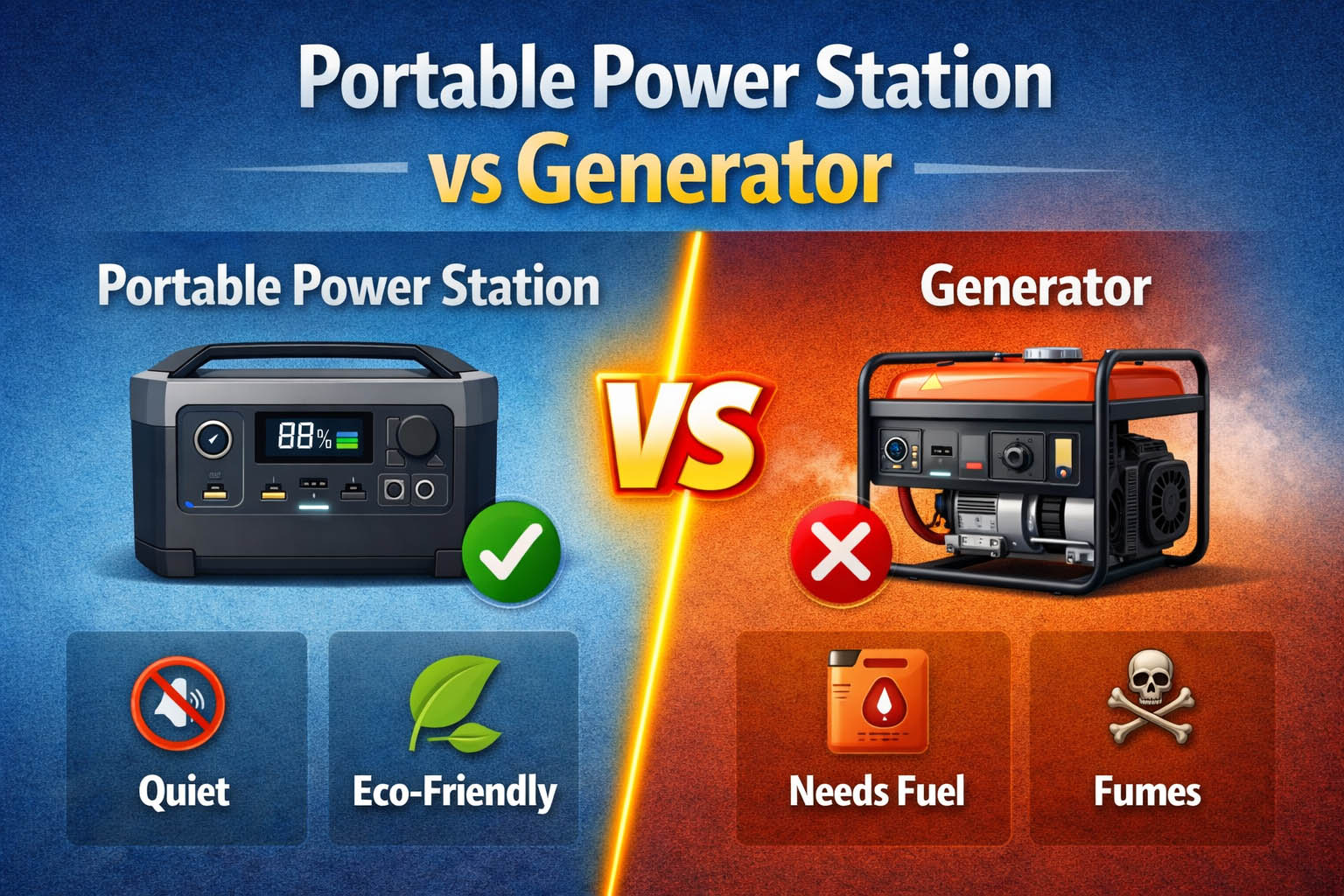
Choosing a reliable backup power solution can be confusing. Many people wonder whether they should buy a portable power station or a generator. Both devices provide electricity when the main power supply is unavailable, but they work very differently.
Understanding the difference between a portable power station vs generator helps you choose the right option for your needs. Some people prefer generators for heavy appliances, while others choose portable power stations because they are quieter and easier to use.
In this guide, we will compare these two power solutions in simple terms so you can decide which one is best for your situation.
What Is a Portable Power Station?
A portable power station is a large rechargeable battery with multiple power outlets. It stores electricity and allows you to run or charge devices whenever needed.
Most portable power stations include:
- AC wall outlets
- USB charging ports
- DC outputs
- digital battery displays
These devices can be charged using a wall socket, car charger, or solar panels.
Because they rely on battery power, portable power stations are quiet and safe for indoor use.
If you want a detailed explanation of how these devices work, you can read our beginner guide on what is a portable power station.
What Is a Generator?
A generator is a machine that produces electricity by burning fuel such as petrol, diesel, or gas.
When the generator runs, it converts fuel energy into electrical energy that can power appliances.
Generators are commonly used for:
- construction sites
- outdoor events
- homes during long power outages
However, generators require fuel and produce exhaust fumes, which means they must always be used outdoors.
Portable Power Station vs Generator: Key Differences
The biggest difference between these two power solutions is how they produce electricity.
A portable power station stores electricity, while a generator produces electricity by burning fuel.
Below are the most important differences.
1. Power Source
Portable power stations run on rechargeable batteries. You charge them before use and then draw power from the stored energy.
Generators generate electricity by burning fuel such as petrol or diesel.
Because of this difference, generators can run longer as long as fuel is available.
2. Noise Levels
Portable power stations are almost completely silent. They do not have engines or moving parts that create noise.
Generators, on the other hand, can be very loud. Many generators produce significant engine noise while running.
For home use, camping, or indoor environments, portable power stations are much more comfortable to use.
3. Indoor Safety
Portable power stations are safe for indoor use because they do not produce fumes.
Generators produce exhaust gases such as carbon monoxide. Because of this, they must always be operated outside.
Using generators indoors can be extremely dangerous.
4. Portability
Portable power stations are usually lightweight and compact. Many models include carrying handles, making them easy to transport.
Generators are typically heavier and larger. Even portable generators can be difficult to move without wheels.
For camping or travel, portable power stations are usually the more convenient option.
5. Maintenance Requirements
Portable power stations require very little maintenance.
You simply recharge the battery and keep the device clean.
Generators require regular maintenance, including:
- refueling
- oil changes
- engine servicing
This can increase the long-term cost of ownership.
6. Power Output
Generators are generally capable of producing more power than portable power stations.
Large generators can run heavy appliances such as:
- air conditioners
- large refrigerators
- power tools
Portable power stations are usually better suited for:
- laptops
- televisions
- lights
- small appliances
However, modern high-capacity power stations are becoming more powerful.
You can explore some of the top models in our guide on best portable power station in India.
Advantages of Portable Power Stations
Portable power stations offer several advantages that make them popular for everyday users.
Quiet Operation
Because they do not use engines, they operate silently.
Eco-Friendly
Portable power stations produce no emissions and can even be charged with solar panels.
Easy to Use
Most models only require pressing a power button.
Indoor Safe
Since they do not produce fumes, they are safe to use inside homes.
Advantages of Generators
Generators also have some advantages in certain situations.
Higher Power Output
Generators can run large appliances that require high wattage.
Unlimited Runtime
As long as fuel is available, generators can continue producing electricity.
Ideal for Long Outages
Generators are useful when power cuts last many hours or even days.
When Should You Choose a Portable Power Station?
Portable power stations are the best option if you want:
- quiet backup power
- electricity for camping or travel
- a portable charging solution
- an eco-friendly energy option
They are especially useful for running small appliances and electronics.
When Should You Choose a Generator?
Generators are better suited for situations where you need:
- very high power output
- long operating hours
- electricity for heavy equipment
For example, generators are often used at construction sites or large outdoor events.
Which Option Is Best for Most Homes?
For many households, portable power stations are becoming the preferred choice.
They are simple to use, quiet, and safer for indoor environments. For short power cuts or charging essential electronics, a portable power station is often enough.
Generators are still useful for situations that require very high power or long runtime.
The right choice ultimately depends on how much electricity you need and how you plan to use it.
Quick Buying Tips
Before choosing between these two options, consider the following points.
Check your power requirements
Make a list of the devices you want to run.
Consider noise levels
If you want a quiet solution, portable power stations are better.
Think about runtime
Generators can run longer if fuel is available.
Consider portability
Portable power stations are easier to carry and store.
Final Thoughts
The comparison between portable power station vs generator ultimately depends on your needs.
Portable power stations are quiet, portable, and easy to use. They are ideal for camping, travel, and short power outages.
Generators are more powerful and can run heavy appliances for longer periods, but they require fuel and produce noise.
For many households today, portable power stations provide a convenient and modern alternative to traditional generators.





0 Comments