
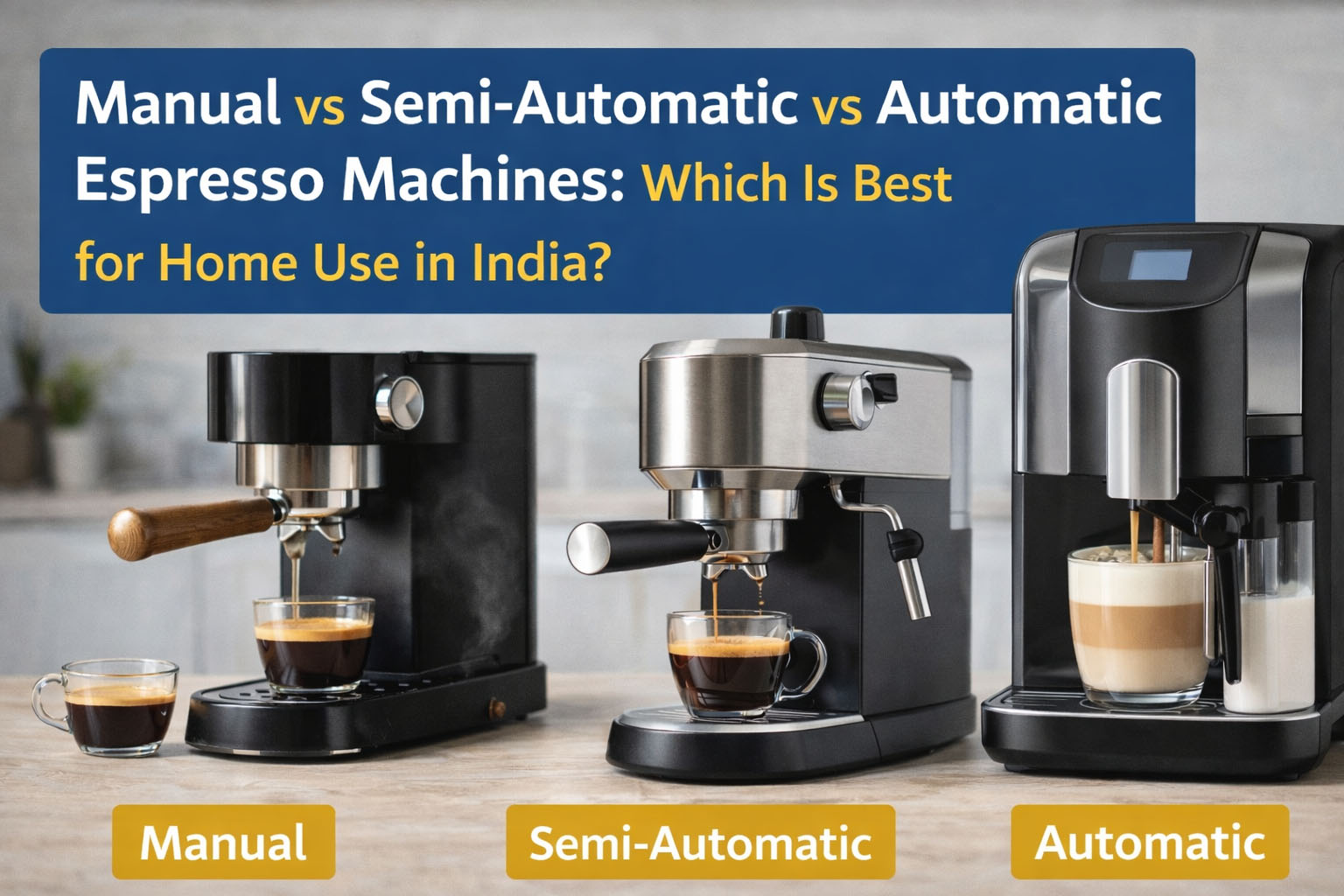
Choosing between manual vs semi automatic vs automatic espresso machines is one of the most confusing decisions for Indian home buyers.
Each type promises café-style coffee.
Each comes with trade-offs.
And each suits a very different lifestyle.
This guide breaks the confusion clearly, without jargon, so you can pick the right machine once, not regret it later.
Why This Comparison Matters for Indian Homes
Indian households differ from cafés in three major ways:
- Milk-based drinks dominate
- Space and power usage matter
- Convenience often beats experimentation
Before comparing machines, it helps to understand what espresso really is and how espresso machines work at home , because expectations often decide satisfaction.
The Three Types of Espresso Machines Explained Simply
Let’s understand each type in real-world terms.
Manual Espresso Machines (Full Control, Full Effort)
Manual espresso machines require you to control pressure, extraction time, and technique yourself.
How they work
You apply force manually to extract espresso from coffee grounds.
Pros
- Lowest entry price
- Complete control over brewing
- Appeals to coffee hobbyists
Cons
- Steep learning curve
- Inconsistent results without practice
- Not ideal for daily rushed mornings
Best for
Coffee enthusiasts who enjoy experimentation and don’t mind spending time learning.
For most Indian homes, manual machines feel exciting initially but become tiring over time.
Semi-Automatic Espresso Machines (Balanced Choice)
Semi-automatic machines automate pressure but leave timing and grinding to the user.
How they work
The machine maintains pressure. You control grind size, tamping, and shot duration.
Pros
- Better consistency than manual machines
- Strong espresso flavour
- Allows skill development without frustration
Cons
- Requires learning basics
- Needs grinder and accessories
- Slightly higher maintenance
Best for
Users who want café-style espresso and are willing to learn, but still want reliability.
Many home baristas in India start here and stay satisfied long-term.
Automatic Espresso Machines (Convenience First)
Automatic and fully automatic machines handle almost everything.
How they work
With one button, the machine grinds, extracts, and often froths milk.
Pros
- Extremely convenient
- Consistent results
- Ideal for milk-based drinks
Cons
- Higher upfront cost
- Limited control over flavour tuning
- Repairs can be expensive
Best for
Busy households, families, and anyone who values speed over experimentation.
If you drink cappuccino or latte daily, this category makes the most sense.
Quick Comparison: Which Type Fits You Best?
| Type | Control | Convenience | Learning Curve | Best For |
| Manual | Very High | Low | Steep | Hobbyists |
| Semi-Automatic | Medium–High | Medium | Moderate | Coffee lovers |
| Automatic | Low | Very High | Minimal | Busy homes |
Cost Reality in India
Approximate home-use pricing:
- Manual machines: ₹8,000 – ₹15,000
- Semi-automatic machines: ₹15,000 – ₹30,000
- Automatic machines: ₹30,000 – ₹70,000+
Running costs (beans, cleaning, power) remain similar across types.
If budget is a concern, understanding whether you can realistically make espresso without a machine helps avoid rushed purchases.
Milk-Based Drinks: A Critical Indian Factor
Indian coffee habits are milk-heavy.
- Manual machines struggle with consistent milk frothing
- Semi-automatic machines handle milk well with practice
- Automatic machines excel at milk texture consistency
For households making multiple milk coffees daily, automation saves effort and avoids mess.
Space, Noise, and Maintenance Considerations
Space
Automatic machines are bulkier. Compact kitchens should measure counter depth carefully.
Noise
Grinders in automatic machines can be loud. Morning users should consider this.
Maintenance
- Manual: Low servicing, high user effort
- Semi-automatic: Regular cleaning required
- Automatic: Requires scheduled cleaning cycles
Common Mistakes Buyers Make
- Choosing manual machines for convenience
- Expecting café results instantly
- Ignoring long-term maintenance
- Buying based on brand hype instead of usage
Most regret comes from mismatched expectations, not bad machines.
So, Which Espresso Machine Is Best for Home Use in India?
Here’s the honest answer:
- Manual → For passion, not practicality
- Semi-automatic → Best balance for serious home users
- Automatic → Best for convenience-focused households
Your choice should reflect how often, how fast, and how involved you want to be. Hope this post settled the debate on manual vs semi automatic vs automatic espresso machines.




0 Comments