
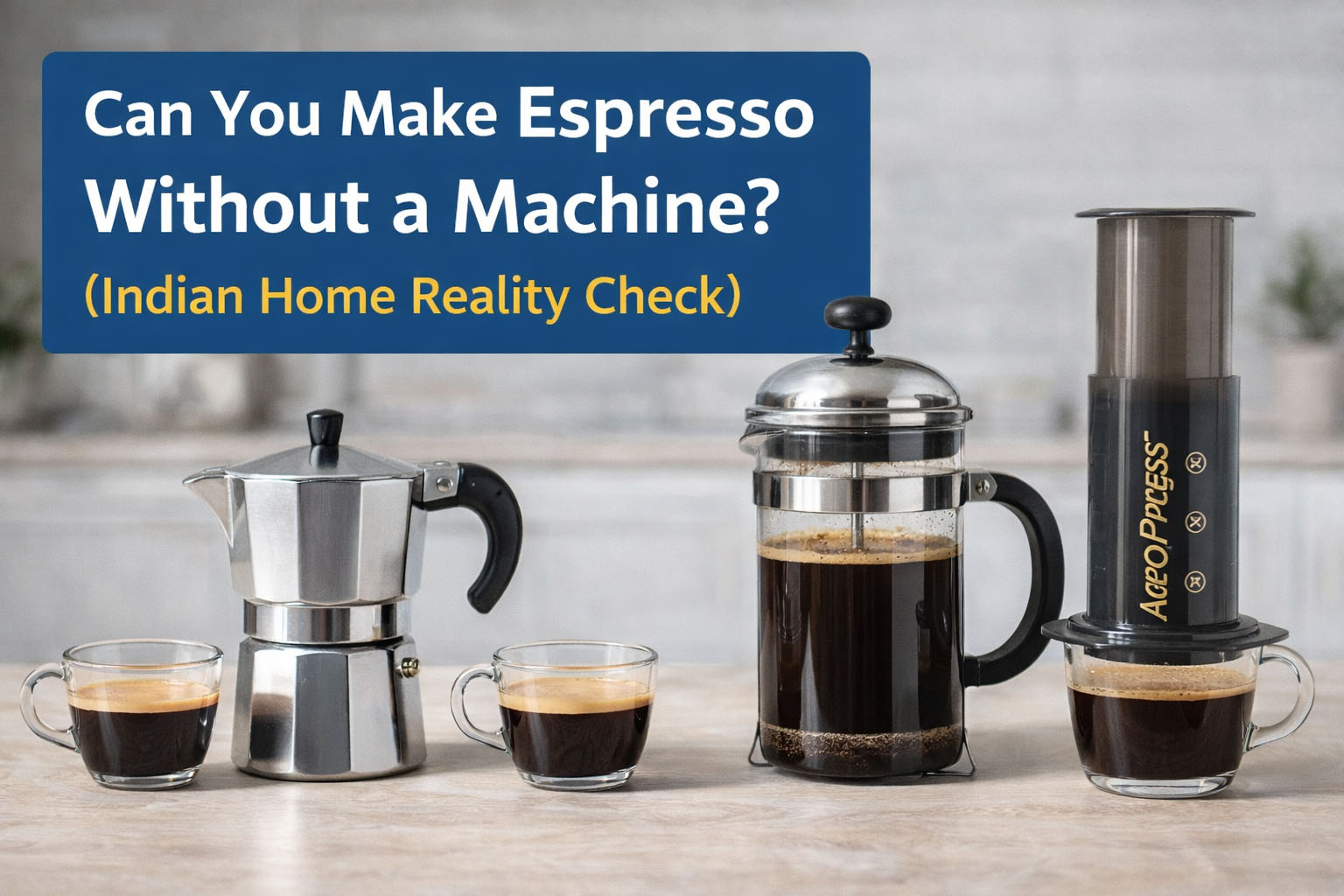
Many people who enjoy café-style coffee ask the same question before spending money: can you make espresso without a machine, especially in an Indian home setup?
The short answer is yes — but with limitations. This article explains what methods actually work, what only imitates espresso, and when buying a machine becomes unavoidable.
Why People Try to Make Espresso Without a Machine
Most Indian households hesitate to buy espresso machines because they:
- Cost more than basic coffee makers
- Require learning and maintenance
- Take up counter space
Before investing, it is natural to look for simpler alternatives.
However, understanding what espresso really is makes these alternatives clearer.
If you are still unsure how espresso differs from other coffee styles, it helps to revisit the basics of espresso vs cappuccino vs latte before evaluating substitutes.
What Makes Espresso “Real” Espresso?
Espresso is defined by pressure, not ingredients.
To qualify as espresso:
- Hot water must pass through finely ground coffee
- Pressure must be close to 9 bars
- Extraction must happen quickly
Without pressure, the drink may taste strong, but it is technically not espresso.
This is why espresso machines exist in the first place, as explained earlier in what an espresso machine is and how it works at home
Methods That Claim to Make Espresso Without a Machine
Let’s look at popular options realistically.
Moka Pot (Closest Alternative)
A moka pot uses steam pressure to push water through coffee grounds.
What it does well:
- Produces strong, concentrated coffee
- Affordable and widely available in India
- Works on gas stoves
Limitations:
- Pressure is much lower than espresso
- No crema
- Taste is similar but not identical
A moka pot is the closest approximation, not a replacement.
French Press (Not Espresso)
French press is often misunderstood.
Reality:
- No pressure
- Long extraction time
- Produces bold coffee, not espresso
It works well for regular coffee drinkers but does not replicate espresso texture or intensity.
AeroPress (Espresso-Style, Not Espresso)
AeroPress can create pressure manually.
Pros:
- Portable
- Produces strong coffee quickly
- Flexible brewing styles
Cons:
- Pressure depends on user strength
- Still below true espresso standards
Many coffee enthusiasts use AeroPress for espresso-style drinks at home, but it remains a workaround.
South Indian Filter (Traditional, Not Espresso)
South Indian filter coffee is rich and intense but follows a slow dripping process.
It:
- Uses gravity, not pressure
- Produces decoction, not espresso
- Works best with milk and sugar
It serves a completely different purpose.
Can These Methods Replace an Espresso Machine?
In practical terms:
- They satisfy curiosity
- They reduce initial spending
- They help you understand flavour preferences
But they cannot replace:
- Consistency
- Crema
- Café-style extraction
Once expectations rise, these methods often feel limiting.
When Does Buying an Espresso Machine Make Sense?
You should consider a machine if:
- You drink cappuccino or latte regularly
- You want consistent results
- You prefer convenience over experimentation
- You value café-style texture
At this stage, the real decision shifts from whether to buy to which type to buy.
That comparison becomes important next when choosing between manual, semi-automatic, and automatic espresso machines for home use in India
Common Myths About Making Espresso Without a Machine
“Strong coffee equals espresso”
Strength alone does not define espresso.
“Milk hides the difference”
Milk softens taste but cannot fix poor extraction.
“Manual methods are cheaper long-term”
Time, inconsistency, and frustration add hidden costs.
Indian Home Reality Check
For Indian homes:
- Gas stoves support moka pots well
- Electricity supports espresso machines reliably
- Milk-based coffee dominates daily habits
This makes espresso machines more practical than they appear once used regularly.
Final Verdict
So, can you make espresso without a machine?
- You can make something close.
- You can learn flavours.
- You can delay buying.
But true espresso requires pressure, consistency, and control — which only espresso machines provide.
Understanding this helps you avoid unrealistic expectations and wasted money.





0 Comments