
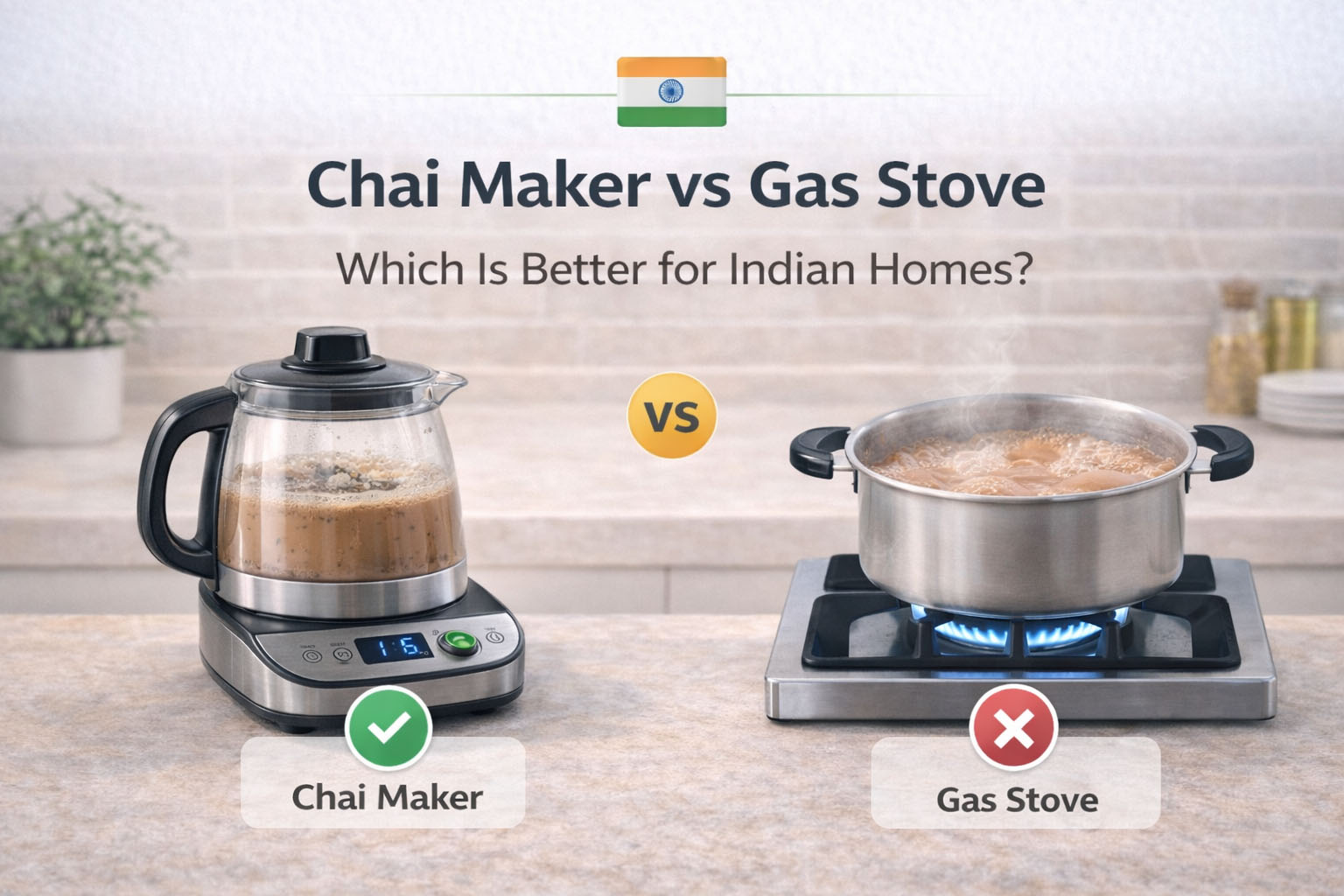
When deciding between a chai maker vs gas stove, most Indian households think the difference is only about convenience. In reality, the choice affects daily effort, safety, consistency, and even how often chai is prepared at home.
Chai is not an occasional drink in India. It is part of everyday life. Therefore, choosing the right method for making chai can quietly improve daily routines without much effort.
This guide compares both options in a practical, no-nonsense way to help you decide what actually works better in Indian kitchens.
Why This Comparison Matters for Indian Kitchens
Indian chai involves milk, water, sugar, and tea leaves boiling together. As a result, the process demands attention. Even a small distraction can cause milk to spill or chai to overboil.
At the same time, modern households are busier than before. Because of this, many people look for safer and more convenient ways to prepare everyday drinks. That is exactly why the chai maker vs gas stove comparison has become relevant.
Making Chai on a Gas Stove: The Traditional Method
The gas stove method is familiar and flexible. Most Indian homes have followed this approach for decades.
How It Works
You heat water and milk in a pan, add tea leaves and sugar, and control the flame manually until the chai reaches the desired strength.
Why Many People Still Prefer It
- Full control over taste
- Easy to adjust sweetness and strength
- No extra appliance needed
However, this method also has drawbacks.
Limitations
- Requires constant supervision
- Milk can spill easily
- Results vary if timing changes
Although effective, the gas stove method demands time and attention every single time.
How a Chai Maker Prepares Tea
A chai maker automates the boiling process. You add ingredients, switch it on, and let the appliance handle heating and simmering.
What Makes It Different
- Controlled temperature
- Reduced chances of overflow
- Minimal supervision
As a result, chai preparation becomes more predictable and less stressful, especially during busy hours.
Before choosing a model, it also helps to understand capacity, heating type, and cleaning effort, which we have covered in this chai maker buying guide for Indian homes.
Chai Maker vs Gas Stove: Key Differences for Indian Homes
| Aspect | Chai Maker | Gas Stove |
| Supervision | Very little | Constant |
| Milk overflow risk | Low | High |
| Consistency | High | Depends on experience |
| Safety | No open flame | Open flame |
| Daily convenience | Higher | Moderate |
This table clearly shows that the chai maker vs gas stove debate is not about taste alone. It is mainly about effort and consistency.
Taste Comparison: Does a Chai Maker Change the Flavour?
Many people worry that chai made in a machine will taste different. However, taste depends more on ingredients and boiling time than on the heat source.
With a gas stove, taste varies depending on flame control and attention. In contrast, a chai maker delivers consistent results once you understand the right proportions.
Initially, users may need a few trials. After that, taste differences are minimal.
Convenience and Time Savings
Gas Stove
You need to stay near the stove, adjust the flame, and clean spills afterward. Therefore, chai making becomes an active task.
Chai Maker
You add ingredients and step away. Meanwhile, the appliance handles boiling. Cleanup is also easier in most cases.
Over time, this difference saves noticeable effort, especially for people who make chai multiple times daily.
Safety in Daily Use
Safety matters more than most people realise.
Gas stoves involve open flames and hot spills. On the other hand, chai makers use enclosed heating with stable bases. As a result, the risk of accidents reduces significantly.
For homes with elderly members or children, this difference is important.
Electricity vs Gas: Cost in Real Usage
Chai makers use electricity only for a few minutes per cycle. Although their wattage sounds high on paper, actual power usage remains low.
Gas stoves use LPG continuously. Over time, the cost difference between the two methods is small. Therefore, cost alone should not decide the choice.
When a Gas Stove Still Makes More Sense
A gas stove works better if:
- You enjoy manual chai making
- You prefer adjusting taste every time
- You make chai occasionally
In such cases, a chai maker may feel unnecessary.
When a Chai Maker Is the Better Choice
A chai maker fits better if:
- Chai is prepared several times a day
- You dislike milk spills
- Convenience matters more than manual control
- Safety is a priority
For these users, the appliance often becomes part of the daily routine.
If you are considering buying one, our detailed guide on the best chai maker for home use in India explains which models actually deliver consistent results for Indian kitchens.
Common Misunderstandings About Chai Makers
Some believe chai makers spoil traditional chai. However, most issues come from incorrect ingredient ratios, not the appliance itself.
Others think chai makers replace gas stoves. In reality, they only complement existing kitchens.
Understanding this helps set realistic expectations.
Final Verdict: Chai Maker vs Gas Stove
Both methods can make good chai. The difference lies in effort, consistency, and safety.
A gas stove offers tradition and flexibility. A chai maker offers predictability and convenience. Therefore, the better option depends on how often you make chai and how much effort you want to invest.
For busy Indian households, a chai maker can quietly improve daily life. For others, the gas stove remains perfectly sufficient.





0 Comments